Answer:
Varicocele is an abnormal enlargement of veins within the spermatic cord, leading to blood pooling around the testicle. This condition increases scrotal temperature and reduces oxygen supply, directly impairing sperm count and quality. In some instances, it also affects the testicles' testosterone production.
This is one of the most common causes of male infertility. At the Center for Reproductive Support, Tam Anh General Hospital Ho Chi Minh City, approximately 30-40% of men seeking infertility evaluation are diagnosed with varicocele. This percentage can rise to 70-80% in cases of secondary infertility.
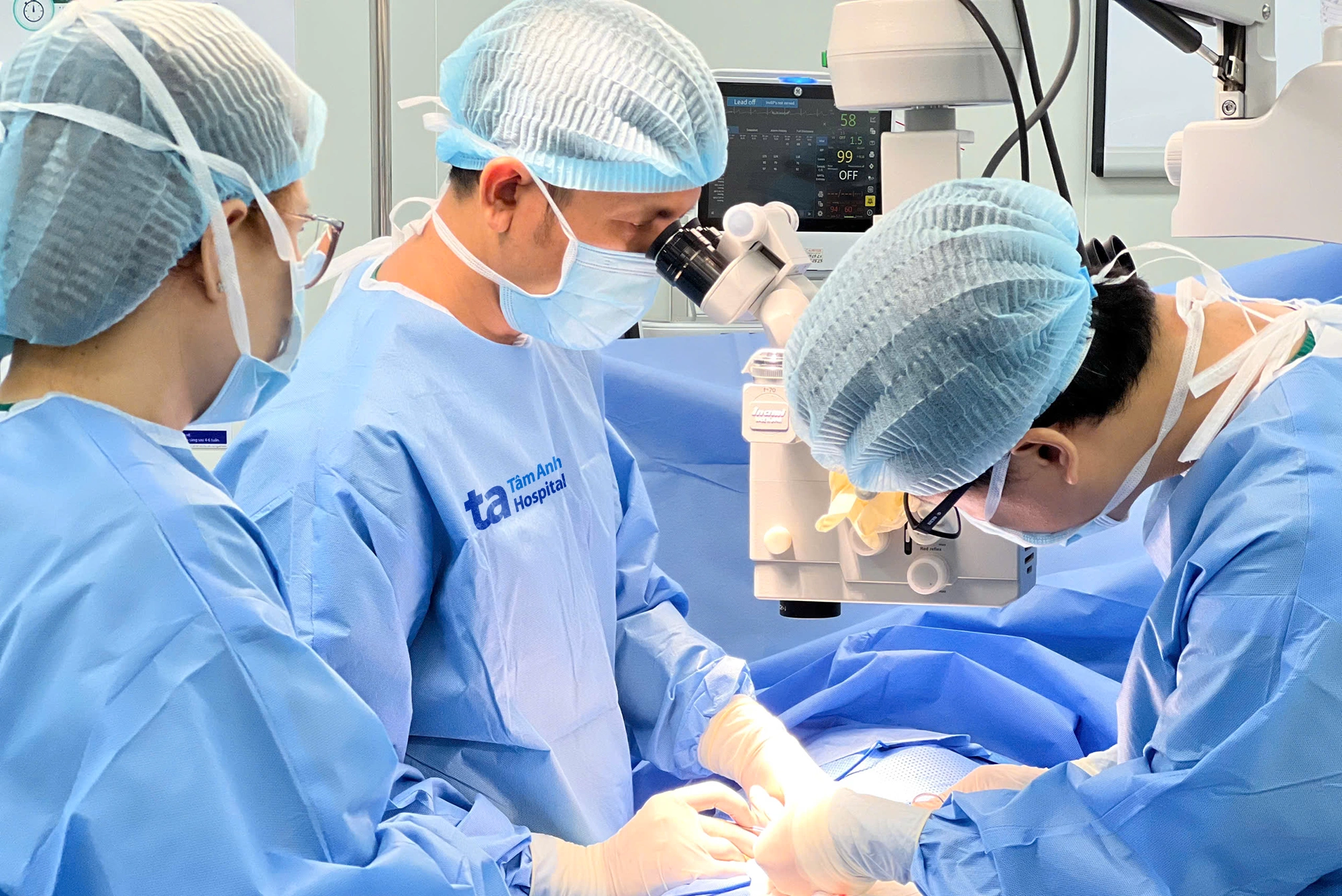 |
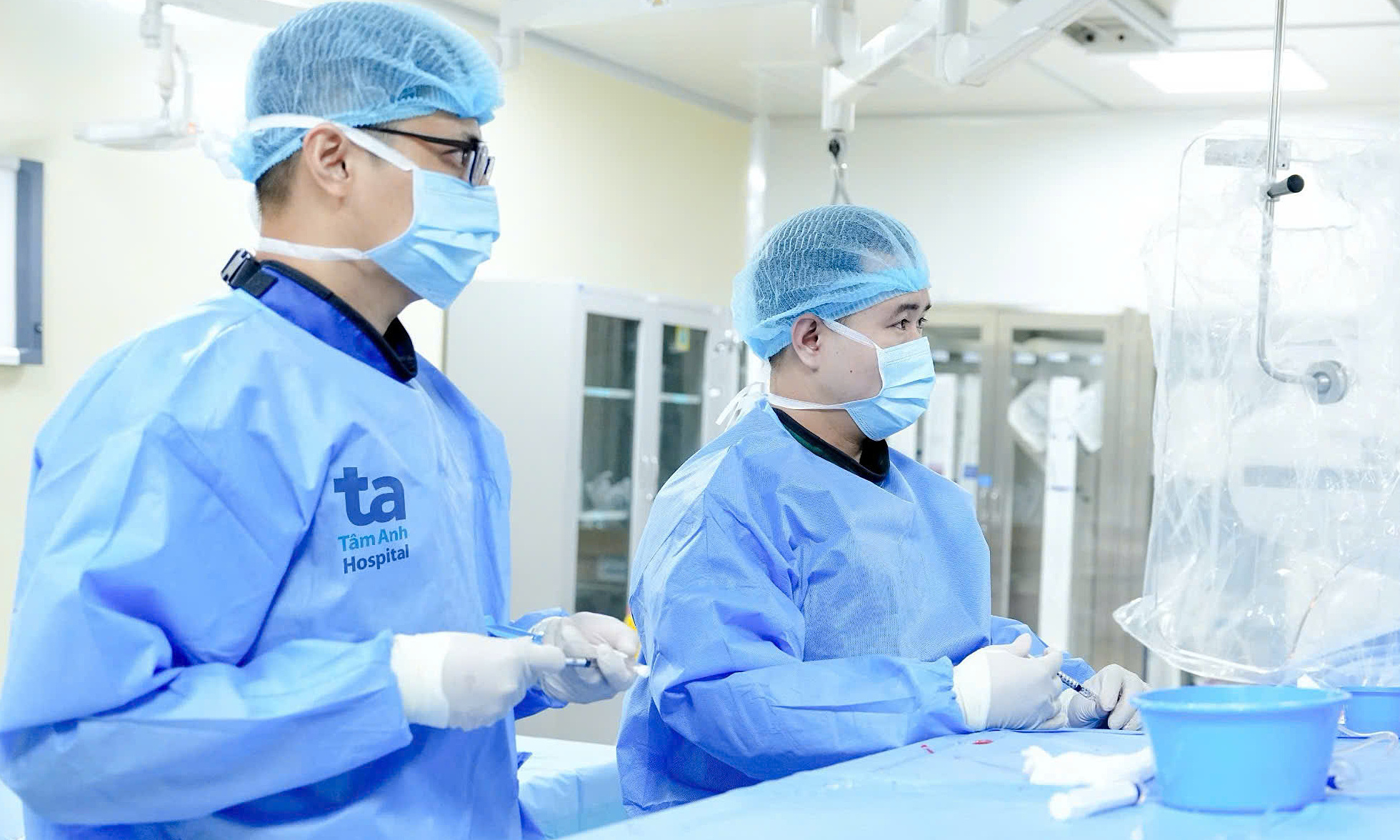
A team of doctors performing microsurgery to treat varicocele for a patient. Illustration: IVF Tam Anh |
The decision for varicocele surgery depends not solely on ultrasound images but also on clinical symptoms, semen analysis results, and the patient's desire for children. After examination and ruling out other causes of infertility, such as genetic abnormalities or hormonal disorders, doctors recommend surgical intervention if the condition directly impacts reproductive function or the patient's quality of life.
Surgery may be considered when a patient experiences declining sperm quality, signs of testicular atrophy, or persistent scrotal pain that does not improve with conservative medical treatment. For patients with mild varicocele, no pain, normal testicular development, and stable semen quality, doctors typically advise regular monitoring combined with healthy lifestyle adjustments.
You have been hoping for a child for two years and have a varicocele diagnosis. This condition can directly affect your fertility. However, an ultrasound result alone is not sufficient to indicate surgery. You need to undergo semen analysis and an ultrasound to measure testicular volume. If the results show declining sperm quality or a tendency for testicular atrophy, as per the criteria mentioned above, surgery is a necessary solution to help you conceive soon.
Currently, various interventional methods are available, including venous embolization and laparoscopic surgery. Among these, microscopic varicocelectomy is considered the most modern treatment approach today.
At Tam Anh General Hospital, microscopic varicocele treatment is performed under a high-magnification microscope. This allows doctors to identify and precisely ligate each enlarged vein while maximally preserving the testicular artery and lymphatic system. This technique helps reduce the risk of testicular atrophy, hydrocele, and lowers the recurrence rate after surgery. The collaboration between male and female infertility treatment units ensures a comprehensive assessment of infertility causes, enabling the development of appropriate treatment protocols tailored to each patient.
Men experiencing persistent scrotal pain, a palpable bundle of tortuous veins in the scrotum, or who have not conceived after one year of regular unprotected intercourse should seek consultation with an andrology or reproductive support specialist for a full evaluation. Timely detection and treatment not only help preserve testicular function and improve sperm quality but also increase the chances of natural conception.
Master, Doctor Le Dang Khoa
Center for Reproductive Support
Tam Anh General Hospital Ho Chi Minh City