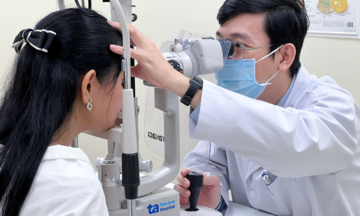
Dr. Tran Thi My Linh, a specialist in dermatology and aesthetic dermatology at Tam Anh General Hospital, Ho Chi Minh City, explained that Ms. Thu's enlarged pores in her T-zone and on both sides of her nose were due to reduced elasticity of the tissue surrounding the hair follicles. Oily skin and overactive sebaceous glands often lead to acne breakouts and prolonged inflammation, causing pores to become larger and more visible. This condition is frequently linked to chronic inflammation around hair follicles.
The nose area, with its high density of sebaceous glands, is prone to blockages and redness. When the supporting collagen layer around hair follicles is damaged, pores struggle to shrink on their own, even with enhanced skincare or pore-tightening products.
 |
A doctor uses RF waves to shrink pores on Ms. Thu's nose. *Photo: Tam Anh General Hospital.* |
Ms. Thu underwent micro-point radiofrequency (RF) treatment, comprising 4-6 sessions, each spaced one month apart. This technology uses micro-needle tips to deliver high-frequency wave energy deep into the skin, creating controlled heating in the dermis. This thermal energy inhibits excessive activity of the sebaceous glands, significantly reducing oil. Simultaneously, it stimulates collagen and elastin production, improving the firmness of the tissue around the hair follicles. As the supporting structure is restored, pores become smaller and tighter.
The dual action of micro-point RF on sebaceous glands and the skin's foundation improves overall skin surface, leading to a smoother and more even complexion. Following micro-point RF, Ms. Thu received LED light therapy to soothe her skin, reduce inflammation, and support skin barrier recovery. This combined approach minimizes irritation, shortens recovery time, and enhances pore-tightening effectiveness.
After three treatment sessions, Ms. Thu's skin was less oily, smoother, and her pores were noticeably smaller. To maintain these results, she was advised to restore her skin's protective barrier by using a gentle, pH-balanced cleanser and avoiding harsh soaps or foaming products that weaken the natural protective layer. For oil control, her doctor prescribed a sebum-reducing serum to limit blockages and support skin regeneration. The doctor cautioned her against self-extracting acne or seeking beauty treatments at unreliable facilities, as the nose area is very prone to inflammation, which can further enlarge pores. Individuals with oily skin, especially in the T-zone, require careful care and regular check-ups to maintain skin stability and limit damage.
Patients experiencing redness or enlarged pores should consult a specialized dermatology and aesthetic dermatology facility for proper assessment and personalized treatment.
Minh Huong
* Character name has been changed.