Not wearing prescribed glasses regularly, especially for moderate to severe myopia, can indeed be detrimental to eye health, according to medical experts. This concern is particularly relevant for individuals like Phi Ngoc, 30, from Dong Thap, who has 3 diopters of myopia but limits glasses use to specific activities.
Myopia, commonly known as nearsightedness, occurs when the eyeball is longer than average or the cornea is excessively curved. This structural anomaly causes light to focus in front of the retina instead of directly on it, leading to blurred vision for distant objects. Prescription glasses correct this by helping light converge precisely on the retina, compensating for the eye's focal error and enabling clear vision.
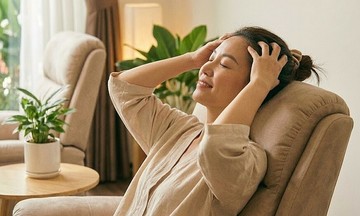
When a myopic individual does not wear their corrective lenses, their eyes must constantly strain and over-accommodate to try and see distant objects clearly. This continuous effort leads to significant eye fatigue, headaches, and tension in the neck and shoulders. Furthermore, this excessive eye accommodation can negatively impact concentration and overall work performance. Over time, this strain can also lead to an increase in the degree of myopia and contribute to the development of other vision issues, such as astigmatism or early macular degeneration.
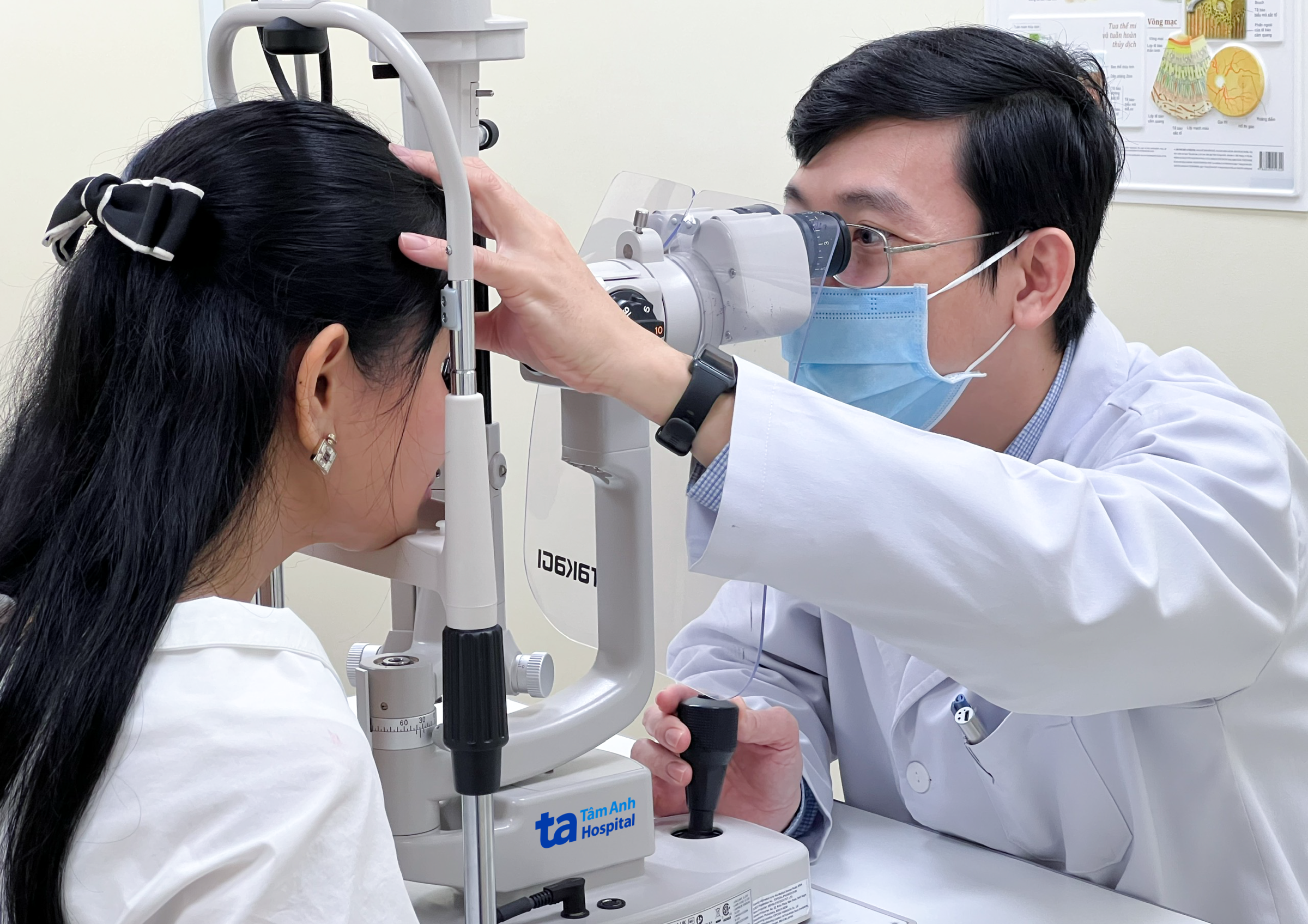 |
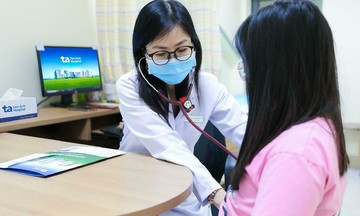
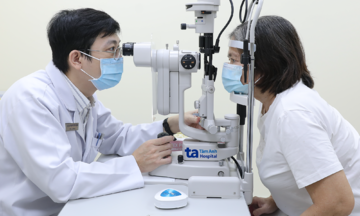
Dr. Tung examines a woman's eyes. Illustration: Tam Anh General Hospital. |
Dr. Tung examines a woman's eyes. Illustration: Tam Anh General Hospital.
Wearing correctly prescribed glasses is the simplest, safest, and most effective method for protecting your eyes. For adults, like Phi Ngoc, the degree of myopia is generally stable, except in cases of pathological myopia. However, it remains crucial to wear glasses consistently when outdoors or engaging in tasks that require sustained visual focus, such as using computers, smartphones, or performing any work that demands intense eye concentration.
Beyond wearing corrective lenses, several practices can help maintain optimal eye health. It is advisable to keep a reasonable distance of 50-65 cm from screens and follow the "20-20-6" rule: after every 20 minutes of screen time, look at an object 6 meters away for 20 seconds. Additionally, enriching your diet with foods high in vitamins A, C, and omega 3 supports eye well-being. Regular eye check-ups are also vital for monitoring myopia progression and ensuring your prescription remains accurate, thus preventing unnecessary eye strain and potential vision reduction.
Dr. Pham Huy Vu Tung
Deputy Head of Ophthalmology Department, High-Tech Eye Center
Tam Anh General Hospital, TP HCM
| Readers can submit ophthalmology questions here for doctors to answer. |