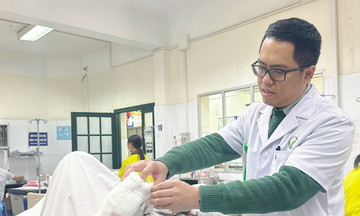
On 4/2, Doctor Tran Viet Hung from the Emergency Cardiovascular Department - Cardiology one, Nguyen Trai Hospital, stated that the patient was admitted in critical condition, experiencing severe shortness of breath and a drop in blood pressure. Two days prior, after playing sports, the patient felt breathless and short of breath but attributed it to fatigue, so he bought over-the-counter medication and continued to work.
In the Emergency Department, doctors observed typical signs of obstructive shock. Tests confirmed the patient had extensive pulmonary embolism. This is a condition where a pulmonary artery becomes blocked (often by a blood clot traveling from elsewhere), preventing oxygen from entering the blood and putting immense strain on the heart, leading to rapid circulatory collapse.
"This condition progresses quickly and is life-threatening if blood flow is not restored promptly," the doctor stated.
The treatment team decided to use thrombolytic drugs, an optimal treatment method to dissolve blood clots in this emergency. Just about 30 minutes after drug administration, the patient's condition dramatically improved, with reduced shortness of breath, stable blood pressure, and a decreased heart rate. The patient escaped the life-threatening cardiogenic shock and continued to be closely monitored.
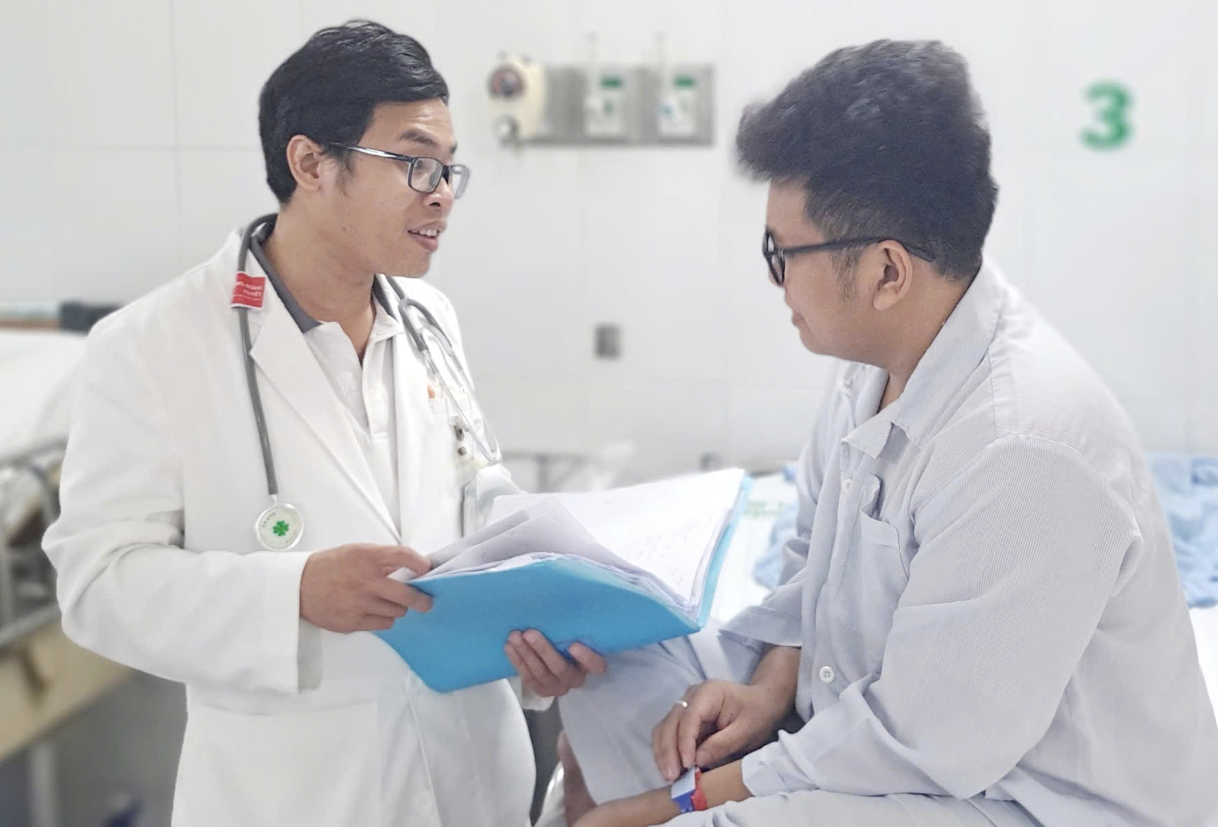 |
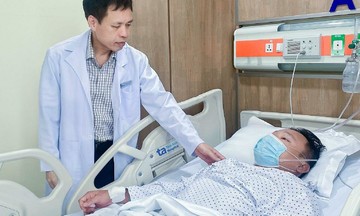
Doctors discussing with the patient during treatment. *Photo: Hospital provided.* |
Saving his life was only the first step. The major question was why such a young patient, without injuries, stimulant use, or malignant diseases, suffered such a severe embolism. Subsequent specialized tests revealed the patient had antiphospholipid syndrome (APS), a rare autoimmune disease in young men that causes increased blood clotting and a high risk of recurrent thrombosis. After 10 days of treatment, the patient was discharged in stable condition, prescribed long-term anticoagulant medication to prevent recurrence.
Doctor Ly Minh Khanh warned that pulmonary embolism is easily mistaken for common fatigue. People should seek medical attention immediately if they experience signs such as: sudden shortness of breath, chest pain, palpitations, dizziness, rapid heartbeat, or swelling and pain in one calf (suggesting deep vein thrombosis, which can travel to the lungs).
Le Phuong