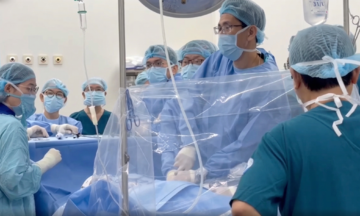
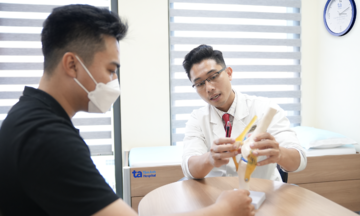
Baby Duy was diagnosed with bilateral undescended testes at birth and monitored at home. By 15 days old, his right testis had descended into the scrotum. When he was four months old, as his left testis was descending, a small, swollen lump appeared in his groin. Doctor, Second-Degree Specialist Nguyen Do Trong, from the Department of Pediatric Surgery at Tam Anh General Hospital TP HCM, diagnosed Duy with an undescended testis twisted three times.
If surgery is performed within six hours of the torsion, the chance of saving the testis is over 90%. After 12 hours, this rate drops below 50%, and after 24 hours, it is almost impossible to salvage.
The medical team untwisted and surgically fixed the testis to prevent recurrence. The surgery was successful, but doctors noted that the risk of testicular necrosis could still progress. Therefore, the baby requires regular follow-up appointments or examinations if any abnormalities occur, such as a red, bruised, or noticeably asymmetrical scrotum or groin area, unexplained crying, refusal to feed, or vomiting.
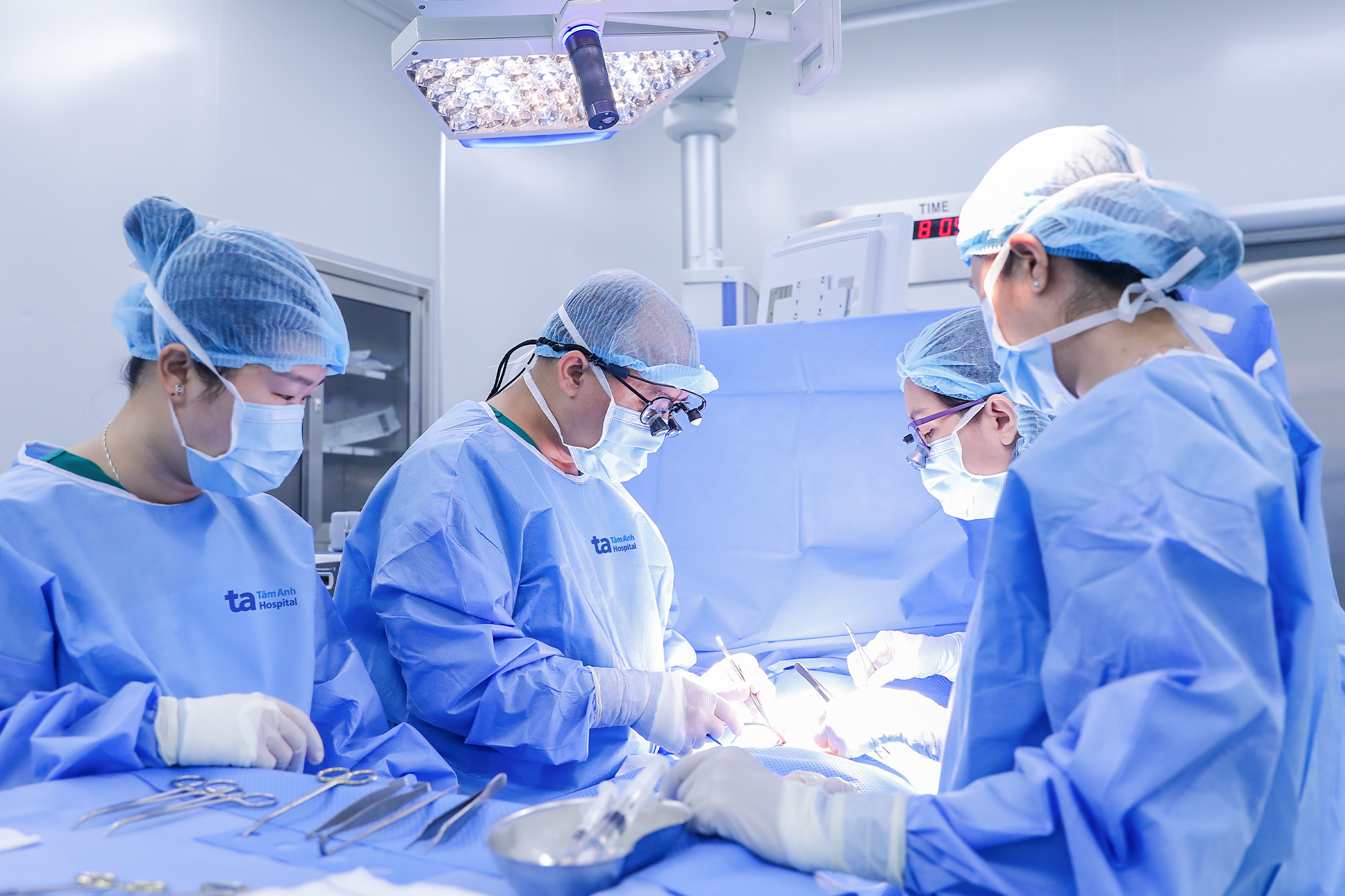 |
Doctor Trong (second from left) and the surgical team operate on Baby Duy. Photo: Tam Anh General Hospital.
Undescended testis is a condition where one or both testes do not move down into the scrotum as they normally would during fetal development. Testicular torsion occurs when the spermatic cord (the structure carrying blood vessels that nourish the testis) twists, partially or completely interrupting the blood supply, increasing the risk of necrosis and requiring removal. After six months of age, children with undescended testes require surgery to prevent complications such as torsion or cancer.
Doctor Trong advises that if a child suddenly cries uncontrollably, refuses to feed or feeds poorly, vomits, or develops a swollen scrotum or groin area, family members should take them to the hospital immediately.
Gian Don
*Character's name has been changed
| Readers can submit questions about neonatal care here for doctors to answer. |