Long Chanthida arrived at Tam Anh General Hospital in Ho Chi Minh City experiencing severe abdominal pain, nausea, high fever, jaundice, yellowing of the eyes, and a critically low blood pressure of 70/52 mmHg. Three weeks prior, she had undergone an endoscopic retrograde cholangiopancreatography (ERCP) to remove common bile duct stones at a hospital in Cambodia.
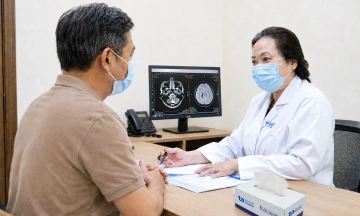
An MRI scan revealed dilated intrahepatic and extrahepatic bile ducts, including the right and left hepatic ducts, with sludge accumulation. Her gallbladder wall was thickened, and it contained an 11 mm stone along with significant bile sludge.
Dr. Tran Hieu Nhan, Specialist Level II, from the Center for Endoscopy and Endoscopic Gastrointestinal Surgery at Tam Anh General Hospital in Ho Chi Minh City, explained that the patient was suffering from severe septic cholangitis. When the bile ducts are obstructed, bacteria and toxins rapidly enter the bloodstream, leading to sepsis, circulatory failure, and multi-organ damage.
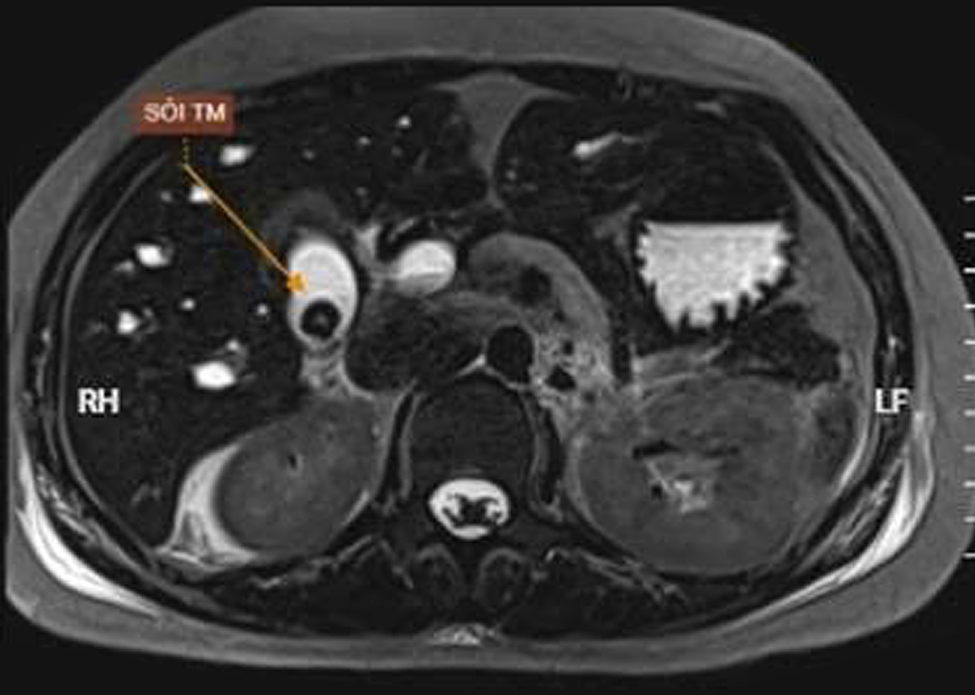 |
MRI images show multiple gallstones in the patient's gallbladder. *Photo: Hospital provided* |
In the Emergency Department, the patient received aggressive resuscitation with intravenous fluids, vasopressors, broad-spectrum antibiotics, and blood cultures. This treatment aimed to control the infection, stabilize her blood pressure, and maintain perfusion to vital organs like the liver and kidneys. Subsequently, she was transferred to the Intensive Care Unit (ICU) for advanced resuscitation, organ function support, and infection control.
After 24 hours, her hemodynamic and respiratory status gradually stabilized, making her suitable for intervention to address the cause of the bile duct obstruction. Doctors opted for a "two-in-one" approach: endoscopic retrograde cholangiopancreatography to remove bile duct stones combined with laparoscopic cholecystectomy in a single procedure. This comprehensive treatment aimed to thoroughly eliminate the source of infection.
During the intervention, doctors discovered a large stone, nearly 18 mm, at the distal end of the common bile duct, along with another sizable stone in the left hepatic branch. The medical team performed mechanical lithotripsy, then used specialized balloons and baskets to retrieve numerous stone fragments and a significant amount of infected bile.
The bile ducts were thoroughly irrigated and a prophylactic stent was placed to ensure proper drainage before the gastrointestinal surgery team proceeded with the laparoscopic cholecystectomy.
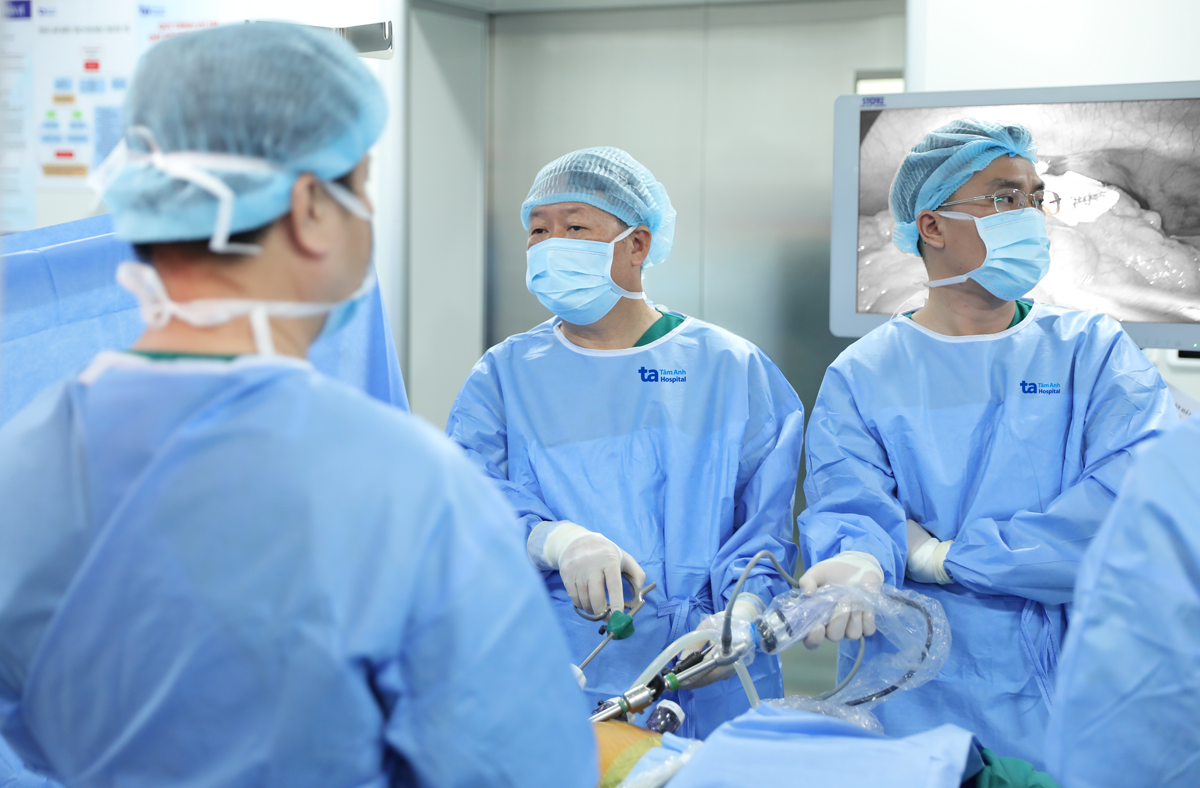 |
Dr. Hieu Nhan (center) performs gallbladder surgery on Long Chanthida. *Photo: Hospital provided* |
According to Dr. Nhan, the surgery presented several challenges due to severe inflammation, which caused the transverse colon and duodenum to adhere tightly to the gallbladder. To ensure patient safety, the doctor chose a retrograde cholecystectomy technique, dissecting the gallbladder from the fundus towards the neck. After separating the gallbladder, doctors noted three stones, approximately 10-12 mm in size, impacted in the gallbladder neck, causing inflammation of the common bile duct wall.
Post-surgery, Long Chanthida's health steadily improved, and she was discharged after five days.
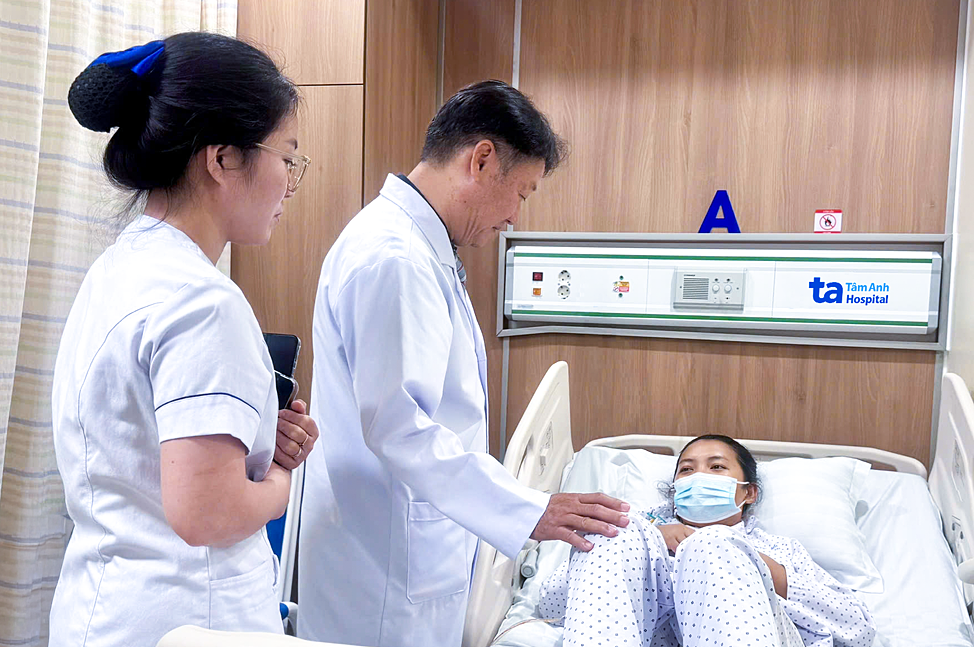 |
Doctors examine the patient after surgery. *Photo: Hospital provided* |
Dr. Nhan stated that gallstones are common, and many individuals with gallbladder stones may remain asymptomatic for extended periods. However, if stones cause pain or complications, there is a high risk of the condition worsening if not treated promptly.
Common complications include acute cholecystitis, stones migrating to the common bile duct causing obstruction, gallstone pancreatitis, acute cholangitis, sepsis, septic cholangitis, and even an increased risk of cholangiocarcinoma.
Doctors advise patients not to be complacent if they experience symptoms such as colicky pain in the right hypochondrium, high fever with chills, jaundice, yellowing of the eyes, persistent nausea or vomiting, sweating, or cold extremities. These could be warning signs of a severe infection, requiring timely diagnosis and treatment.
Quyen Phan
| Readers can ask questions about digestive diseases here for doctors to answer. |