Ms. Hai’s heart rate measurements showed a very slow rhythm, 45-50 beats/minute, significantly below the normal range of 60-90 beats/minute. Doctor Le Xuan Hoang from the Interventional Cardiology Center at Tam Anh General Hospital, Ho Chi Minh City, diagnosed her with sick sinus syndrome. He immediately ordered the implantation of a temporary pacemaker and close monitoring in the intensive care unit.
Doctor Hoang explained that the patient suffered from long-standing sick sinus syndrome, which had progressed to heart failure. When the heart's pumping function declines, its ability to receive and circulate blood throughout the body also diminishes. This compromised cardiovascular system fails to supply enough blood to vital organs, leading to severe complications such as liver and kidney damage, acute respiratory failure, and a high risk of sudden death.
Ms. Hai developed acute kidney failure, compounded by her existing heart failure and an infection. Her weakened heart struggled to pump blood, causing stagnation in her lungs and peripheral veins, which resulted in edema and shortness of breath. Doctors worked to carefully balance her fluid levels, preventing both dehydration that could lead to hypotension and fluid overload that could cause pulmonary edema. Concurrently, they managed the infection with antibiotics, adjusting doses according to her kidney function. The patient's heart rhythm stabilized, myocardial oxygen supply improved, and her contractile function enhanced. She also received nutritional support to boost her overall health.
After 20 days of intensive care, Ms. Hai’s health stabilized. Her shortness of breath eased, her glomerular filtration rate returned to normal, and the infection was controlled. The medical team then planned to implant a permanent pacemaker to definitively treat her sick sinus syndrome.
Professor Doctor Vo Thanh Nhan, Director of the Interventional Cardiology Center at Tam Anh General Hospital, Ho Chi Minh City, noted that Ms. Hai weighed 35 kg and had a thin subcutaneous tissue layer. Choosing a traditional wired pacemaker would require a skin incision and muscle dissection to place the device under the muscle, which could easily lead to a hematoma at the implantation site. To ensure patient safety, doctors opted for a leadless pacemaker, eliminating the need for open-chest surgery and avoiding risks of infection, hematoma, and hemothorax.
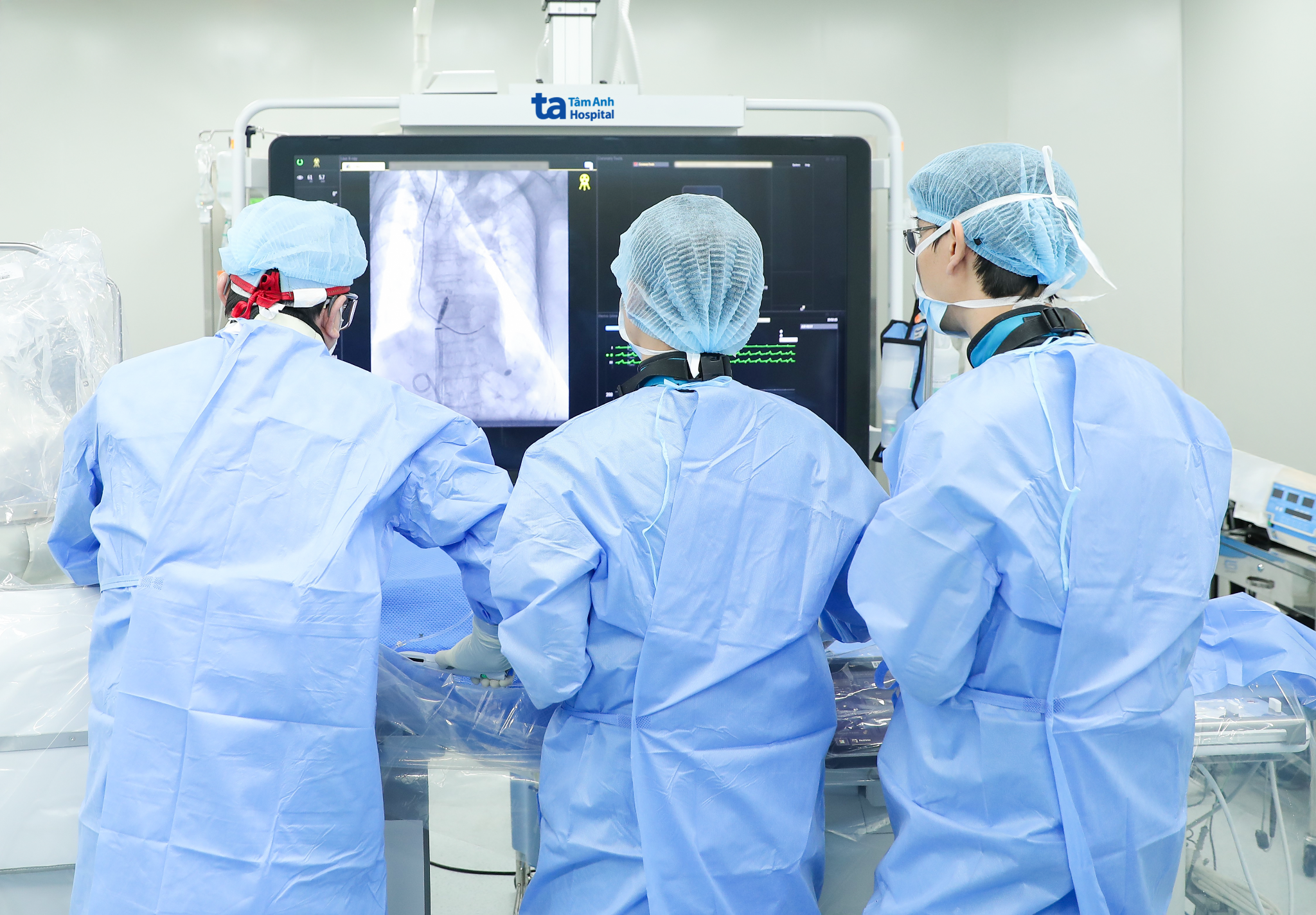 |
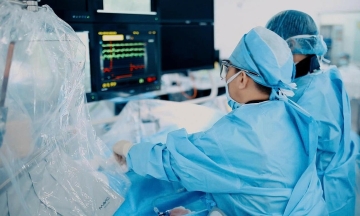
The medical team from the Interventional Cardiology Center implanted a leadless pacemaker for the patient. Photo: Tam Anh General Hospital |
Before removing the temporary pacemaker, the team threaded a catheter through the femoral vein to the right ventricle. The leadless pacemaker, as small as a capsule pill, was then guided into the correct position within the heart chamber. Post-procedure checks confirmed Ms. Hai’s heart rate stabilized at 60-70 beats/minute. She was discharged two days later, with only a 1 cm incision in her thigh, causing no pain and posing no risk of infection.
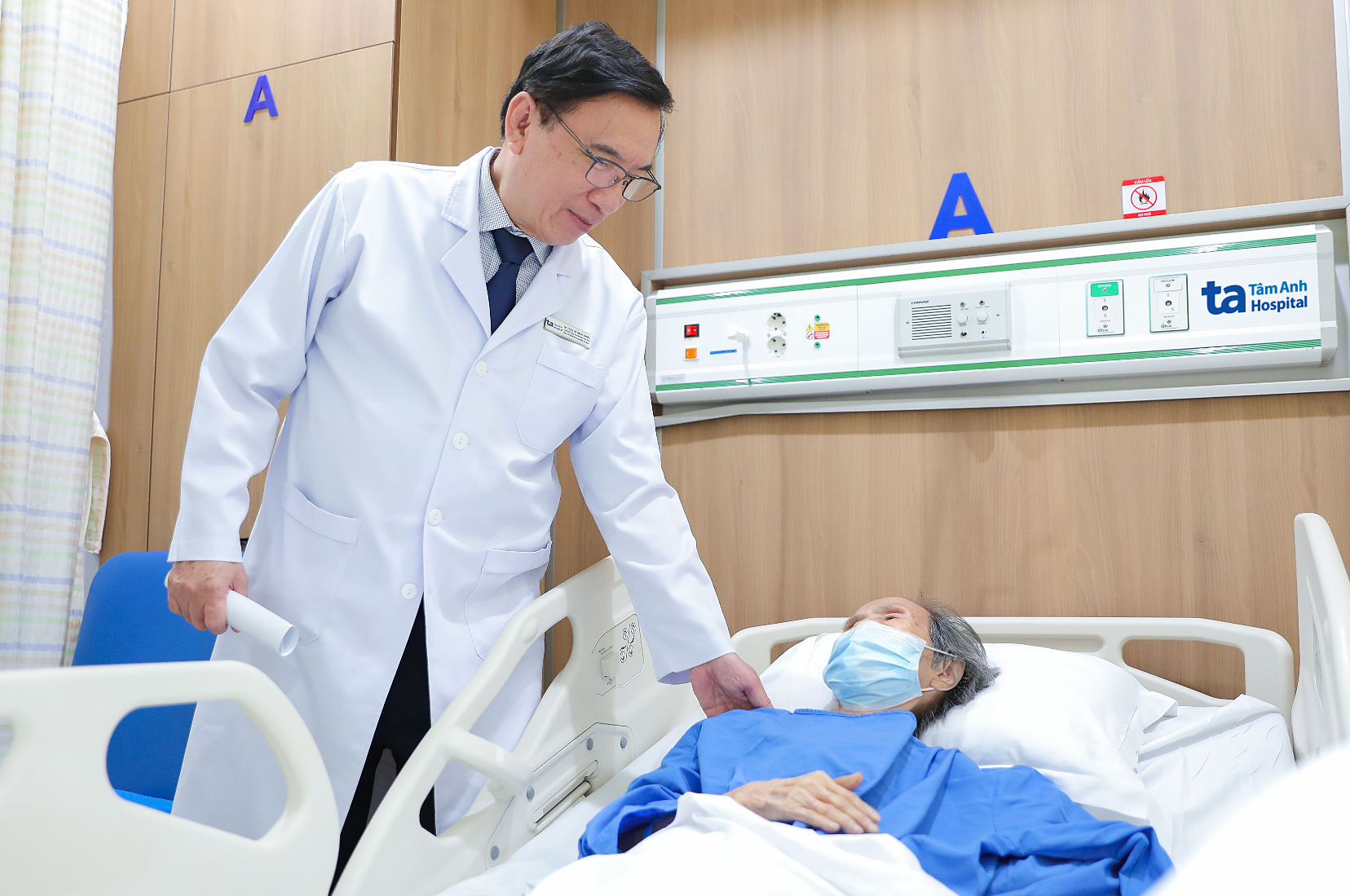 |
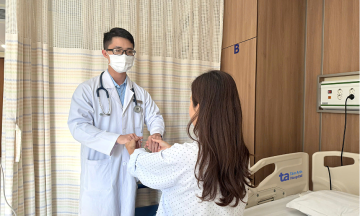
Professor Nhan inquired about the patient's health after the intervention. Photo: Tam Anh General Hospital |
Sick sinus syndrome is common in older adults, particularly those over 60. It can cause a slow heart rate, irregular heartbeat, or brief cardiac arrest. Symptoms such as dizziness, fatigue, and shortness of breath occur because the heart fails to pump enough blood to the body's organs. These symptoms are often mistaken for age-related health decline, leading to delayed diagnosis and treatment.
If detected early, the condition can be managed with medical treatment. In severe cases, a permanent pacemaker implantation is necessary. Currently, two types are available: traditional wired pacemakers and leadless pacemakers. The new generation of leadless pacemakers is smaller, has a battery life of up to 16 years, and is implanted directly into the heart chamber via a catheter, eliminating the need for a chest incision to create a device pocket.
In Vietnam, cardiovascular disease is estimated to be the leading cause of death, affecting over 200,000 people annually. Among these, cardiac arrhythmias like sick sinus syndrome, atrial fibrillation, and premature ventricular contractions are common but often overlooked due to their atypical symptoms.
Professor Nhan advises people aged 50 and above to undergo regular cardiovascular health check-ups every 3-6 months for early detection of abnormalities. If symptoms such as palpitations, dizziness, unexplained fatigue, shortness of breath, or fainting occur, it is crucial to seek early medical attention and treatment to prevent dangerous complications.
Thu Ha
*Patient's name has been changed
| Readers can submit questions about cardiology here for doctors to answer. |