She visited Benh vien Da Lieu TP HCM (Ho Chi Minh City Hospital of Dermatology) with right facial pain rated 8/10, impacting her eating and daily activities. Although the blisters had disappeared over half a year prior, the pain persisted, causing her many sleepless nights. Pain medication, however, induced severe dizziness, leaving her in a dilemma: she was in pain but could not increase the dosage.
She had previously used nerve pain medication combined with regular painkillers, but her symptoms remained uncontrolled. Doctors shifted her treatment, incorporating 10 sessions of He-Ne laser therapy on the painful area. Following this treatment, her pain level decreased to 4/10, her sleep improved, and her nerve pain medication dosage was reduced to one pill daily.
Sharing this case at the Southern Dermatology Scientific Conference 2026 on 27/9, Dr.CK2 Doan Van Loi Em, Head of the Outpatient Department at Benh vien Da Lieu TP HCM, explained that this condition is postherpetic neuralgia, which occurs when pain lasts for over three months after the onset of blisters. Patients can experience pain for many months, or even years, despite the skin lesions having disappeared.
According to the doctor, shingles does not only cause skin lesions. The varicella-zoster virus, which causes chickenpox, can remain in nerve ganglia for many years, reactivating when immunity declines. The virus travels along the nerves to the skin, causing clusters of blisters and simultaneously damaging the nerves.
Consequently, the pain can continue even after the blisters dry and the skin heals. Patients may experience a burning sensation, sharp electric shock-like pain, a dull ache, or intermittent throbbing. Some cases involve numbness, tingling, itching, or pain when clothes, blankets, or even a gentle breeze touch the skin.
"Patients often dismiss it, thinking it is not pain, but this can be a manifestation of postherpetic neuralgia", the doctor stated.
The risk of prolonged pain increases with age, especially in older adults. Individuals who experience severe pain from the outset, have widespread or severe skin lesions, develop shingles in the eye area, or have a compromised immune system also face a higher risk.
Approximately 10-18% of people with shingles may develop postherpetic neuralgia, with the rate increasing with age. One study noted that 24% of patients still experienced pain after 90 days. This condition can lead to insomnia, fatigue, poor appetite, and restricted daily activities. In elderly patients with multiple underlying health conditions, chronic pain further complicates the management of other diseases.
Over 4,400 visits for post-shingles pain
The number of people visiting Benh vien Da Lieu TP HCM for shingles and prolonged post-shingles pain has increased in recent years. In 2023, the hospital received over 3,800 new shingles cases and 3,104 visits for subacute pain and postherpetic pain. In 2025, these figures were 5,657 and 4,483 visits respectively.
According to Doctor Loi Em, treating postherpetic neuralgia is not always easy because most patients are elderly, have multiple underlying conditions, and use various medications. Some nerve pain medications can cause dizziness, drowsiness, and edema, requiring dose adjustments based on kidney function.
A 72-year-old male patient previously suffered from shingles on his left back and chest, experiencing pain for about three months at an 8/10 intensity, leading to insomnia. Each time his pain escalated, his blood pressure rose to 150-160 mmHg. After using two types of painkillers without sufficient symptom control, doctors opted for 15 sessions of He-Ne laser therapy instead of increasing medication. His pain level decreased to 3/10, sleep improved, and blood pressure stabilized.
The doctor noted that He-Ne laser has been implemented at the hospital since 2025 as a non-invasive supportive pain relief method, not a replacement for medication or other treatments. The choice of method should be based on pain intensity, underlying conditions, current medications, and individual patient response.
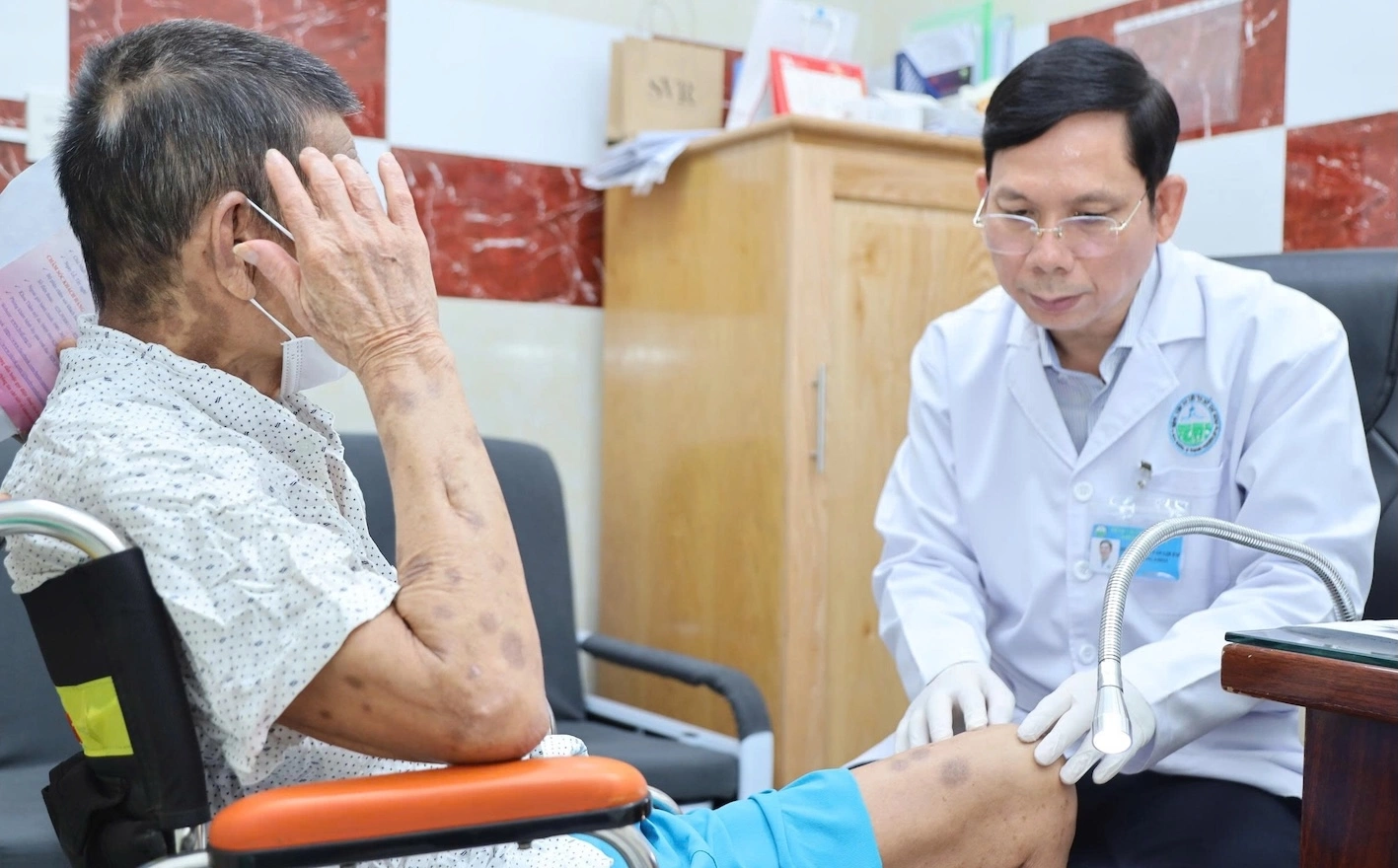 |
Doctor Loi Em examining a patient with prolonged post-shingles pain at Benh vien Da Lieu TP HCM. Photo: Hospital provided |
Do not wait for skin to heal to address pain
Individuals with shingles should seek medical attention as early as possible, ideally within 72 hours of blister appearance, for assessment and treatment. Early consultation is especially crucial if lesions are on the face, eyes, or ears, are widespread, or if the patient is immunocompromised.
Early treatment helps skin lesions heal faster, limits the appearance of new blisters, and reduces acute pain. However, antiviral medication alone has not been definitively proven to reduce the incidence of postherpetic neuralgia. Early examination also allows doctors to assess risk, manage pain, and detect complications.
If the skin is nearly healed but pain persists, patients should return for a follow-up, particularly if the pain causes insomnia or if burning, numbness, tingling, or pain upon light touch occurs.
Patients should not self-medicate with painkillers for prolonged periods. Nerve pain medications typically require a low starting dose, gradually increasing and adjusting based on response, age, kidney function, and underlying conditions. Arbitrarily increasing, decreasing, or stopping medication can make pain management more challenging. Patients should also avoid self-administering corticosteroids or antibiotics, applying herbal remedies, or breaking blisters.
Prevent shingles to avoid prolonged pain
According to Doctor Loi Em, shingles prevention is a proactive way to reduce the risk of postherpetic neuralgia. Recombinant shingles vaccines in large clinical trials have shown to reduce the risk of postherpetic neuralgia by approximately 90% in individuals aged 50 and older. Vaccination is recommended for people aged 50 and above, and for individuals aged 18 and older who are at high risk due to immunocompromise, including those who have previously had shingles. People should consult a doctor before vaccination.
"Healed skin only means the skin lesions have resolved; it does not mean the nerves have fully recovered", the doctor emphasized.
Le Phuong