North Korea is experiencing a significant demographic shift, as recent data from the United Nations and South Korea indicates that North Korean women currently have an average of 1,6 to 1,8 children. This figure is significantly below the replacement birth rate of 2,1, which is essential for maintaining a stable population. Data from the National Statistical Portal further estimates North Korea's birth rate in 2025 to be 1,59 children per woman. While this is higher than South Korea's 0,65, it still falls short of the 2,1 needed to sustain the population. The country currently has a population of about 26,5 million. This reality places North Korea among East Asian societies with record-low birth rates, creating a "demographic paradox" where a nation ages before it can prosper economically.
According to The Korea Times, North Korea is joining the ranks of societies with low birth rates but lacks the developed economic foundation that typically accompanies such a demographic transition. Experts warn that the combination of poverty and shrinking family sizes will lead Pyongyang to face a severe demographic crisis within one generation. This situation is unusual for countries at North Korea's economic level.
Typically, large families, with birth rates above 3, are common in nations with income levels comparable to North Korea. However, the country's demographic indicators resemble those of developed economies, where women tend to marry later to pursue careers and higher education.
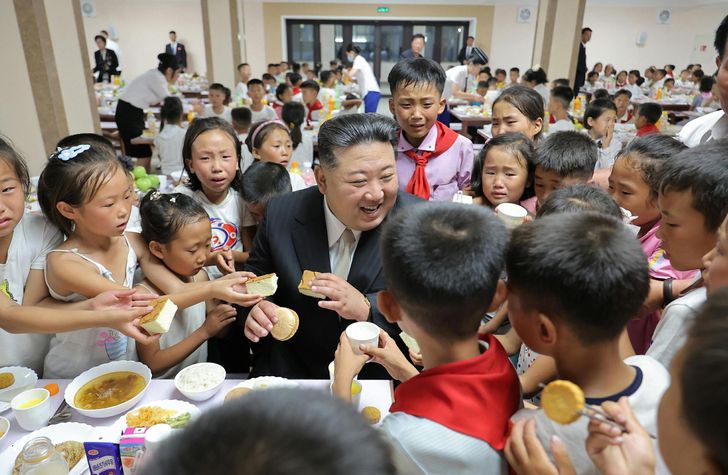 |
North Korean leader Kim Jong-un surrounded by children during a visit to a temporary shelter for flood victims in Pyongyang on 15/8. *Rodong Sinmun*
Chairman Kim Jong-un's administration is attempting to reverse this trend through various strict measures. Last month, during Mother's Day, Pyongyang heavily promoted the message that childbirth is a "heavenly duty and obligation." Simultaneously, authorities are tightening discipline, increasing penalties for doctors performing abortions, and cracking down on birth control smuggling rings. These measures have been intensified since the early 2010s.
"North Korea is changing similarly to South Korea", remarked Choi Jung-hoon, a former North Korean doctor now living in Seoul. He noted that traditional family structures are eroding due to trends of later marriages and flexible lifestyles among young people.
According to Choi, cohabitation and unmarried living are becoming more common among young people who value freedom and wish to avoid government interference in their private lives. The traditional notion of "wise men marry, grown women wed" no longer holds absolute sway, reflecting a shift in societal values.
The former doctor also revealed that abortions occur frequently despite being illegal, even becoming a primary source of income for many medical personnel. Thanks to the legacy of its socialist healthcare system, North Korea possesses a much denser network of hospitals and doctors compared to countries at similar economic levels. This, combined with high demand for birth control, explains the sharp decline in birth rates despite low economic conditions.
Currently, intrauterine devices (IUDs) are the most common birth control method in North Korea. Additionally, condoms and birth control pills from China have entered the country in large quantities in recent years, further contributing to birth rate control.
Professor Kang Chae-yeon from the Institute for Unification Education analyzes that, beyond goods, the influx of information from the outside world has profoundly impacted social perceptions. Access to new ideas helps North Korean women recognize their right to self-determination over their lives, rather than accepting the role of childbirth as a mandatory duty.
Observers suggest that the North Korean government has identified the declining birth rate as a national crisis. However, the ability to reverse this trend remains a significant question. One analyst commented: "History has shown that once a society falls below a low birth threshold, it becomes very difficult to turn the situation around, despite policy intervention efforts."
Binh Minh (According to The Korea Times)