Professor Doctor Nguyen Hoang Dinh, Deputy Director of University Medical Center Ho Chi Minh City and head of the heart transplant team, announced on 31/12 that this was the most challenging transplant case doctors had ever encountered.
The young patient suffered from end-stage heart failure; his heart was barely able to contract despite treatment with high-dose vasopressor medications. This prolonged heart failure caused liver and kidney failure, along with severe systemic disorders.
After interdisciplinary consultation, doctors concluded that a heart transplant was the patient's only chance for survival. This procedure, however, presented numerous risks, such as severe pulmonary hypertension, infection, multi-organ failure, and other surgical complications. Yet, without the transplant, the patient had no hope of survival.
Despite the slim chance of success, the medical team decided to give the patient this final opportunity for life.
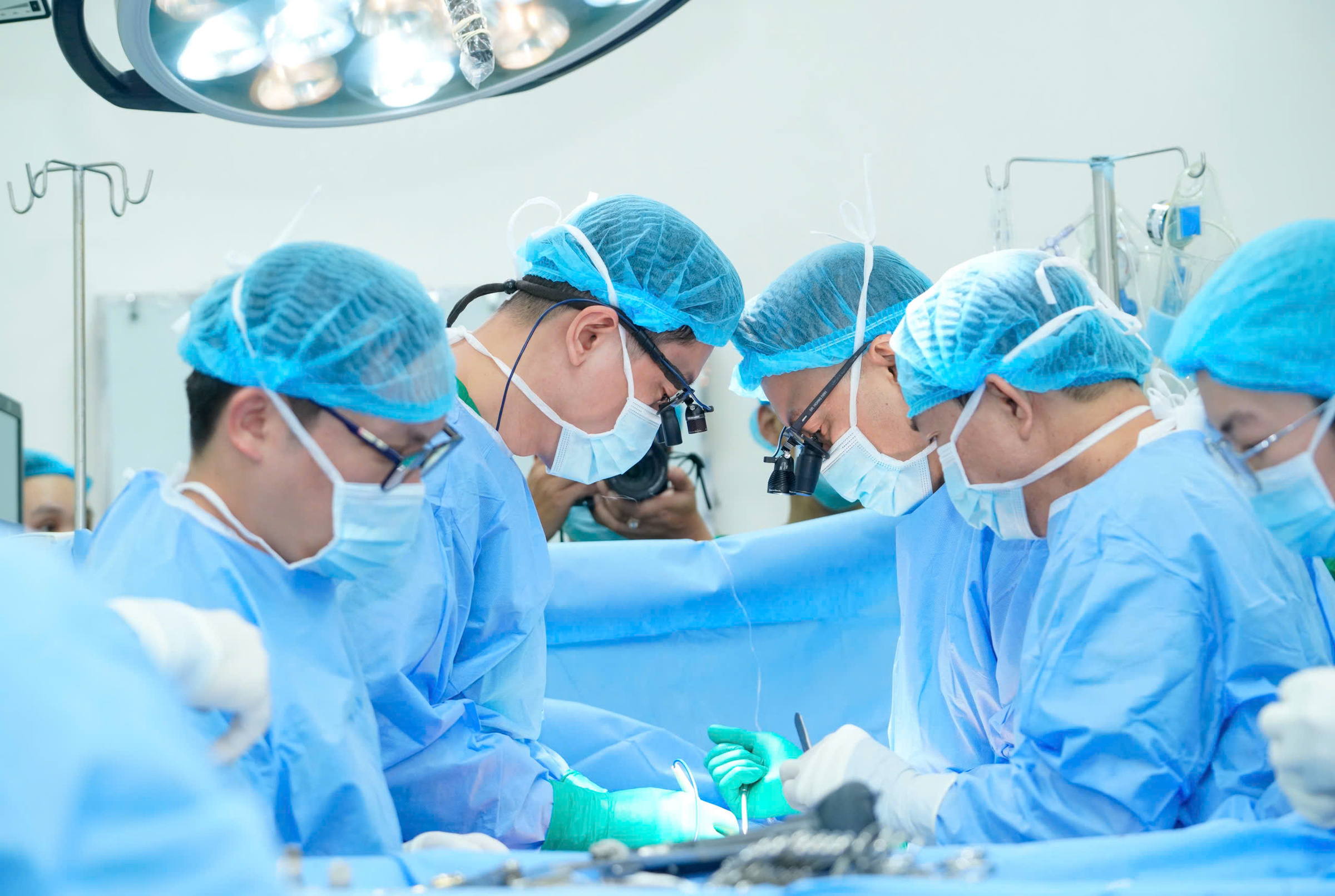 |
The team performing the heart transplant for the young patient. *Photo: Hospital provided*. |
The donor heart, from a brain-dead individual at Nhan Dan 115 Hospital, was transported approximately 3 km to University Medical Center Ho Chi Minh City between the night of 30/12 and the early morning of 31/12. The boy was prepped for immediate transplant upon the heart's arrival. However, the most critical moment arose just before the transplant: the patient's heart suddenly stopped on the operating table.
Faced with this dire situation, the surgical team immediately performed cardiopulmonary resuscitation and initiated extracorporeal circulation to temporarily sustain the patient's life. This allowed them to await the donor heart's timely arrival for immediate transplant.
The boy's heart restarted, and the donor heart arrived at the hospital just in time. The transplant proceeded smoothly, lasting throughout the night as planned. By 7:30 AM on 31/12, the first beats of the new heart in the patient's chest brought profound relief to the team, marking a critical milestone in the boy's recovery.
The boy is currently under close postoperative observation, with careful monitoring of the new heart's function.
End-stage heart failure represents the final outcome of various cardiovascular diseases. 50% of patients die within 5 years, making heart transplantation the optimal treatment. While awaiting a heart transplant, patients with end-stage heart failure often receive left ventricular assist devices, a routinely used method globally. However, both internationally and in Vietnam, heart transplants remain difficult due to the severe scarcity of heart donors.
Heart transplantation is also a complex surgical procedure. In medicine, particularly in organ transplant surgery, medical techniques must adhere to stringent safety protocols and receive Ministry of Health approval before practical implementation.
Over the past 33 years, Vietnam has achieved over 9,500 successful organ transplants. Of these, more than 100 were heart transplants, with kidney, liver, and lung transplants comprising the majority.
My Y