At a recent national scientific conference organized by the Vietnam Urology and Nephrology Association (VUNA) in collaboration with GSK Vietnam, Associate Professor, Doctor Nguyen Khoa Dieu Van, Vice President of the Vietnam Association of Endocrinology and Diabetes, highlighted that diabetes and chronic kidney disease directly affect immune function, impairing the body's ability to fight pathogens. Older adults, especially those with multiple underlying conditions, should be particularly aware of this risk.
The Ministry of Health reports that approximately 10 million Vietnamese people are living with chronic kidney disease. Chronic kidney disease is also the 8th leading cause of death among the top 10 causes. Meanwhile, diabetes, one of the world's most common chronic diseases, is rapidly increasing, becoming an urgent health issue with about 7 million people affected in Vietnam, over 55% of whom experience complications.
Studies indicate that people with diabetes frequently experience respiratory infections and pneumonia. The risk of shingles in this group is about 38% higher. Diabetes is also a factor linked to the risk of severe rsv in older adults.
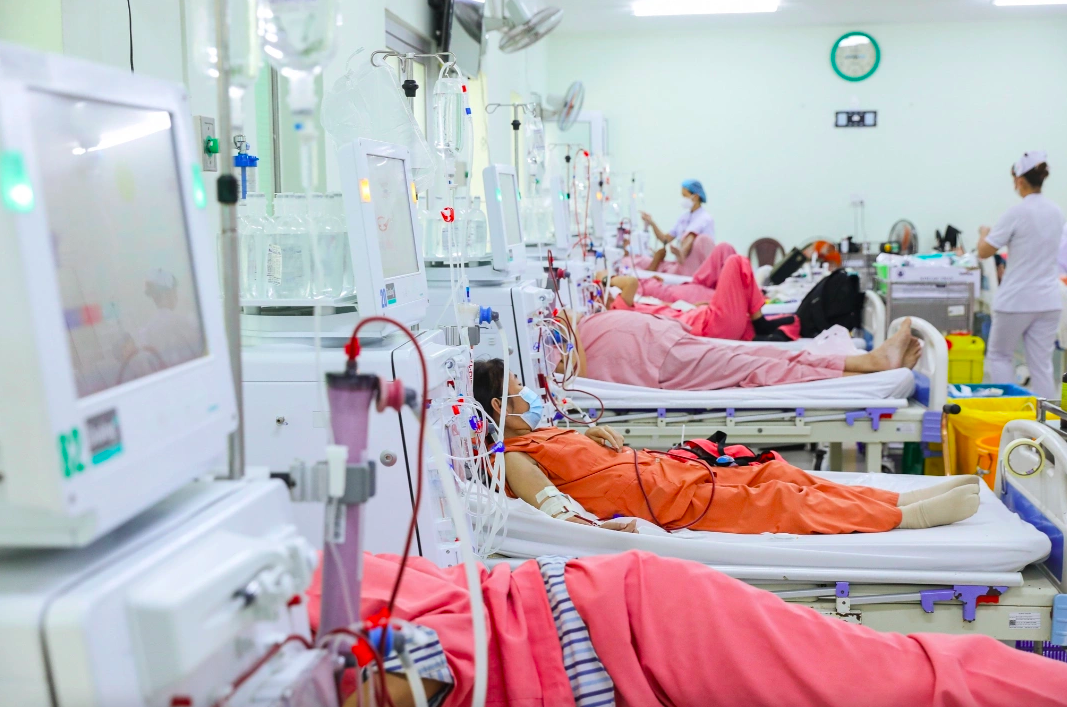 |
Hemodialysis patients at Cho Ray Hospital, Ho Chi Minh City. *Phung Tien*
For patients with chronic kidney disease, the risk of herpes zoster (shingles) increases by about 29%. This group of patients is also more susceptible to infections such as rsv and faces a higher risk of severe disease progression.
Doctor Van explained, "As age advances alongside chronic diseases, immune response capability declines. An infection that might be mild in a healthy person can cause more complications in someone with underlying conditions." She recommended that diabetic patients view preventive vaccination, creating an 'immune shield', as important as controlling blood sugar, blood pressure, and blood lipids.
The American Diabetes Association (ADA) recommends vaccination as a crucial component of care for individuals with diabetes. The KDIGO 2024 guidelines on chronic kidney disease also refer to vaccination programs as a proactive intervention for patients.
Associate Professor, Doctor Vo Tam, Vice President of the Vietnam Urology and Nephrology Association, believes that risk assessment and prevention counseling should be integrated into long-term monitoring, not just when an infection has already appeared. Doctors should review vaccination history, assess health status, and advise on appropriate preventive measures for each individual.
The Ministry of Health also directs the control of risk factors, individuals with risk factors, and those with non-communicable diseases in the community through vaccination. Vaccine-preventable diseases include hepatitis B, hpv, rsv, flu, pneumococcal disease, and shingles. Vaccination must comply with Ministry of Health guidelines and be appropriate for each target group.
Experts at the conference noted that managing chronic diseases, especially diabetes in older adults, requires a comprehensive approach where treatment and prevention go hand in hand. Alongside controlling blood sugar, blood pressure, and risk factors, doctors need to proactively assess patients' infection risk and vaccination status during regular check-ups.
Le Nga