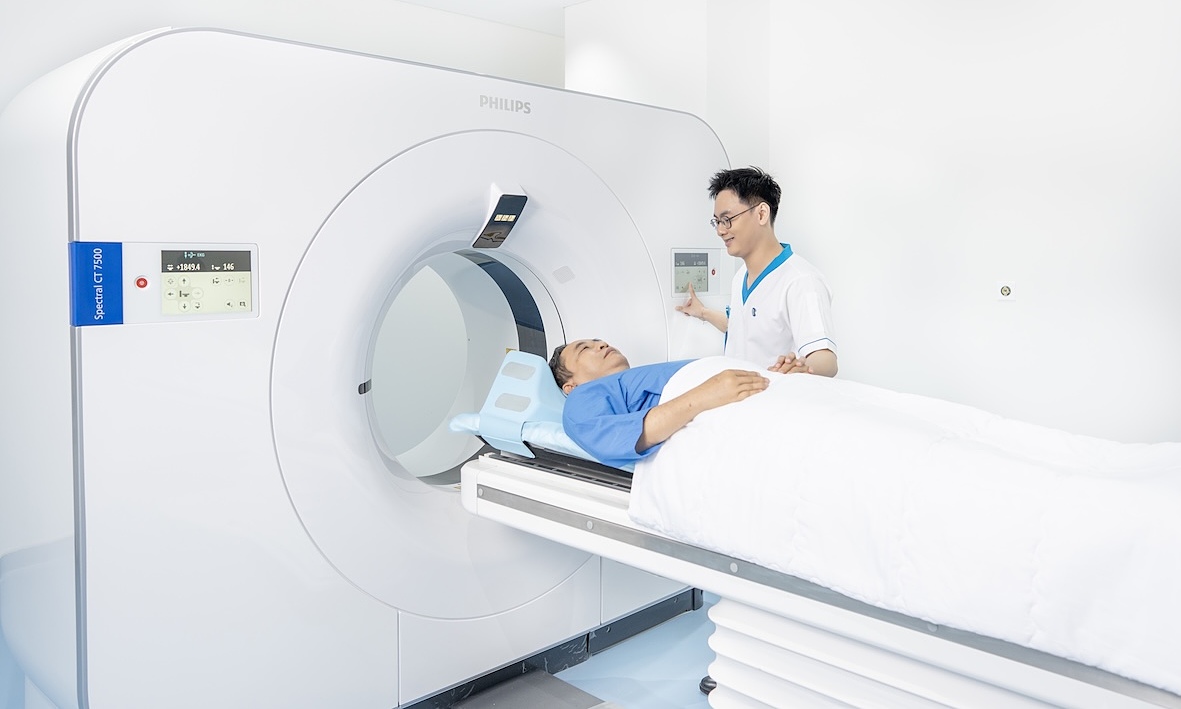
Dong was diagnosed with inflammation of his right testicle, epididymis, and spermatic cord, with scattered cysts. He received medical treatment at a local hospital. Late September, his condition worsened, and he sought care at Tam Anh General Hospital Ho Chi Minh City. An ultrasound revealed a mass in his right testicle measuring approximately 93.7 ml, which had doubled in size from one month prior. (Normal adult male testicle volume ranges from 12-30 ml.) Elevated tumor-related hormones were also noted, leading to an MRI. The MRI revealed an inhomogeneous internal structure, suggestive of a malignant tumor.
Dr. Doan Ngoc Thien, from the Urology Department at the Center for Urology, Nephrology, and Andrology, performed surgical removal of the patient's right testicle to remove the lesion, followed by the implantation of a silicone prosthesis to restore the natural appearance of the scrotum. Dong recovered well, being discharged after three days.
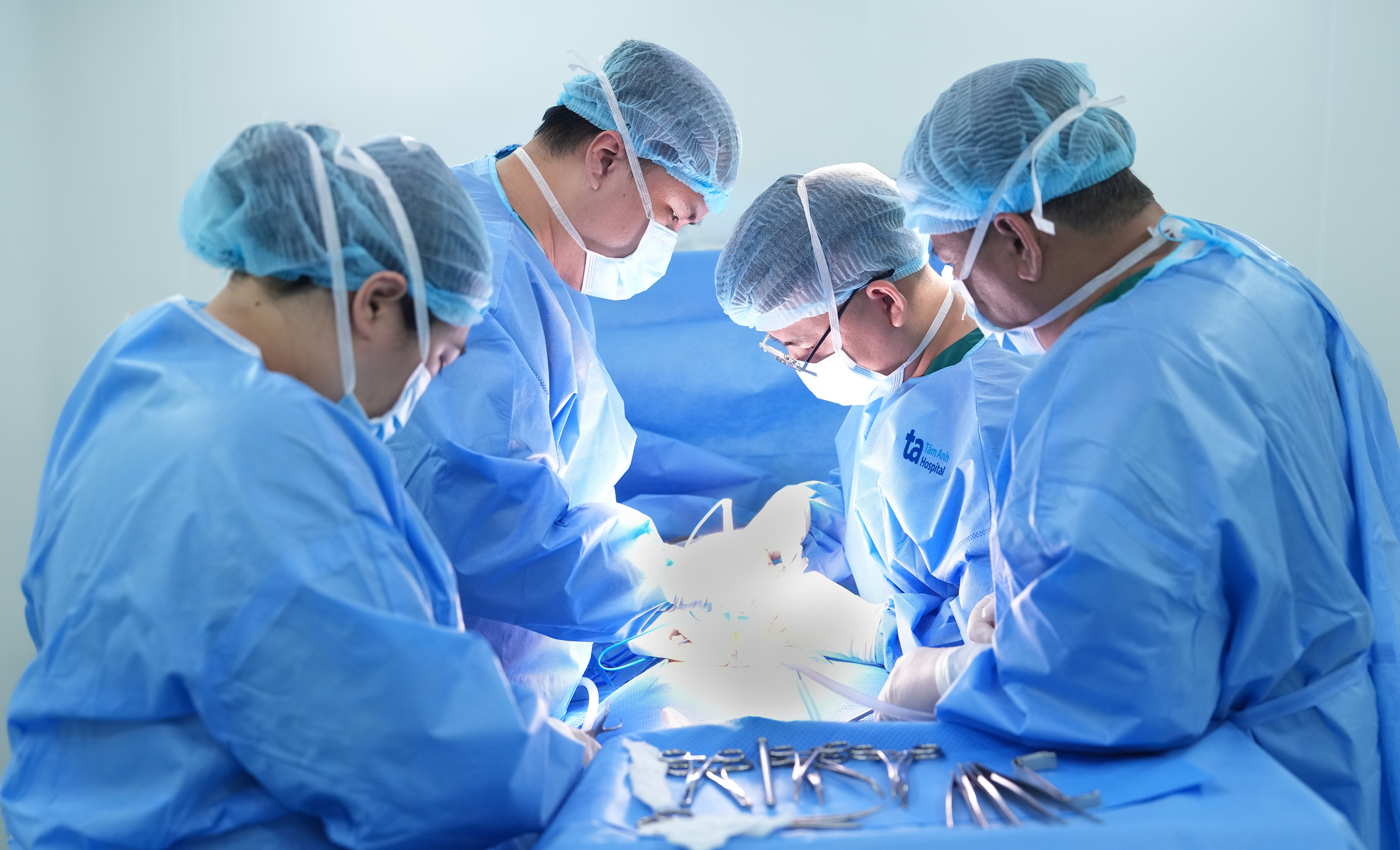 |
Dr. Thien (second from left) and his surgical team operate on Dong. Photo: Tam Anh General Hospital |
Dr. Thien (second from left) and his surgical team operate on Dong. Photo: Tam Anh General Hospital
One week later, pathology results confirmed the lesion was early-stage testicular cancer, and the surgery was curative. The patient requires regular follow-up to mitigate the risk of recurrence.
According to Dr. Thien, if the remaining testicle is healthy after treatment, men can still produce testosterone and sperm. However, fertility depends on the function of the remaining testicle and any subsequent treatments. Dong is married with two children and expressed a desire for more children in the future. He needs regular checks of his sperm function or should consider early sperm cryopreservation to preserve his fertility.
Testicular cancer can cause unusual swelling, a heavy sensation, or discomfort in the scrotum. Some cases present without distinct pain. These symptoms are often mistaken for inflammation or other benign conditions, leading to delayed diagnosis and treatment.
Dr. Thien advises young men not to delay seeking medical attention due to embarrassment or concerns about their reproductive health. Early detection allows doctors to fully assess the condition, choose effective treatment methods, and preserve fertility while maintaining the patient's physiological function.
Ha Thanh
*The patient's name has been changed.
| Readers can submit questions about male reproductive health here for doctors to answer. |