Moderna and Merck announced initial results on 19/8 from a phase 3 trial involving over 1,100 high-risk melanoma patients who had undergone surgery. The study revealed that a personalized mRNA vaccine, Intismeran, combined with Keytruda, significantly extended recurrence-free survival and improved distant metastasis-free survival.
Participants in the trial were randomized in a 2:1 ratio. One group received Intismeran every three weeks (up to 9 doses) in combination with Keytruda every six weeks, while the other group received Keytruda alone. Treatment typically lasted about one year, or was stopped earlier if the disease recurred or severe side effects emerged.
Both companies reported that the observed improvements were statistically and clinically significant. While detailed phase 3 data are pending release, they will be presented at an international conference before submission to regulatory authorities.
The study is ongoing to further evaluate objectives such as overall survival, safety, tolerability, and quality of life. No new safety signals have been observed compared to previous trials, indicating a consistent safety profile.
Intismeran (formerly known as V940 or mRNA‑4157) is custom-designed for each patient. Researchers analyze tumor samples to identify specific mutations, then design mRNA to encode up to 34 neoantigens. After injection, the body produces these neoantigens and presents them to the immune system. This process helps T-cells learn to recognize and attack cancer cells carrying the corresponding mutations, which is the core mechanism of personalized cancer vaccines.
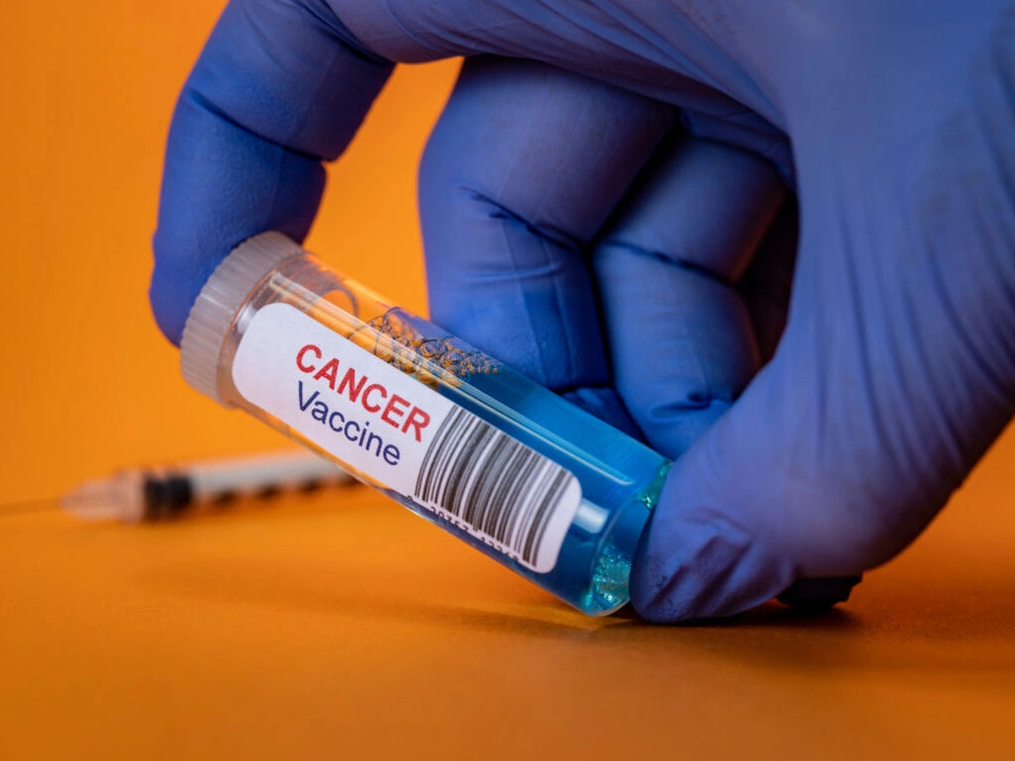 |
Illustration of a cancer treatment vaccine. *Photo: BJMO* |
Keytruda (pembrolizumab) is a PD‑1 inhibiting monoclonal antibody that helps the immune system recognize and attack cancer cells. When combined with the Intismeran vaccine, the two mechanisms are expected to generate a stronger and more precise treatment response, targeting cancer cells more effectively.
These new results align with phase 2b trial data published in June. After approximately 5 years of follow-up, the combination regimen reduced the risk of recurrence or death by 49% and the risk of distant metastasis or death by 59% compared to Keytruda monotherapy. However, it is important to note that these were phase 2b data; the phase 3 study has not yet provided full conclusions on overall survival.
Intismeran is a therapeutic vaccine, not a preventive one. Since the product is designed based on each patient's tumor analysis, its manufacturing process is more complex than that of conventional vaccines, requiring individualized production.
The therapy is currently still in the research phase. Merck and Moderna are collaborating with regulatory bodies to seek approval. Beyond melanoma, Intismeran is also being tested in non-small cell lung cancer, bladder cancer, kidney cancer, pancreatic cancer, and several other solid tumors, demonstrating its potential broad application.
Van Ha (According to Reuters)