On 20/8, Ha Noi Obstetrics and Gynecology Hospital announced that a premature baby, born with a critical prognosis, has been discharged after nearly three months of intensive treatment. The baby's health is now stable, weighing 4,8 kg, a significant increase from 2,4 kg at the time of initial discharge. Before this, the infant endured 65 continuous days on a ventilator due to underdeveloped lungs and faced multiple episodes of digestive disorders and poor absorption before being able to breathe independently.
The 29-year-old mother's pregnancy became complicated from week 18, when doctors discovered central placenta previa, a condition where the placenta covers the cervix, posing a high risk of massive hemorrhage.
At week 24, an ultrasound revealed a ventricular septal defect in the fetal heart. The family immediately transferred the pregnant woman to the Center for Prenatal and Neonatal Screening and Diagnosis at Ha Noi Obstetrics and Gynecology Hospital for specialized examination.
Examination results also noted suspected abnormal fluid accumulation in the neck region, identified as a lymphatic cyst, along with a limb deformity. Doctors advised amniocentesis to accurately assess for chromosomal abnormalities and urged the family to prepare for the worst-case scenario.
 |
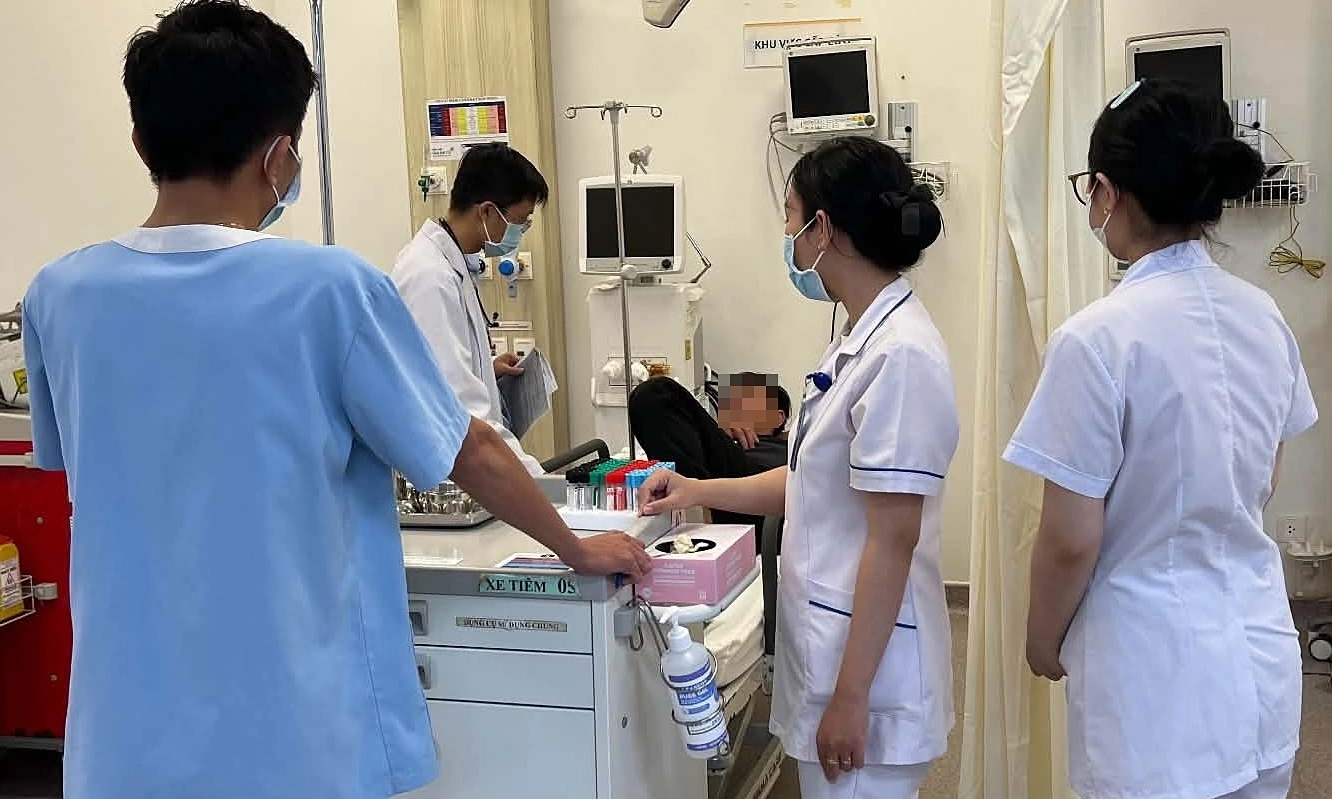
The premature baby "revived" despite a critical prognosis. *Photo: Hospital provided* |
Two weeks later, the mother experienced severe vaginal hemorrhage. By week 28, with the fetus showing no further growth and the lives of both mother and baby directly threatened, the medical team ordered an emergency C-section.
During the surgery, the mother lost nearly 2 liters of blood. Surgeons focused on controlling the bleeding and administered blood transfusions to stabilize the mother's condition, while also safely delivering the baby for immediate transfer to the Neonatal Department.
After delivery, the mother remained hospitalized for an additional 15 days due to an infected surgical incision, while the baby began a specialized treatment journey lasting nearly 90 days.
According to doctors, extremely premature infants born before 28 weeks of gestation face a very high risk of mortality because vital organs such as the brain, lungs, heart, and kidneys are not fully developed. This can easily lead to asphyxia, acute respiratory failure, internal hemorrhage, necrotizing enterocolitis, or severe infections.
Doctors recommend that pregnant women at risk of premature birth receive monitoring at leading specialized facilities to ensure timely and coordinated management between obstetrics and neonatal resuscitation from the moment of birth.
Thuy An