Answer:
When the knee's cruciate ligament is torn, patients are typically advised to wear a brace after reconstructive surgery. The brace helps control the range of motion and limits excessive rotational, flexion, and extension forces on the knee joint. This protection prevents the new graft from stretching or re-tearing before it has firmly healed into the bone. While protecting the joint, the brace still allows limited movement, which helps reduce pain, swelling, and inflammation, and minimizes the risk of joint stiffness or muscle atrophy caused by complete immobilization.
During the first two weeks post-surgery, patients usually wear the brace day and night, with the joint's range of motion almost completely locked. The brace should only be removed for showering or during physical therapy sessions, as directed by a doctor. As the healing process progresses, the doctor will gradually loosen the brace's locking angle, allowing for a greater range of flexion and extension. At this stage, continuous brace wear, including during sleep, is still necessary to prevent unconscious knee bending or leg movements.
The total duration for brace removal is generally around 4 to 8 weeks. However, this timeframe can vary significantly based on several factors: the type of ligament injured, the type of graft used (autologous patellar tendon, hamstring tendon, or allograft), the graft fixation technique, the presence of other accompanying injuries, the patient's adherence to rehabilitation exercises, and their individual healing response.
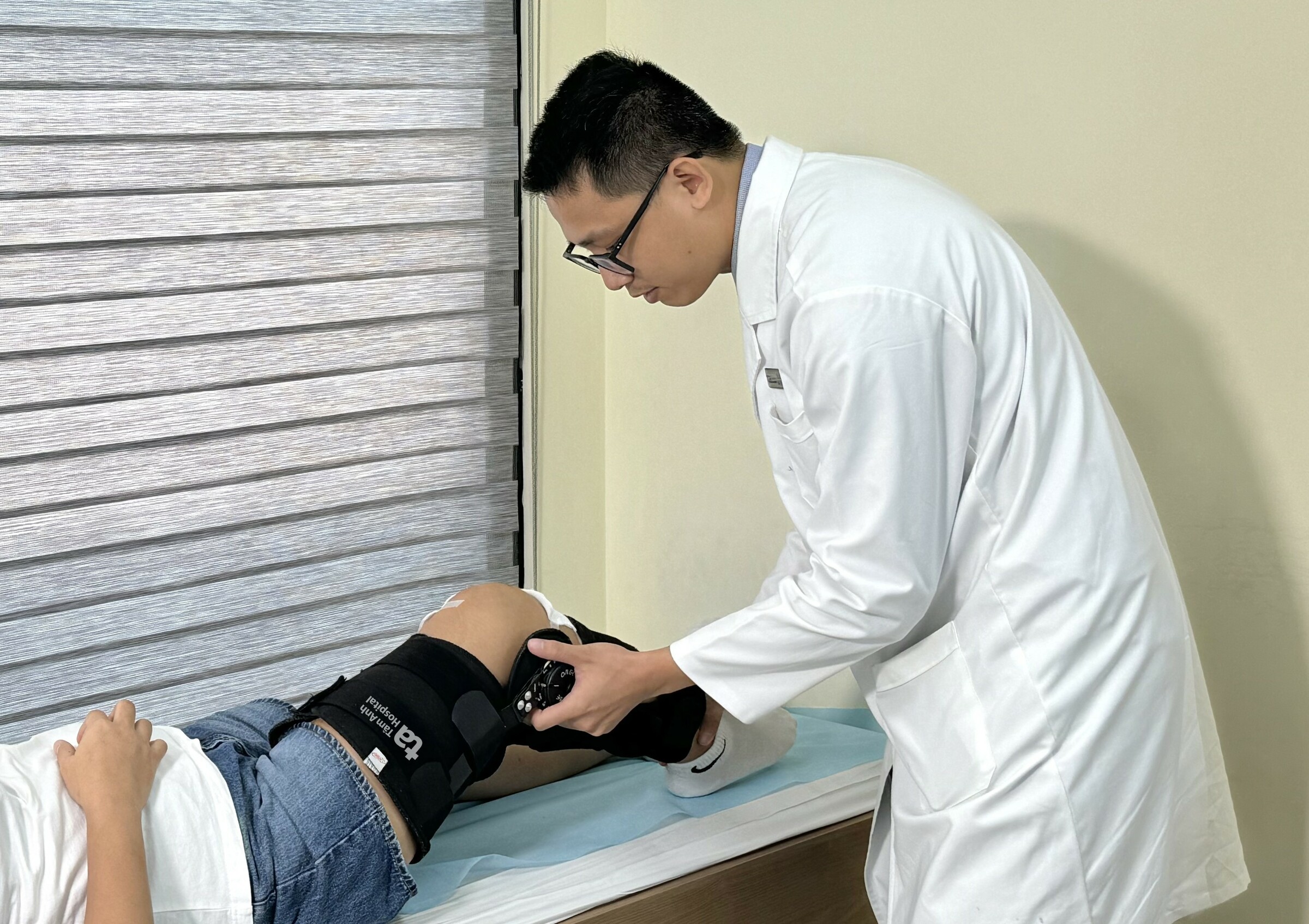 |
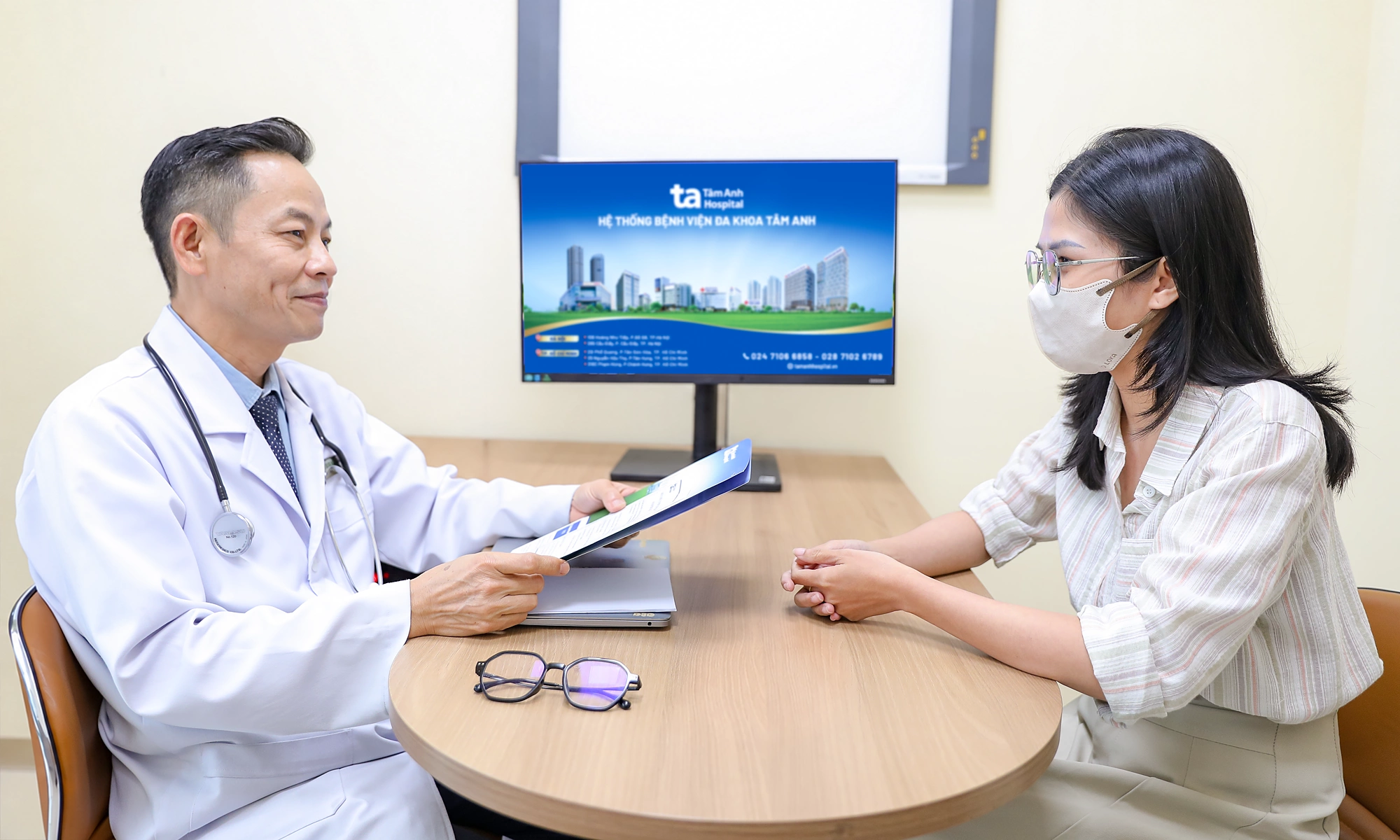
Doctor Tan assesses a patient's recovery while wearing a brace after ligament reconstruction surgery. Illustration: Tam Anh General Hospital |
Patients should not remove the brace prematurely, even if they no longer feel pain or can move comfortably. The graft may not yet be strong enough to withstand normal forces. Removing the brace too early, especially within the first 4 weeks, can lead to stretching, weakening, or re-tearing of the newly reconstructed ligament.
The treating doctor will determine the safe time for you to remove the brace. Even after brace removal, continued adherence to the prescribed rehabilitation protocol, regular follow-up appointments, and immediate notification to the doctor about any abnormal signs, such as increased swelling or pain, are crucial.
Master of Science, Doctor, First Degree Specialist Phan Thanh Tan
Center for Orthopedic Trauma
Tam Anh General Hospital, TP HCM
| Readers can submit questions about musculoskeletal diseases here for doctors to answer. |