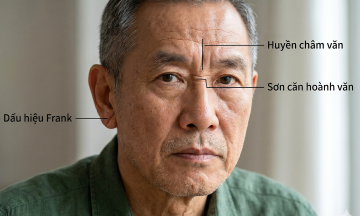
Plastic surgeons are increasingly concerned about the rise of the "AI face" trend, as a growing number of clients visit clinics with unrealistic expectations for their appearance, driven by AI-generated images, according to The Guardian.
Doctor Nora Nugent, a plastic surgery specialist in Tunbridge Wells, has directly witnessed this phenomenon. Many clients arrive at her clinic with personal photos edited by AI, mistakenly believing that plastic surgery can help them achieve that exact look. The president of the British association of aesthetic plastic surgeons (BAAPS) stated that her colleagues are also encountering similar situations. "I anticipate this trend will continue to grow, as AI penetrates deeper into every aspect of life", Nugent commented.
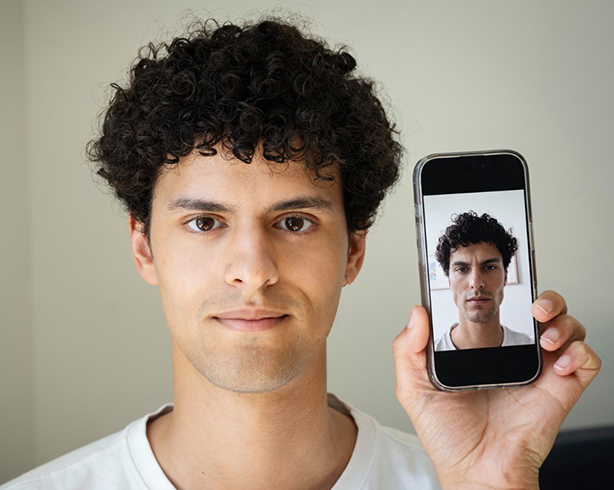 |
Isaaq Tomkins with AI chatbot suggestions for plastic surgery. Photo: Linda Nylind/The Guardian. |
An increasing number of individuals using AI chatbots to generate ideal faces are appearing at aesthetic clinics. They bring requests for flawless skin, sharp cheekbones, slender noses, and nearly perfect symmetry – standards that are time-consuming, expensive, and in many cases, physically impossible to achieve. According to Doctor Alex Karidis, a surgeon in west London, AI can control every pixel, while "surgery certainly cannot intervene at such a micro-level of detail".
For many, these expectations were formed long before they met a surgeon. Both Karidis and Nugent state that AI-generated images have a powerful psychological impact in shaping and reinforcing clients' ideal beauty standards. "Once you've seen that image, it becomes deeply ingrained in your mind", Nugent said. Karidis concurred, describing AI images as "etched" into patients' minds. He noted that many of his colleagues are currently overwhelmed by these types of requests. Experts emphasize that plastic surgery outcomes offer no absolute guarantee.
Nugent explained that patients need to understand that each body has a different healing and aging process. "I always tell patients upfront: My surgical capabilities are not limitless. None of us control everything", she shared. Karidis added that when clients research aesthetic procedures, they often fixate solely on images and overlook "all the surrounding warnings". "That's a common reality for everyone. The moment you show them something like that, everything is practically decided", he stated.
Experts have also observed commonalities in the aesthetics of the "AI face", particularly absolute symmetry. This is something AI can easily achieve but is often impossible in real life. According to Doctor Julian de Silva, a plastic surgeon on Harley Street, if one eye is a few millimeters higher than the other, AI can correct it in a few seconds. However, rearranging pixels is not the same as rearranging anatomical structures. "You cannot change the height of the eye because that part is essentially fixed to the bone, and your brain is right behind the eye socket. You cannot safely change the position of the eye socket", he explained.
Doctor De Silva added that when AI edits client photos, it often automatically applies common beauty standards: for women, a V-line chin, soft ogee curves in the cheekbones, and a heart-shaped face; for men, a broad jawline, low eyebrows, and fuller upper eyelids.
Additionally, Doctor De Silva is concerned about another alarming trend: clinicians sharing seemingly astonishing surgical results on social media, which he suspects might be AI-generated. "I remember watching one results video last week and replaying it repeatedly", he recounted of a video showing a patient appearing 30 years younger. "It wasn't until the third careful viewing that I noticed the person's hand had six fingers".
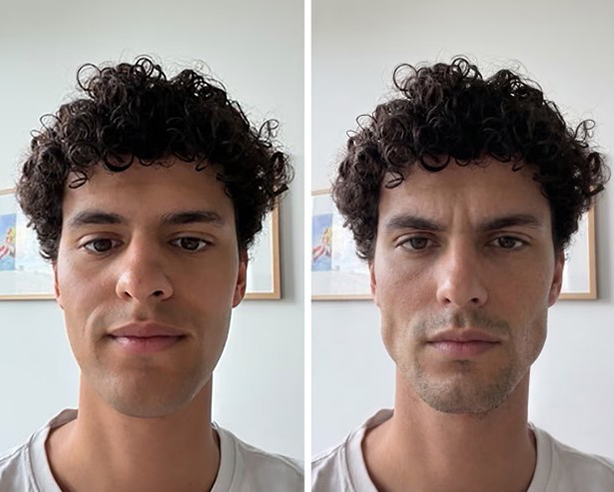 |
Appearance before (left) and after applying AI suggestions for a chin implant and other modifications to look more "masculine". Photo: Isaaq Tomkins/The Guardian. |
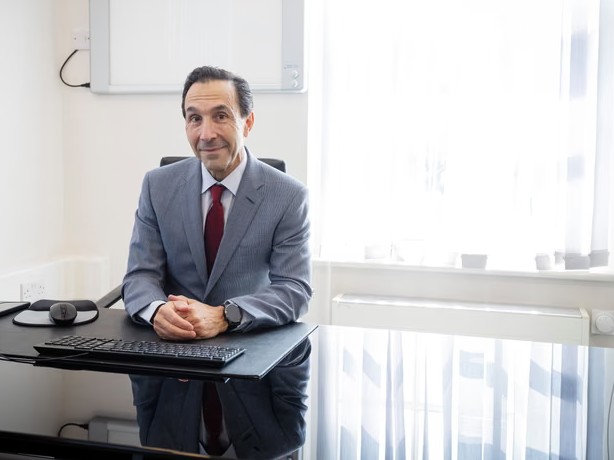 |
Surgeon Alex Karidis. Photo: Linda Nylind/The Guardian. |
Binh Minh (According to The Guardian)