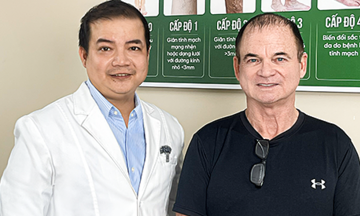
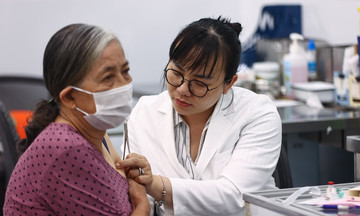
Mr. Thang, 65, had a coronary stent placed twelve years ago. For the past three months, he has experienced snoring, occasional choking during sleep, fatigue upon waking, and unexplained fainting spells. Despite normal cardiovascular check-up results, Doctor Dang Thi Mai Khue, Deputy Head of the General Internal Medicine Department at Tam Anh General Hospital, Ho Chi Minh City, ordered a sleep polysomnography. This test assesses respiratory issues such as breathing rate, nasal airflow, apnea-hypopnea events, snoring, heart rate, and blood oxygen levels.
The results showed Mr. Thang's apnea-hypopnea index (AHI) was 75 events per hour, significantly higher than the normal range of 0-5 events per hour. His lowest blood oxygen saturation dropped to 61%, with an average of 85%. An SpO2 level below 90% during sleep indicates respiratory failure. He also snored loudly, with a snoring frequency of 388 times per hour, compared to the normal 150 times per hour. Doctors diagnosed him with severe obstructive sleep apnea, characterized by over 30 events per hour.
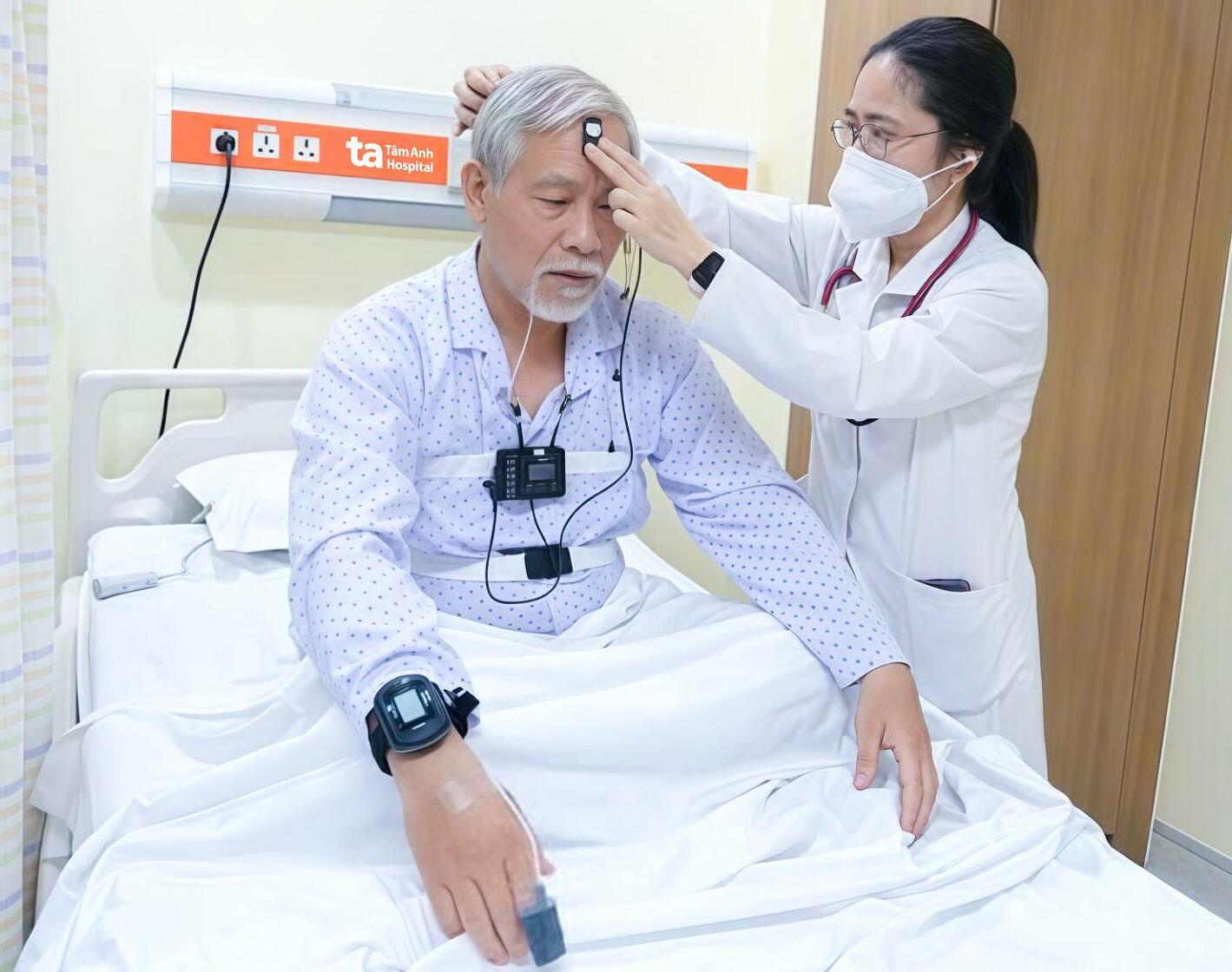 |
Doctor Khue (right) attaches polysomnography equipment to Mr. Thang. *Photo: Tam Anh General Hospital*. |
Sleep apnea is a temporary airway obstruction causing breathing pauses of ten seconds or longer, with a 30% reduction in airflow and at least a 4% drop in initial oxygen saturation. This syndrome leads to oxygen deprivation, increasing the risk of cardiovascular events such as hypertension, sudden death, stroke, and other heart issues. Given Mr. Thang's existing cardiovascular disease and nocturnal respiratory failure, his risk of myocardial infarction is two to three times higher than that of a normal person.
Mr. Thang began continuous positive airway pressure (CPAP) therapy, which delivers steady air pressure to keep his airway open and monitor his respiratory status during sleep. After one night, his apnea-hypopnea index significantly improved, dropping from 75 events per hour to 25 events per hour on the first night. In subsequent nights, the index returned to a normal level, below five events per hour. However, due to the severity of his sleep obstruction, Mr. Thang will require long-term CPAP therapy, alongside lifestyle and rest habit adjustments.
Individuals prone to sleep apnea include those with obesity or abnormal craniofacial structures, such as a small or recessed jaw that pushes the tongue towards the back of the throat, or a large tongue. Chronic nasal congestion caused by a deviated septum, sinusitis, or allergies also contributes. Mouth breathing due to nasal obstruction increases the risk of pharyngeal airway collapse. Additionally, frequent use of central nervous system depressants like alcohol, sleeping pills, or sedatives, which cause muscles to relax and reduce protective reflexes, increases the risk of airway obstruction.
Doctor Khue recommends that individuals experiencing symptoms such as snoring, difficulty breathing, or morning fatigue should seek medical evaluation at a hospital.
Quyen Phan
| Readers can submit questions about respiratory diseases here for doctors to answer. |