An MRI scan of Ms. Thuan's brain at Tam Anh General Hospital, TP HCM, revealed a right frontal lobe hemorrhagic contusion and subdural hematomas in both frontal and temporoparietal regions, posing a risk of fetal distress. Dr. Do Dinh Dat, from the Obstetrics and Gynecology Center, stated that the primary challenge was ensuring the mother's safety without harming the fetus. Doctors from both the Obstetrics and Gynecology Center and the Neuroscience Center collaborated, prescribing medication to reduce intracranial pressure and maintaining optimal blood pressure and blood oxygen levels for the pregnant woman. Simultaneously, continuous monitoring of fetal heart rate, amniotic fluid, and uterine contractions was performed.
Master, Dr. Chu Tan Si, Head of the Department of Neurosurgery - Spine, indicated that the medical team prioritized conservative treatment, minimizing surgical intervention. All of the mother's vital signs were closely monitored to ensure adequate cerebral perfusion and oxygen supply to the fetus. However, the mother developed limb weakness, necessitating continued hospitalization.
After two weeks of stable conservative treatment, Ms. Thuan was discharged and continued with weekly outpatient monitoring. At this time, she still experienced limb weakness and required a wheelchair. Approximately one month later, thanks to rehabilitation and active monitoring, the patient gradually regained mobility, but was diagnosed with gestational diabetes, which required treatment.
According to Dr. Dat, the mother's health complications led to delayed fetal growth. Doctors provided appropriate nutritional counseling, suitable energy supplementation, and strict pregnancy management to stabilize the pregnant woman's blood sugar, ensuring the health of both mother and baby.
At 39 weeks of pregnancy, due to a previous cesarean scar, limited pelvic capacity, and unfavorable conditions for vaginal delivery, the pregnant woman was scheduled for a cesarean section. A healthy baby boy was born, weighing 3,3 kg. The mother recovered well and stably, with no postpartum complications noted during her follow-up appointment on 18/12.
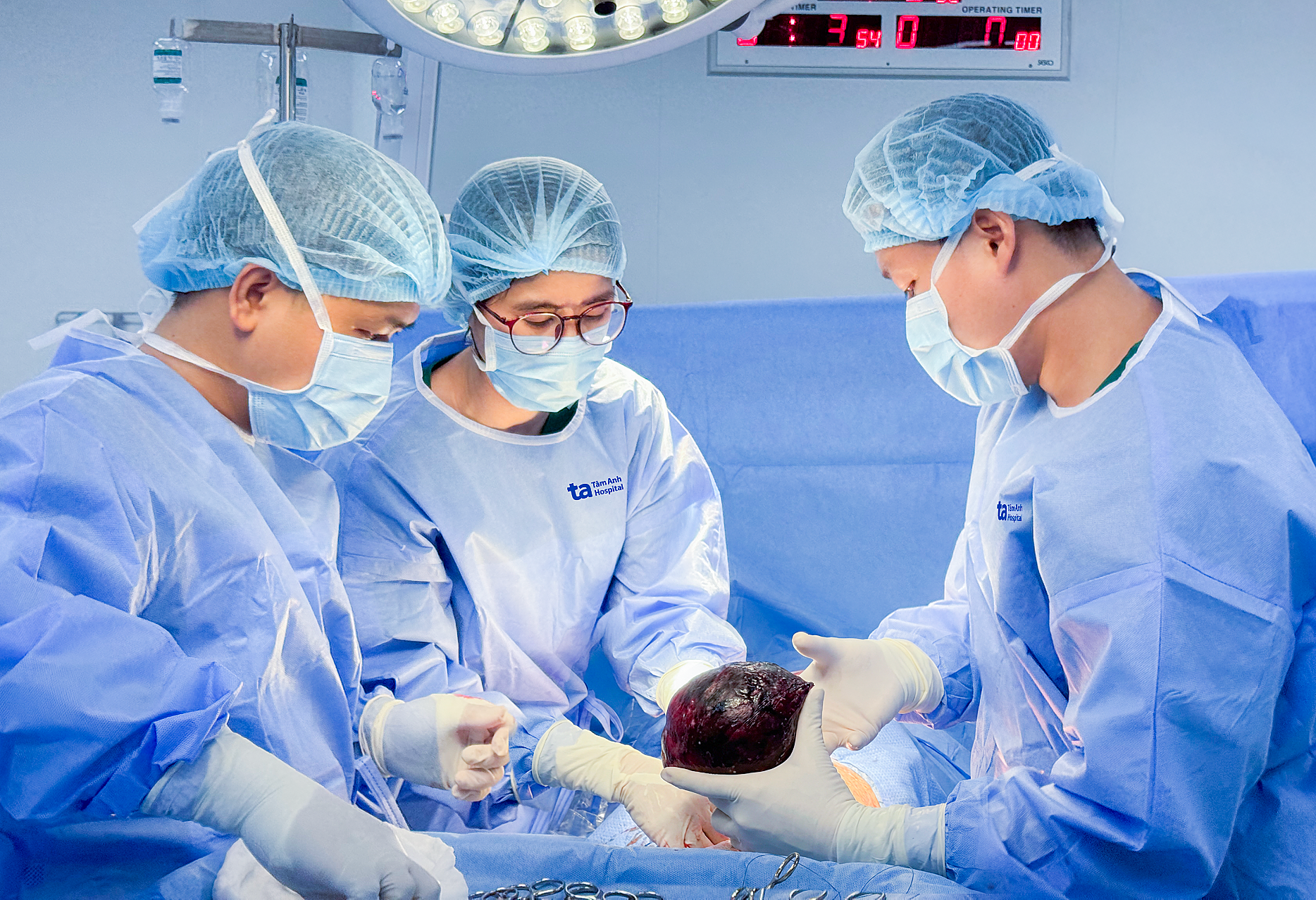 |
Dr. Dat (right) and the team performing a cesarean section for the patient. Photo: Phuong Trinh |
According to doctors, traumatic brain injury in pregnant women is rare but can lead to complex medical conditions. Pregnancy can alter hemodynamics, respiration, and coagulation mechanisms, increasing the risk of cerebral edema, fetal distress, premature birth, or stillbirth. Not all cases of cerebral hemorrhage require surgery. Conservative treatment is preferred when the hematoma is not large, the patient is conscious, responsive, and not experiencing severe headaches. Pregnant women who sustain an injury, especially to the head, even if minor, should seek medical attention at a facility with both neurological and obstetric specialists.
Tue Diem
*Character names have been changed
| Readers can submit questions about obstetrics and gynecology here for doctors to answer |