Cuong left Thai Nguyen for Taiwan to work as a factory employee at the age of 30. He promised his wife that in just a few years, he would have enough money to build a house and ensure their children received a proper education. However, the reality proved far more challenging than he anticipated. Each morning, Cuong wakes up at 5 am, commutes on a crowded worker bus, and returns late at night. While his salary is not low, rent, food, medical expenses, and various other costs in the city deplete his income. The remaining amount is sent home, and every month he meticulously calculates every single dong, fearing that a shortfall would leave his wife and children in distress.
Initially, he told himself to push a little harder. Gradually, calls from home began to revolve solely around money: repaying the cost of labor export, children's tuition fees, medication for his elderly mother, and house repairs after a flood. He dared not complain about being tired, much less admit he was exhausted.
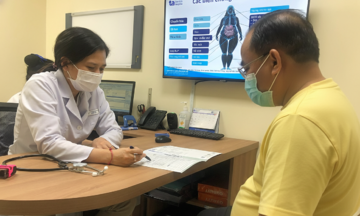
Financial pressure became a constant worry. Every night, he would wake up with his mind racing through numbers. Cuong grew irritable, avoided friends, and hesitated to call home. He ate sparingly, slept fitfully, lost weight, felt useless, and often had negative thoughts. After several conversations and online consultations, Cuong was diagnosed with anxiety disorder and depression by Doctor Hoang Quoc Lan, a clinical psychologist at Phuong Dong General Hospital. He began treatment with medication and psychological relaxation.
Doctor Lan also treated a 32-year-old man working as a nail technician in Germany who suffered from depression. The patient reported that his job provided a stable income compared to domestic standards, but he constantly felt physically and mentally exhausted, experienced prolonged insomnia, headaches, rapid heartbeat, irritability, and particularly felt tired whenever he thought about money.
"I never lack work, but I always live in a state where I'm not allowed to be weak. If I have a slow day or take a break due to back pain, I immediately worry, feel guilty, and blame myself," the patient told the doctor.
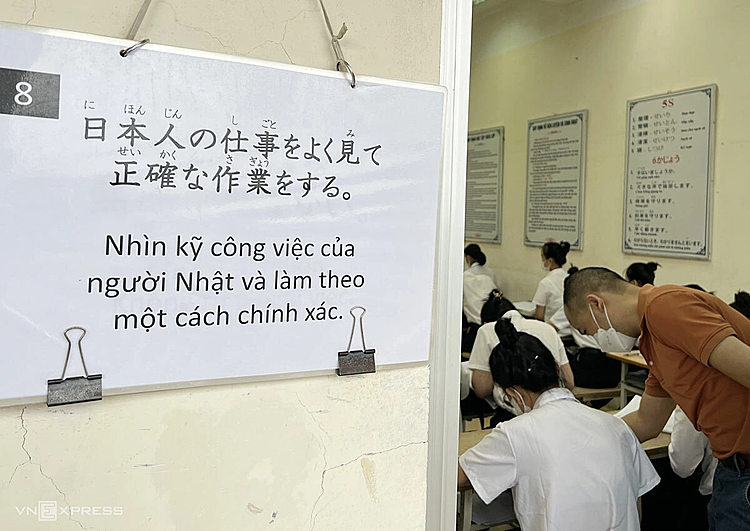 |
A notice board outside a training class for workers going to Japan in Hanoi, May 2023. *Photo: Hong Chieu* |
According to Doctor Lan, migrant workers are particularly susceptible to financial burnout syndrome, leading to prolonged stress and depression due to a complex interplay of psychological factors and living conditions. Statistics from the International Labour Organization (ILO) show that migrant workers face a significantly higher risk of anxiety and depression compared to local workers, especially when subjected to prolonged financial pressure and a lack of psychological support.
Data from 2024 indicates that Vietnam has over 158,000 workers employed abroad, with Japan being the largest market. Common salaries of approximately 180,000 yen, equivalent to 28-30 million VND per month, combined with remittances estimated at 3.5-4 billion USD, make this market an attractive opportunity for savings.
Behind these figures lie numerous obstacles. According to the ILO in 2023, the average cost for Vietnamese workers to go to Japan was around 192 million VND, among the highest in the region. A survey by Japan's immigration authorities revealed that over 50% of Vietnamese interns carry debt equivalent to more than two years of minimum wage. In mid-2025, the weakening yen further reduced the value of remittances by 10-20%, pressuring many workers to extend their stays beyond initial plans, even if their accumulated savings fall short of expectations.
Mental health research clearly demonstrates the link between debt and mental illness. A meta-analysis published in the journal Clinical Psychology Review indicates that individuals under debt pressure have a 3 times higher risk of depression and a significantly higher risk of suicide compared to the general population.
Doctor Lan attributes the underlying cause of depression in this group to the pressure of a dual role. Workers not only strive for their own livelihood but also bear the responsibility of "changing their entire family's destiny." Carrying the title of "Viet Kieu" (overseas Vietnamese) or "someone working abroad," they impose upon themselves the expectation to be successful and wealthy. This expectation creates an invisible barrier that prevents them from sharing their vulnerabilities. They choose silence, reporting good news instead of bad, suppressing negative emotions until their mental state collapses. Harsh working environments, cramped living spaces, and the feeling of being perceived as "cheap labor" further exacerbate emotional wounds, making them feel useless if they send less money home that month.
To break free from this cycle, psychological experts advise workers to reset their financial management mindset and expectations. Instead of setting huge debt repayment goals in a short period, they should break down debts into longer-term plans to alleviate mental pressure. Crucially, maintaining real-world connections is vital; find at least one friend, colleague, or community group to share difficulties with, rather than living a virtual life on social media, which often only showcases superficial successes.
Furthermore, maintaining a healthy lifestyle, getting sufficient sleep, and limiting stimulants are critical factors for preserving mental well-being. When signs of prolonged insomnia or loss of motivation appear, seeking professional support from online psychological counseling channels is a necessary step to prevent regrettable consequences.
Thuy Quynh