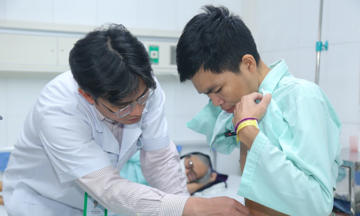
On 2/1, doctor Dao Nguyen Hung, vice head of the obstetrics and gynecology department at Military Hospital 103, announced the patient's positive recovery. Five days after emergency surgery, the woman is conscious, communicates well, and can sit up and eat light meals.
Earlier, the patient was admitted in critical condition, her life hanging by a thread. Examinations revealed a uterine rupture at 18 weeks of pregnancy. The cause was a low-lying gestational sac that had invaded the scar from her two previous c-sections. This complication resulted in massive internal bleeding, causing severe hemorrhagic shock and a coma.
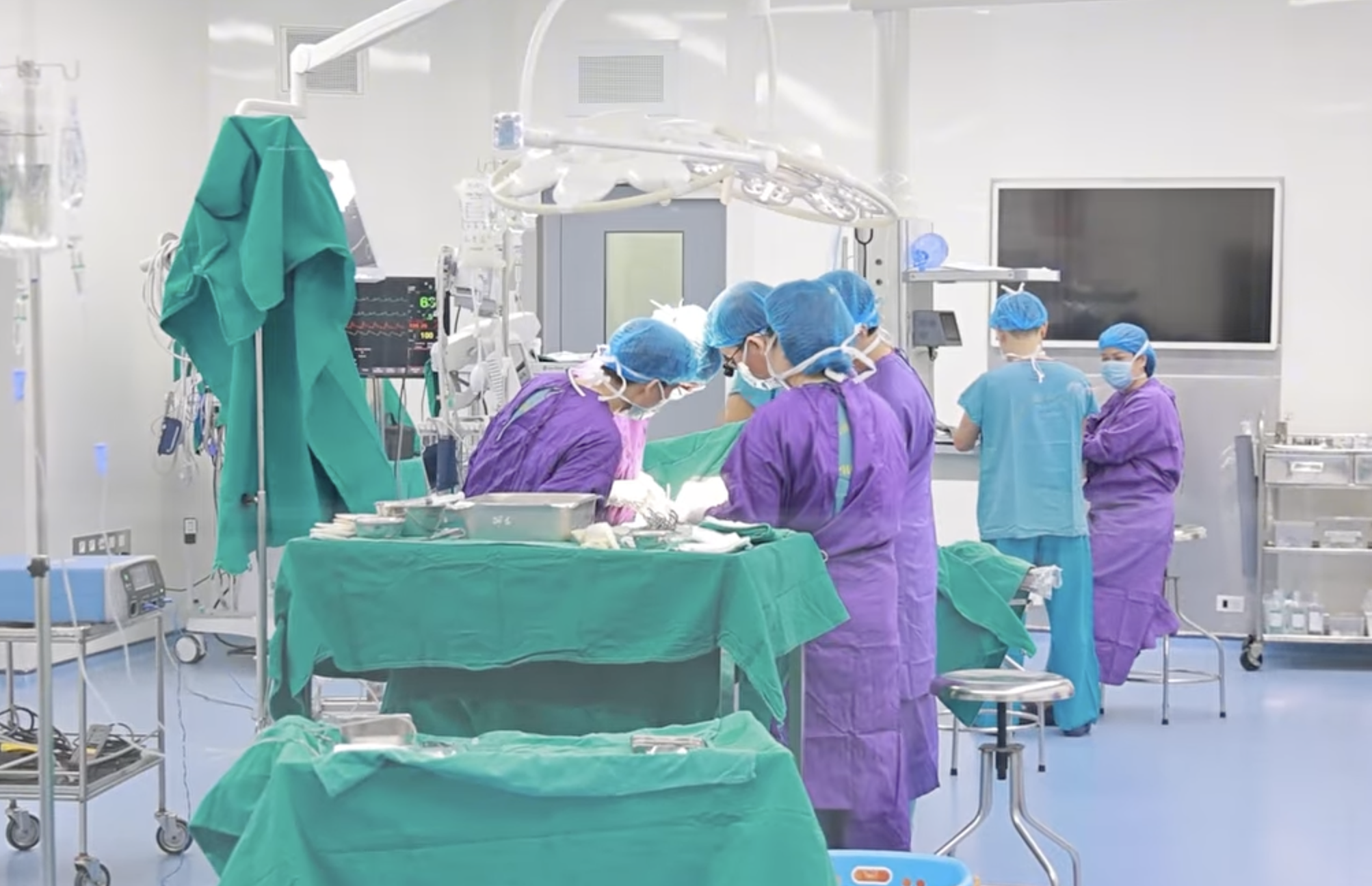 |
The team raced against time to save the critically ill, comatose pregnant woman. *Photo: Hospital provided* |
Recognizing the extreme urgency, the hospital immediately activated its "red alert" system. The on-call team mobilized all resources, racing against time. They performed intensive resuscitation, established multiple lines for blood transfusions, and simultaneously conducted surgery to address the injury. The entire process, from admission to surgical completion, took only 30 minutes. Doctor Hung emphasized that a delay of just five to 10 minutes would have cost the patient her life.
Uterine rupture is among the most dangerous obstetric complications, often occurring in women with previous c-section scars on the uterus, directly threatening the lives of both mother and fetus. Obstetric complications in general, such as amniotic embolism, pre-eclampsia, and placenta accreta, often develop suddenly and are difficult to predict. Doctors recommend that pregnant women, especially those with a history of c-sections, adhere to a schedule of regular prenatal check-ups at specialized facilities to detect abnormalities early and ensure timely intervention.
Thuy An