On 30/12/2023, Doctor Cao Manh Thau, Deputy Head of the Oncology Department at Viet Duc Friendship Hospital, announced that his team successfully removed a large abdominal tumor from a young man. The patient had been admitted in a severely emaciated state, experiencing intense pain and unable to eat or sleep due to the tumor's compression.
The patient had a history of hepatitis B since childhood. In 6/2023, he was diagnosed with cancer when an emergency surgery was performed at a provincial hospital for a ruptured liver tumor. Just six months later, the disease recurred and metastasized to the abdomen. Instead of following medical protocols, the man left the hospital, switching to consuming traditional herbal remedies, applying poultices, and performing spiritual rituals based on advice. As a result, the tumor proliferated uncontrollably, causing abdominal deformity and a rapid decline in his health.
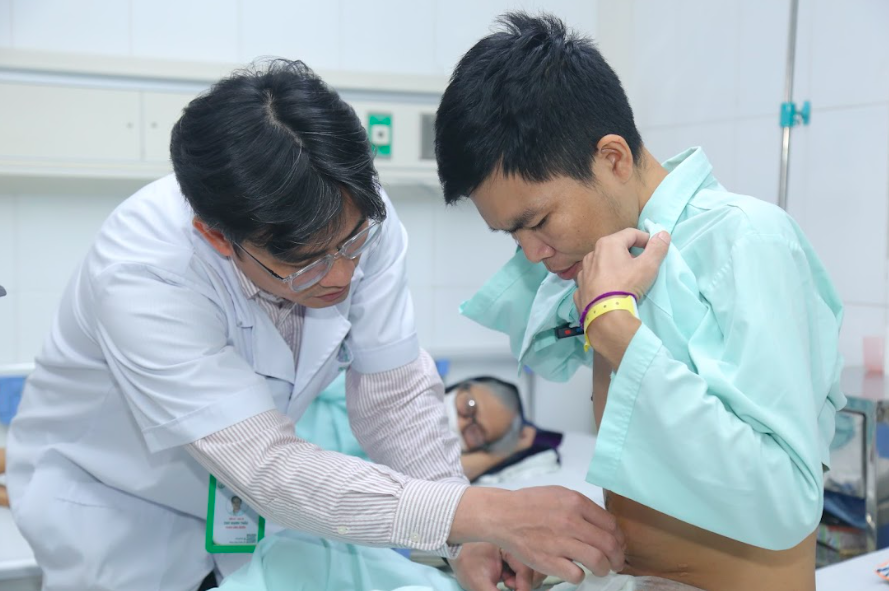 |
Doctors examine the patient after surgery. *Photo: Thai Ngoc* |
Assessing the tumor posed an immediate life-threatening risk of rupture, Doctor Thau and his colleagues decided to first surgically remove the abdominal tumor to alleviate pain, then address the liver lesions. The five-hour surgery completely removed a tumor the size of a football. Currently, the patient's health is recovering well, he is eating normally, and his quality of life has significantly improved.
Regarding the next course of treatment, the patient will undergo hepatic arterial chemoinfusion once every three weeks. This therapy aims to control malignant cells in the liver, extending life despite a challenging long-term prognosis.
According to Doctor Thau, instead of systemic intravenous chemotherapy, which distributes the drug throughout the body at lower concentrations, the technique of placing an infusion chamber in the artery allows for the isolation and direct concentration of high-dose drugs into the liver. This method increases the effectiveness of killing cancer cells while minimizing systemic side effects.
Doctors perform the procedure by inserting a catheter from the femoral artery, through the aorta, to the hepatic artery to secure the drug infusion site. Viet Duc Hospital has applied this technique to approximately 50 patients, reporting promising results. Notably, one case of advanced liver cancer remained stable for four years using this protocol.
The expert noted that for cases with distant metastases to sites like the lungs or abdomen, this method may not fully control the disease but plays a crucial role in reducing liver damage, helping patients "live with" cancer more comfortably.
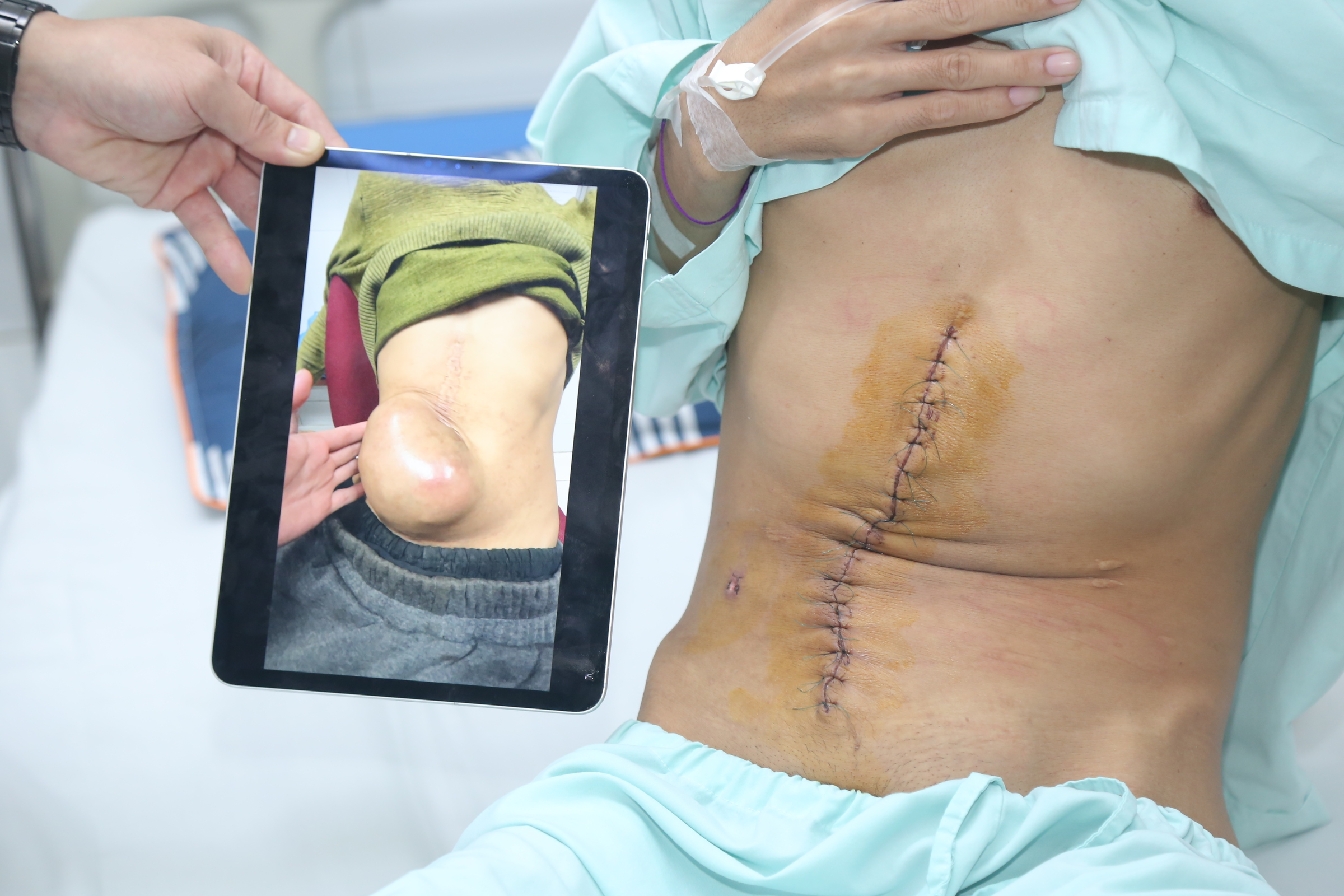 |
Metastatic liver cancer to the abdomen. *Photo: Hospital provided* |
Le Nga