The man, age 72, stated that these days the city is hazy with dust like fog. He and his wife have limited going out and keep their doors closed, but fine dust still infiltrates their home. Every morning after sleeping, the table surfaces are covered with a layer of dust.
His wife, age 68, has underlying conditions of hypertension and cardiovascular disease, while he suffers from chronic obstructive pulmonary disease (COPD). For many days, despite trying various methods to purify the air indoors, they still experience shortness of breath and prolonged coughing.
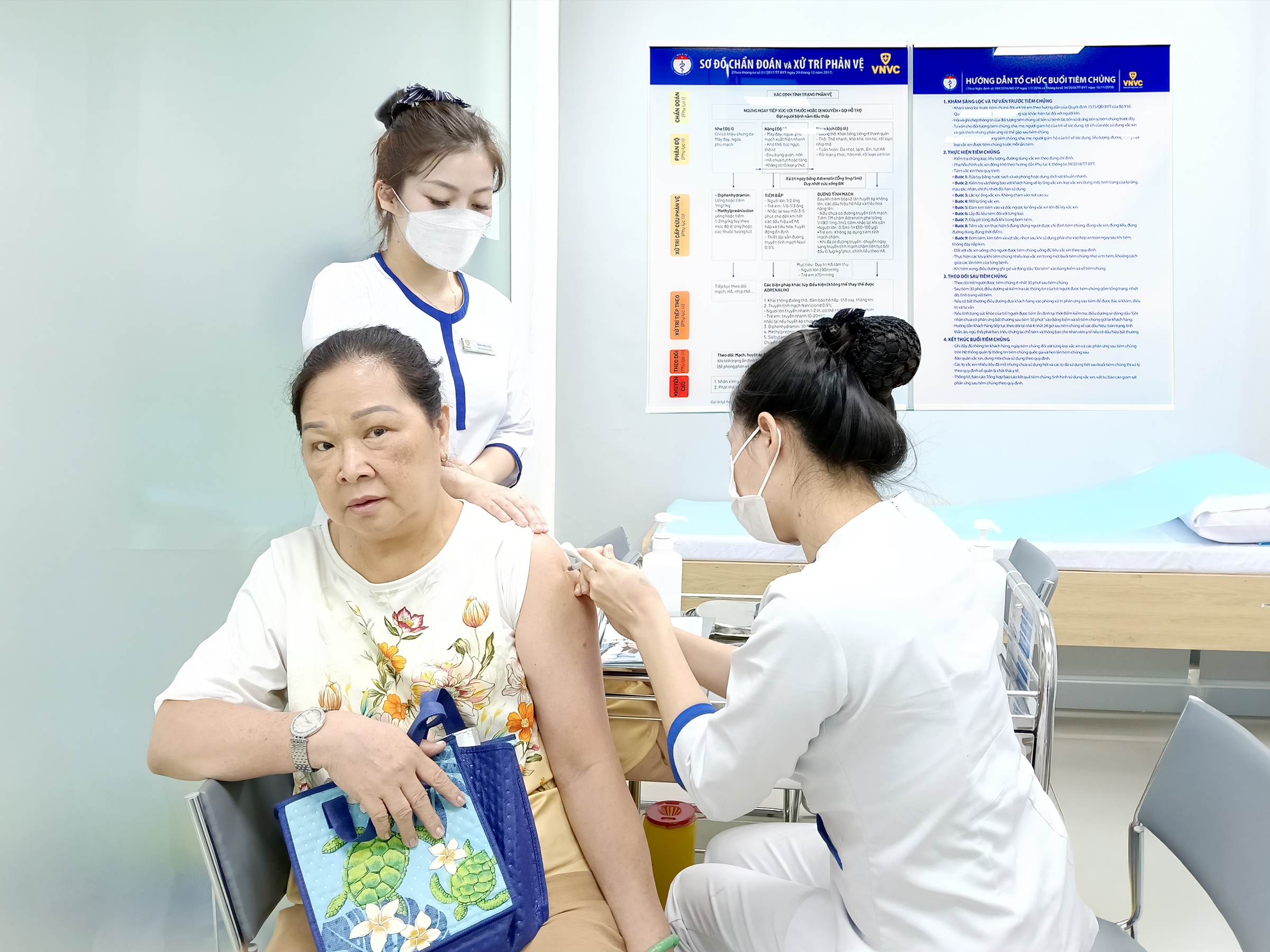 |
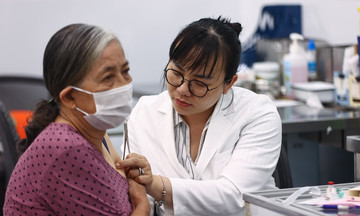
Ms. Hau gets a flu shot at VNVC Hai Ba Trung, Tan Dinh ward, TP HCM. Photo: Hoang Duong
For nearly a month, the couple has not gone out for morning and evening exercise, instead dedicating that time to cleaning and dusting their home and belongings. Last weekend, they received the vaccine for RSV, which causes pneumonia. Previously, they had been vaccinated against flu and pneumococcal disease to protect their respiratory system.
Ms. Hau, age 67, and her husband, residing in Tan Dinh ward, TP HCM, have also limited their outdoor activities for many days. Instead of daily market trips, she now goes once a week to purchase food and drinks for the entire week.
Before the recent pollution, the couple regularly walked for exercise in the mornings. When air pollution reached alert levels, they switched to exercising indoors using a stationary bicycle. Ms. Hau also focused on increasing fruits and green vegetables in their daily diet.
Ms. Hau has underlying conditions of diabetes and fatty liver. She and her husband have monthly check-ups to monitor their health. The couple has consistently received flu shots for over 10 years, also getting pneumococcal vaccines, and plan to get the RSV vaccine. She noted that since getting the flu vaccine, symptoms of coughing and fever have significantly decreased.
Specialist Doctor Level I Nguyen Le Nga, Medical Manager at VNVC Immunization System, reported that Hanoi, many northern provinces, and TP HCM frequently experience air pollution. At times, Hanoi has ranked first globally for pollution levels. Dust and vehicle emissions containing CO₂, CO, O₃, NO₂, SO₂ are harmful to health, increasing the risk of respiratory inflammation, COPD, asthma, cardiovascular disease, stroke, and cancer.
A 2025 analysis indicated that a daily 10 mcg/m3 increase in PM2.5 exposure raises the risk of flu by 1,5%, and simultaneously increases the risk of pneumococcal pneumonia, especially in young children and older adults.
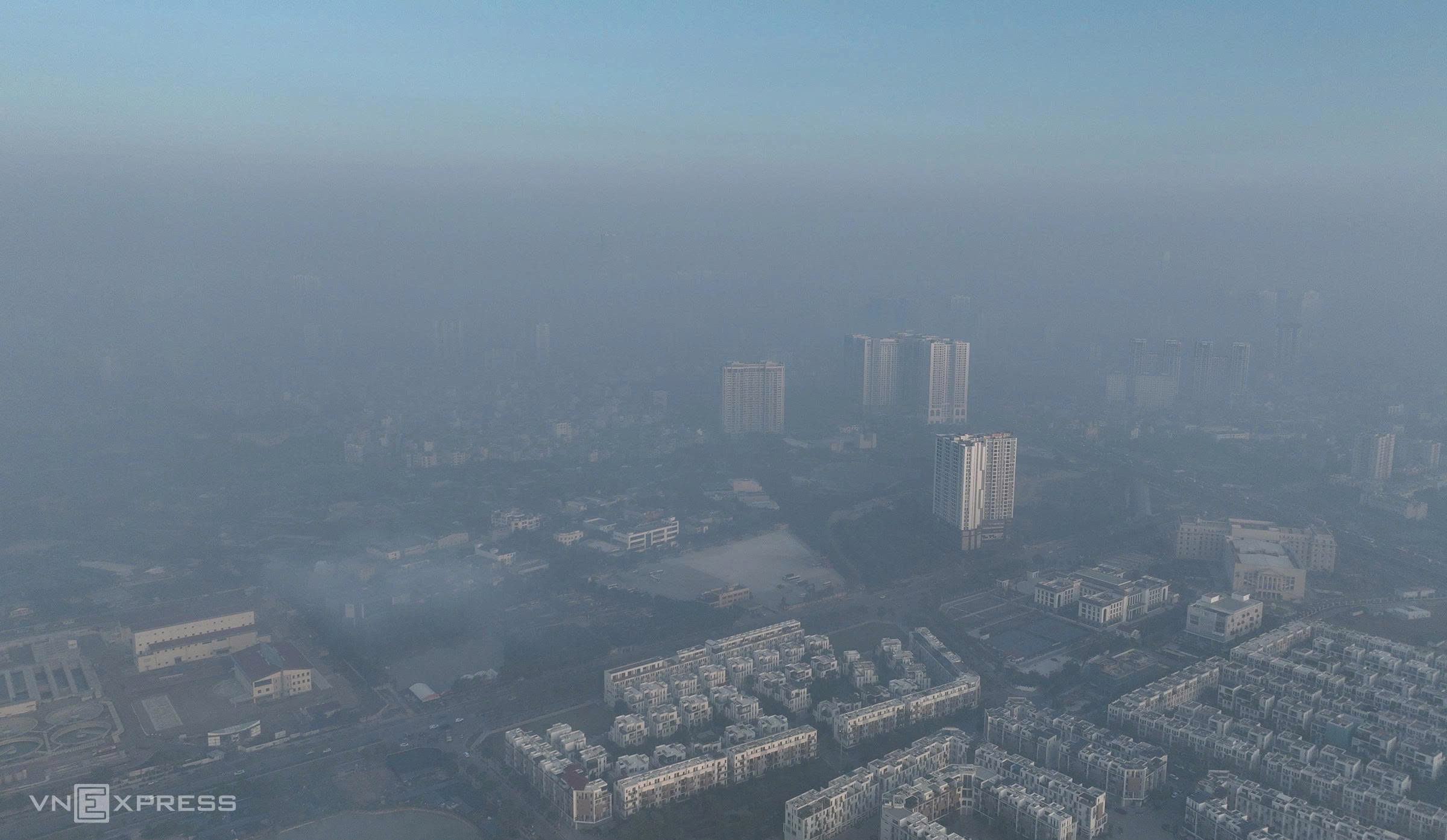 |
View of polluted air in Hanoi from above. Photo: Thanh Hai
Doctor Nga advises people to monitor air quality, wear masks, keep homes clean, practice eye and nasal hygiene, supplement nutrition, and limit outdoor activities during periods of pollution. Older adults, children, and individuals with underlying conditions need vaccinations to boost antibodies and prevent illness.
For flu, Vietnam circulates four types of vaccines protecting against A/H3N2, A/H1N1, and B influenza strains. Vaccines are administered to children from six months of age and adults, with schedules based on age and vaccination history, requiring annual boosters.
For RSV, which causes pneumonia, there are two preventive vaccines: one by Pfizer administered to pregnant women at 24-36 weeks and individuals age 60 and above; and a GSK vaccine for individuals age 60 and above. In addition to vaccines, Vietnam also offers a Sanofi monoclonal antibody product for infants up to 24 months old, providing early protective immunity.
There are five types of pneumococcal vaccines: pneumococcal 10, pneumococcal 13, pneumococcal 15, pneumococcal 20, and pneumococcal 23, with vaccination schedules varying by age and immunization history.
Furthermore, many other dangerous diseases are transmitted via the respiratory tract, such as measles, meningococcal disease, and chickenpox. Everyone should arrange to visit the nearest immunization center for doctor consultation and vaccination recommendation.
Tuan Khanh