Hanh had three pregnancies. After giving birth to her second child, she began experiencing dull pain in her lower abdomen, which had gradually worsened over the past two months. She sought medical attention, undergoing digestive endoscopy, ultrasound, and gynecological examinations, which revealed no abnormalities.
During her most recent visit, Doctor Nguyen Anh Dung, Head of Thoracic and Vascular Surgery at the Thoracic and Vascular Surgery Center, Tam Anh General Hospital TP HCM, ordered an abdominal and pelvic ultrasound. This revealed numerous unusually dilated pelvic veins. A subsequent CT scan showed significant dilation of the left ovarian vein compared to the right, causing prolonged blood pooling. Doctors diagnosed her with pelvic congestion syndrome due to left ovarian vein dilation.
According to Doctor Dung, after multiple pregnancies, the uterus gradually enlarges, compressing pelvic veins. This weakens vein valves, preventing blood from returning to the heart and causing it to pool around the uterus and ovaries, leading to chronic dull pain. Without treatment, prolonged blood pooling can result in severe vein dilation, hemorrhage, clot formation, and an increased risk of embolism. Additionally, this condition can cause severe pain during intercourse and intensify with each menstrual cycle.
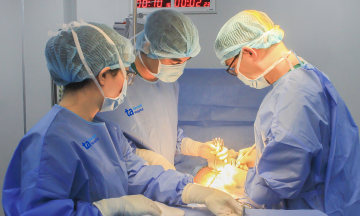
The endovascular intervention team accessed the patient's femoral vein. Guided by a digital subtraction angiography (DSA) system, doctors advanced a catheter to the dilated ovarian vein and deployed metal coils to embolize the vein. This blocked the reflux of blood, stopping the pooling that caused the pain.
Following the intervention, the dilated vein cluster gradually shrank. Hanh was able to walk and was discharged the same day.
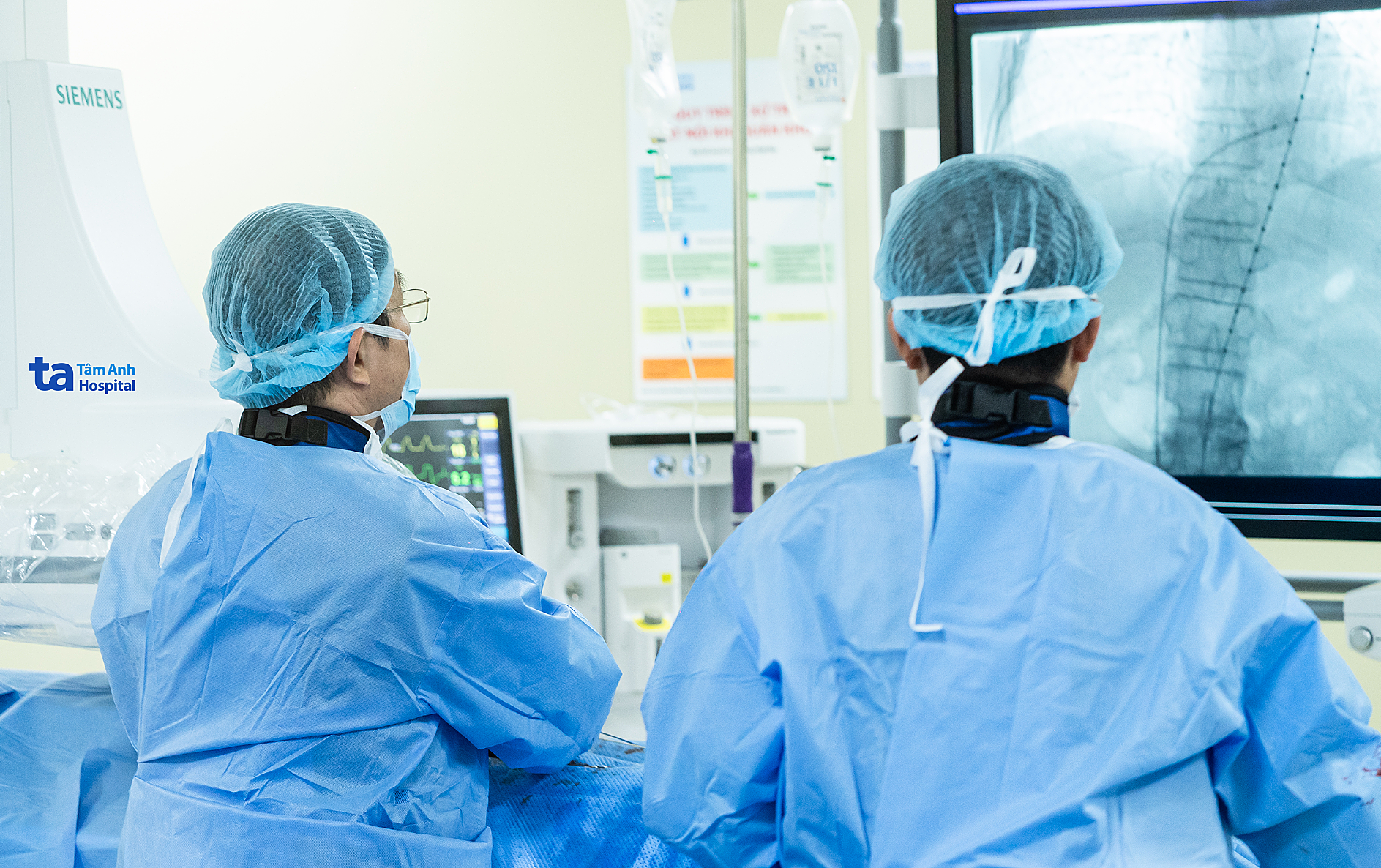 |
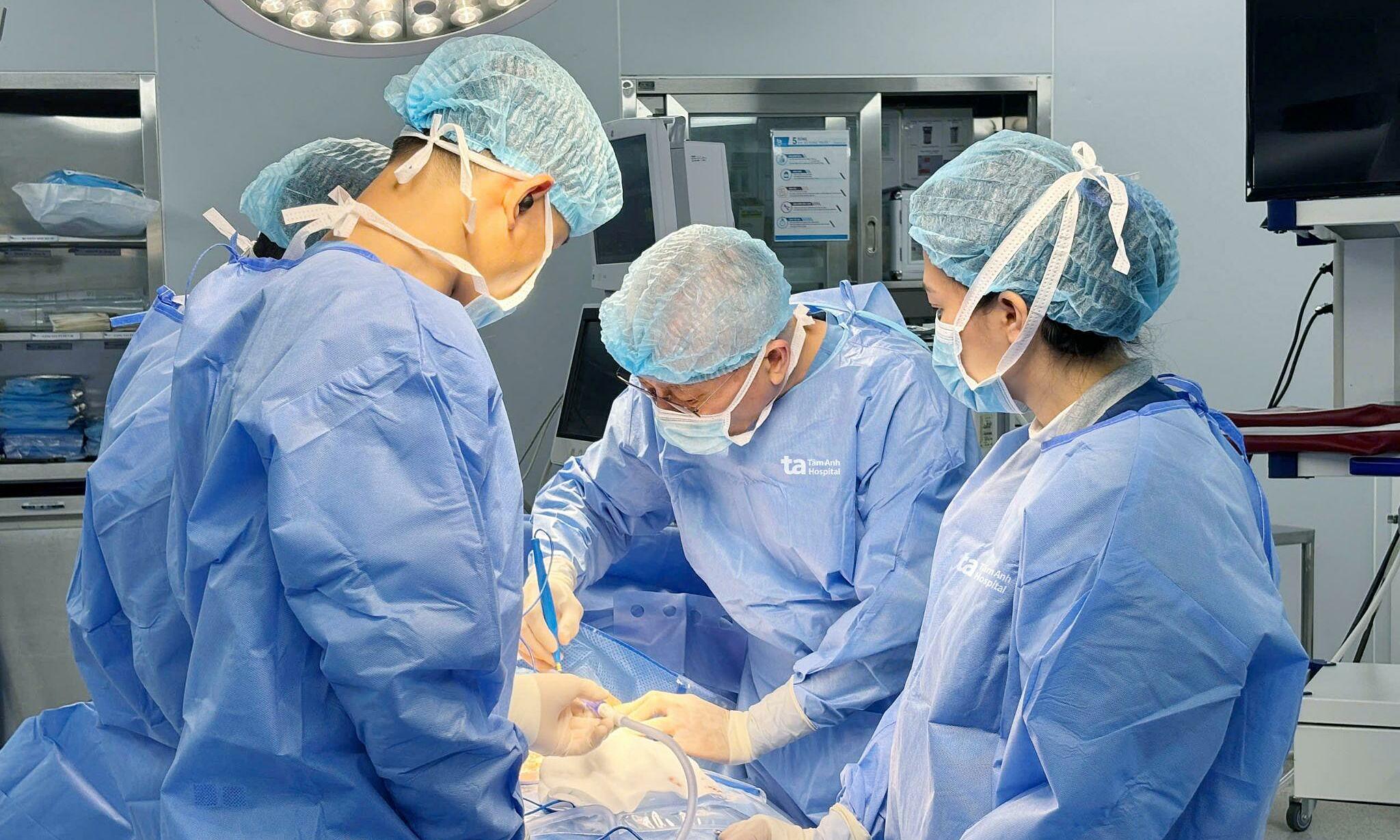
Doctor Dung (left) and the Thoracic and Vascular Surgery team performing an endovascular intervention on a patient. Photo: Tam Anh General Hospital
Doctor Dung noted that pelvic congestion syndrome accounts for approximately 30-40% of chronic pelvic pain cases in women. Of these, about 40-60% of cases are misdiagnosed or experience delayed diagnosis due to vague symptoms that are easily mistaken for common gynecological conditions or digestive disorders. The condition typically affects women aged 20-45 with a history of multiple pregnancies.
When experiencing prolonged dull lower abdominal pain that intensifies when standing and lessens when lying down, patients should visit a hospital for an accurate diagnosis. Early detection allows for treatment with modern, minimally invasive endovascular techniques that preserve fertility.
Bao Anh
*Patient's name has been changed
| Readers can submit questions about cardiovascular disease here for doctors to answer |