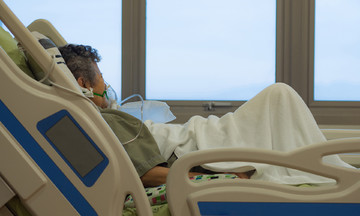
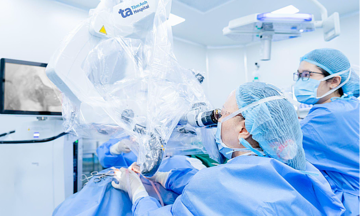
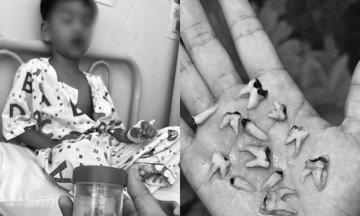
Mr. Nien experienced severe back pain and difficulty bending or straightening his body. A medical examination diagnosed him with spinal tuberculosis, accompanied by a herniated disc and lumbar spinal degeneration. Despite taking medication for a period, his condition worsened significantly. X-ray, MRI, and laboratory tests at Tam Anh Hospital TP HCM revealed extensive lung damage from tuberculosis bacteria. His L1 vertebra was almost completely destroyed, and L2 was partially damaged, with an abscess present. The spinal deformity also impacted his lung function. Mr. Nien suffered from weakness and paralysis in both legs, with muscle strength reduced to 3/5, and his body was severely debilitated.
Doctor Tran Quang Hien, Head of the Spine Surgery Department at the Orthopedic Trauma Center, explained that bone tuberculosis is not rare but is often difficult to detect early. Its characteristic bone pain symptoms are easily mistaken for other musculoskeletal conditions, leading to delayed diagnosis. The disease typically occurs when tuberculosis bacteria from the lungs or digestive system travel through the bloodstream and lymphatic system to settle in the musculoskeletal system. However, even if pulmonary tuberculosis is successfully treated, a weakened immune system can allow the bacteria to re-emerge and attack another organ, as seen in Mr. Nien's case with his spine.
Doctor Hien stated that surgery was the only effective treatment for Mr. Nien. Without it, the patient would be unable to move, remaining bedridden, which would further weaken his lungs. This could lead to severe complications such as pressure ulcers, blood clots with a risk of stroke, and a high mortality rate.
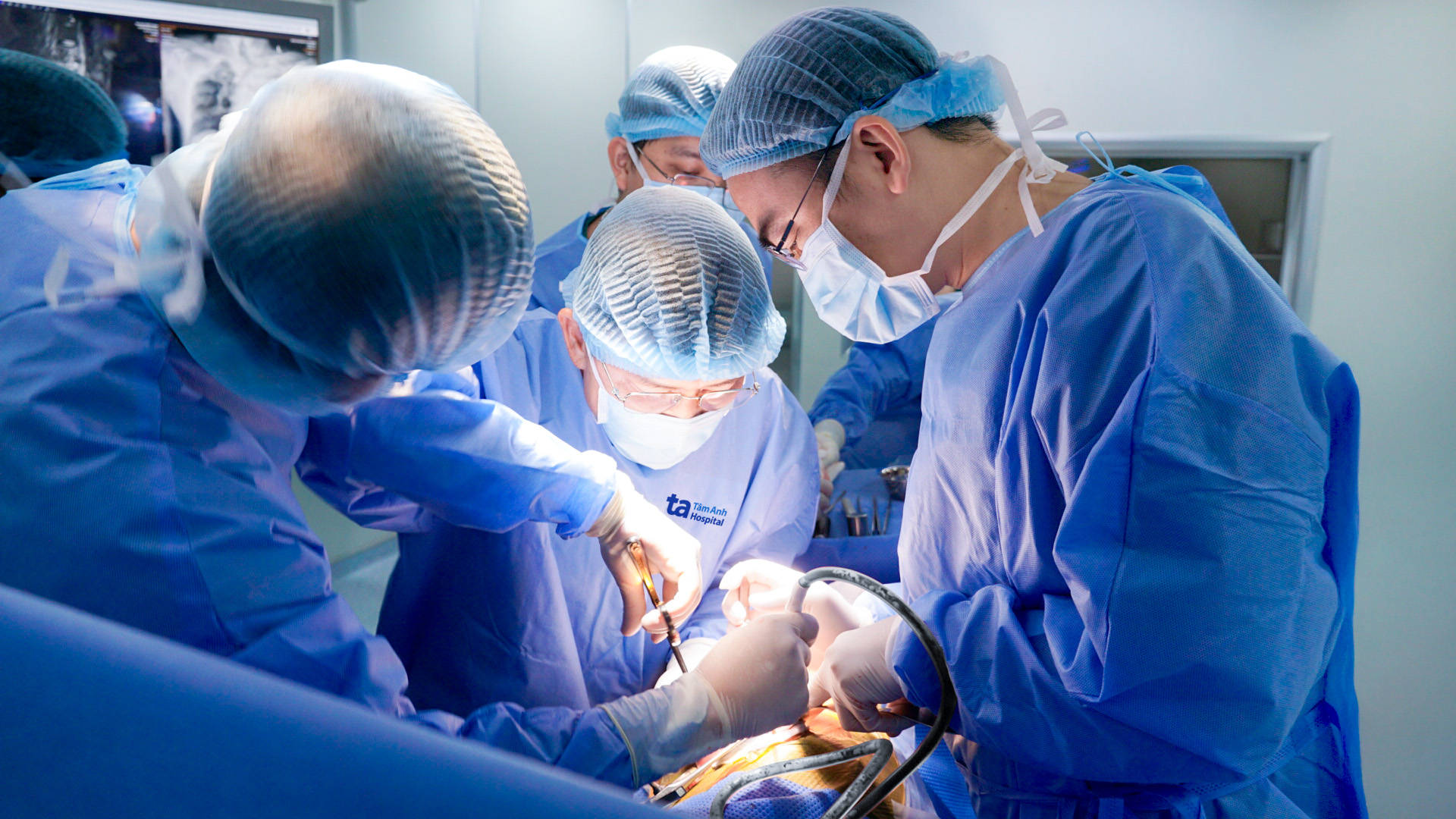 |
Doctor Hien (center) performs decompressive surgery, removing spinal tuberculosis for Mr. Nien. *Photo: Tam Anh General Hospital* |
Given the patient's history of pulmonary tuberculosis, anesthesia posed a risk of dangerous respiratory complications such as airway spasm or injury, reduced ventilation, or post-extubation complications. A multidisciplinary team of spine surgery, anesthesia and resuscitation, and respiratory specialists convened, deciding on an anterior approach for Mr. Nien's spinal decompression surgery.
Surgeons accessed the lesion through an incision in the front of the chest. One lung was deflated to improve visibility, clearly exposing the tuberculous abscess. This allowed doctors to remove all inflamed tuberculous tissue, prevent recurrence, eliminate bone and soft tissue components causing compression, free nerve roots, and help the patient regain mobility.
For the damaged vertebrae, surgeons performed spinal fusion using a titanium cage, inserting anterior screws into the T12 thoracic and L2 lumbar vertebral bodies for fixation. This restored the physiological curvature and recreated spinal stability. Finally, the patient's lung condition was re-evaluated before the surgery concluded.
Doctor Vu Ngoc Bao Quynh, from the Spine Surgery Department, had initially predicted Mr. Nien would require a prolonged stay in the ICU. However, after two hours in the ICU, he was transferred to a regular ward with stable lung function and vital signs. Three days post-surgery, the patient was pain-free and could stand and walk slowly with the aid of a walker. Two days later, Mr. Nien was discharged, needing physical therapy to improve muscle strength and continued anti-tuberculosis medication to manage both pulmonary and spinal tuberculosis. At a follow-up appointment more than a month after surgery, Mr. Nien could walk independently, without assistance.
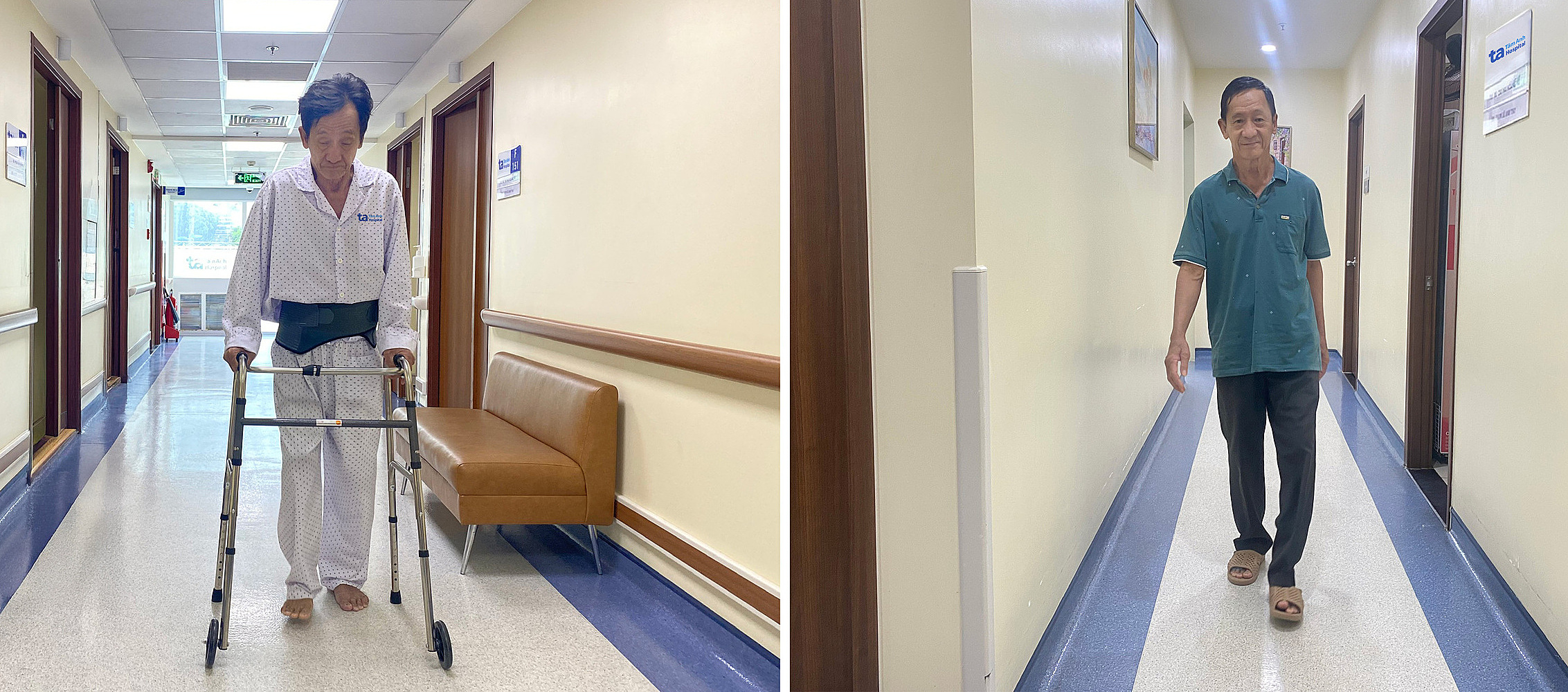 |
Mr. Nien walking independently before discharge (left) and during a follow-up visit. *Photo: Tam Anh General Hospital* |
Doctors advise that if bone tuberculosis is not diagnosed and treated early, there is a high risk of dangerous complications affecting mobility, even leading to death. Individuals with a history of tuberculosis should be vigilant for abnormal signs such as localized bone pain, difficulty bending or straightening, fatigue, evening fever, weight loss, pale skin, and poor appetite. Prompt medical attention is crucial for timely treatment.
Phi Hong