Ms. Hong was diagnosed with end-stage endometrial cancer with multi-organ metastasis to the liver, lungs, and brain in April. She underwent a hysterectomy, chemotherapy, immunotherapy, and localized radiation therapy, which temporarily stabilized the metastatic tumors. However, she recently experienced sudden, dull, throbbing pain in her right arm, with weakness when lifting it, leading her to suspect a stroke.
Tests at Tam Anh General Hospital in Ho Chi Minh City (HCM City) revealed her right arm muscle strength was 4/5, with poor grip, while her left arm was normal. A large metastatic bone tumor was compressing the nerve root in cervical vertebra C6. Doctor Nguyen Huy Loc, Department of Radiation Therapy, Oncology Center, Tam Anh General Hospital in HCM City, identified this as the cause of vertebral damage, leading to weakness and paralysis in her right arm, ruling out a stroke.
Doctors convened to confirm the tumor was progressing rapidly, with the potential to cause permanent right arm paralysis. They devised a treatment regimen of 10 consecutive radiation doses to the tumor using a linear accelerator. "Radiation therapy is the fastest and most effective method at this time to shrink the tumor, thereby reducing nerve compression, alleviating pain, numbness, and paralysis in the fingertips," Doctor Loc explained. If emergency radiation therapy is not performed to shrink the tumor within the first 24 hours of experiencing throbbing pain and muscle weakness, the patient could suffer from "flaccid paralysis." This is a condition of motor paralysis where muscles become flaccid and weak due to loss of nerve signals, followed by irreversible muscle atrophy.
Ms. Hong underwent MRI and CT simulations to precisely determine the tumor's location, shape, and size. The technical team quickly fabricated a custom immobilization mask – a specialized tool essential for head and neck radiation therapy – based on the patient's specific treatment area parameters, including head and neck circumference, within approximately 20 minutes.
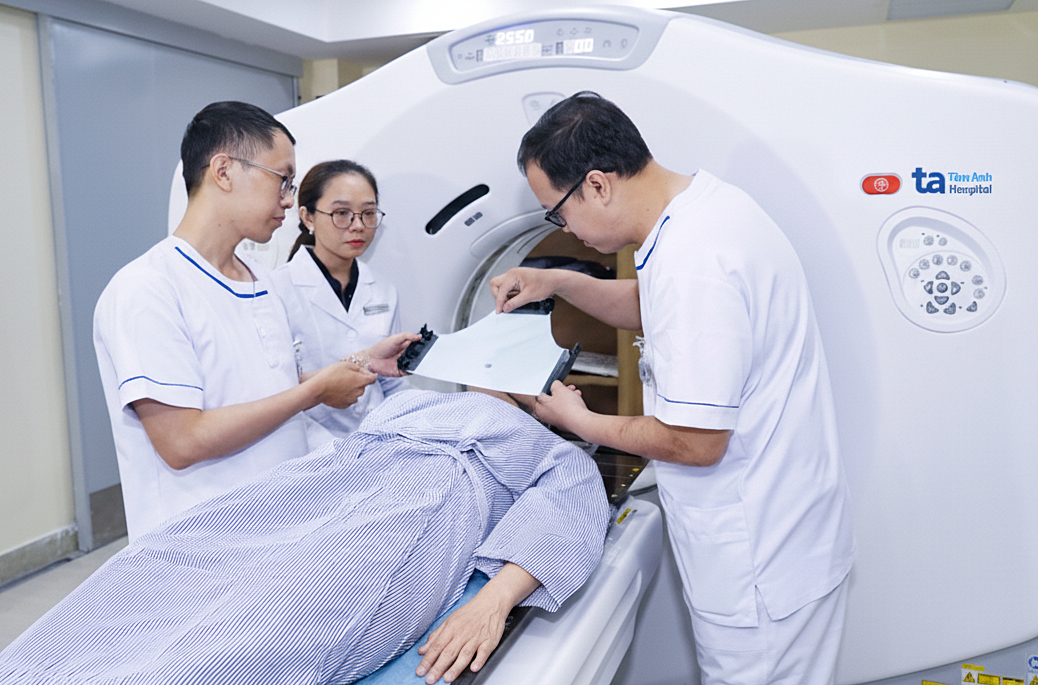 |
A technician prepares an immobilization mask for a patient. *Photo: Tam Anh General Hospital*
Doctor Loc stated that a standard (non-emergency) radiation therapy process, from patient admission to the first radiation dose, typically takes a minimum of 3-5 days. In contrast, Ms. Hong's radiation therapy process, from admission to the first radiation dose, took only three hours, which is one-eighth of the international recommendation of 24 hours. After 10 radiation doses, imaging showed significant tumor shrinkage and reduced compression. Her muscle strength reached 5/5, pain decreased substantially, arm numbness was minimal, and she could lightly grip objects.
According to Doctor Loc, previously, patients with brain or spinal metastases often did not continue treatment due to low success rates and poor survival. Today, even with distant metastatic cancer and a low prognosis, if treated correctly with palliative care, physical and psychological support, health outcomes are significantly better than without treatment. Advanced radiation therapy technologies, such as surface guided radiation therapy (SGRT), offer high precision, contributing to increased effectiveness, shorter treatment times, and minimized side effects for patients.
Nhat Minh
*Patient's name has been changed
| Readers can submit questions about cancer here for doctors to answer. |