A CT scan at Tam Anh General Hospital Hanoi revealed a food mass causing a 4,4 cm dilation in the middle section of her small intestine, leading to mechanical intestinal obstruction.
Doctor Le Van Luong, from the Department of General Surgery, explained that intestinal obstruction can stem from various causes, including hernias, postoperative adhesions, intussusception, or intestinal tumors. Ms. Sinh’s obstruction resulted from undigested food residue forming in her stomach and accumulating in the small intestine.
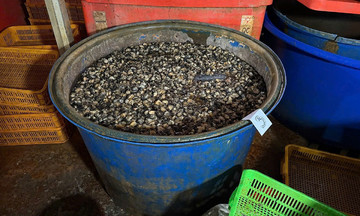
Her family reported that Ms. Sinh had been eating rice with black canarium fruit preserved in fish sauce for several consecutive days prior to her symptoms.
According to Doctor Luong, elderly patients often have weak teeth, reduced gastric and small intestine secretions, leading to weakened overall digestive function. Black canarium fruit is rich in fiber, resin, and tannins, which can easily precipitate and clump together, causing blockages. Consuming it continuously for several days, coupled with reduced physical activity, further decreased gastric and intestinal motility, exacerbating her condition.
Despite intensive medical treatment, Ms. Sinh’s condition did not improve, necessitating laparoscopic surgery to remove the food mass. Post-surgery, she experienced minimal pain and no longer felt nauseous. She was able to move in bed, reducing the risk of blood clot formation from prolonged immobility. By day five, her condition had stabilized, and she was discharged from the hospital.
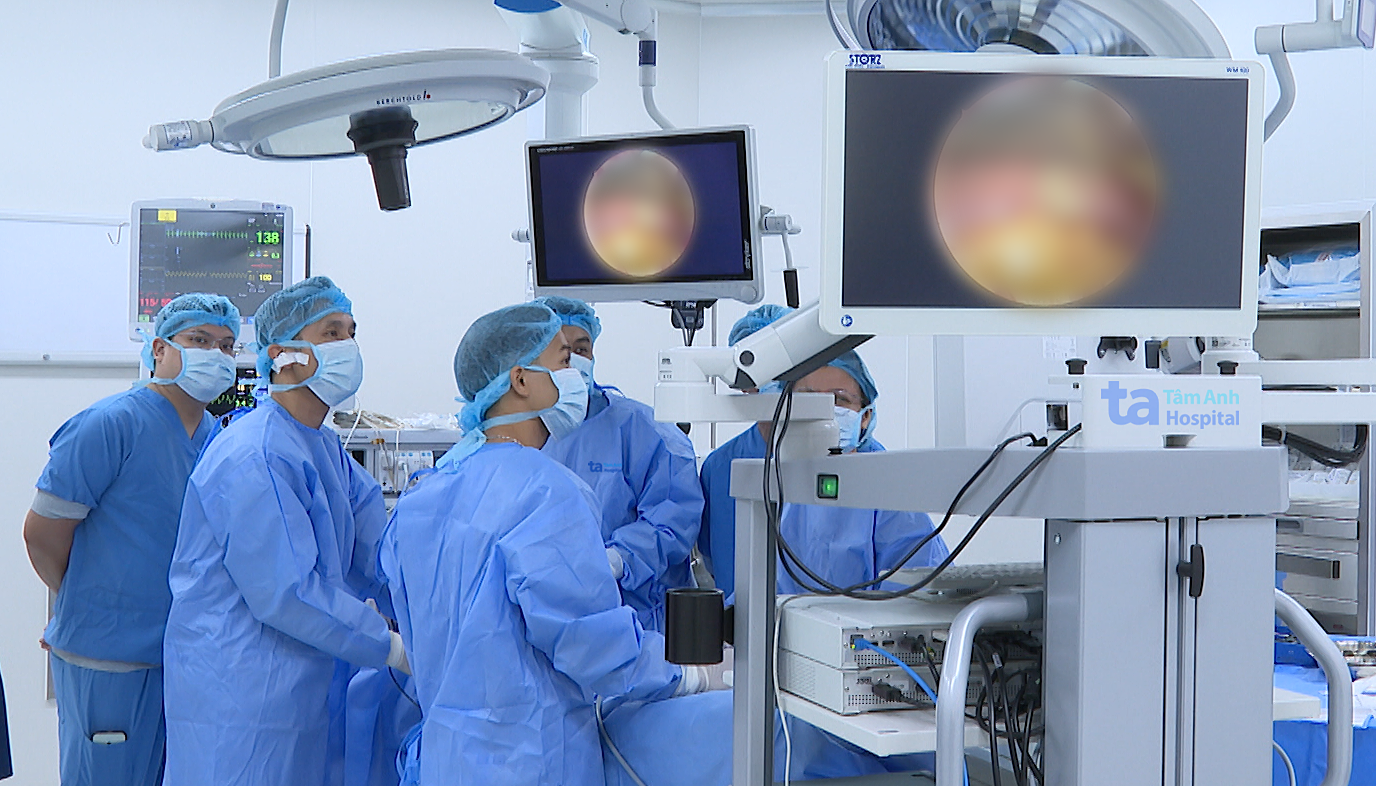 |
Doctor Luong performs surgery on Ms. Sinh. *Photo: Tam Anh General Hospital*. |
Small bowel obstruction due to food residue can also occur when patients consume large amounts of high-fiber foods such as celery, pumpkin, grape skins, dried plums, or persimmons. Doctor Luong advises that older adults, individuals with impaired digestive function, and those with limited physical activity should opt for soft, liquid, easily digestible foods, consumed in multiple small meals. Vegetables should be finely chopped, tender varieties chosen, and thoroughly chewed before swallowing. It is important to limit consumption of large, coarse, indigestible fibrous foods and to eat fruits with resin or astringent properties, such as sapodilla, figs, Garcinia cowa, sour star apple, black canarium fruit, and bamboo shoots, in moderation.
Prolonged intestinal obstruction can lead to severe complications, including intestinal necrosis and abdominal infection. Patients experiencing suspicious symptoms like severe abdominal pain, bloating, vomiting (especially green or yellow fluid), a palpable abdominal mass, or inability to pass gas or stool, should seek prompt examination and diagnosis at a multispecialty hospital.
Thanh Long
*Patient's name has been changed
| Readers can submit questions about digestive diseases here for doctors to answer |