Over three months, Khanh experienced nosebleeds 5-7 times, with each episode involving approximately 5 ml of blood. Dr. Tran Khanh Duy, a first-degree specialist in Ear, Nose, and Throat at Tam Anh District 7 General Clinic, stated that endoscopic imaging showed no structural abnormalities in Khanh's nasal septum, turbinates, or signs of trauma or infection. Suspecting a systemic cause, Doctor Duy ordered comprehensive blood tests, including a complete blood count and coagulation tests.
Test results indicated normal coagulation parameters and no clotting disorders, ruling out bleeding due to a blood clotting condition. However, the complete blood count revealed microcytic hypochromic anemia, suggesting a hemoglobin synthesis disorder. Hemoglobin electrophoresis confirmed abnormal hemoglobin components, leading to Khanh's diagnosis of thalassemia trait.
"Microcytic hypochromic anemia is common in children, primarily due to iron deficiency, but it does not always indicate thalassemia," Doctor Duy explained. In Khanh's case, the thalassemia trait remained undetected because of its mild symptoms, only becoming apparent after repeated nosebleeds in adulthood. Chronic anemia causes dry nasal mucosa and fragile capillaries. Abnormal red blood cell morphology and function further affect vessel wall strength, making nosebleeds prone to recurrence.
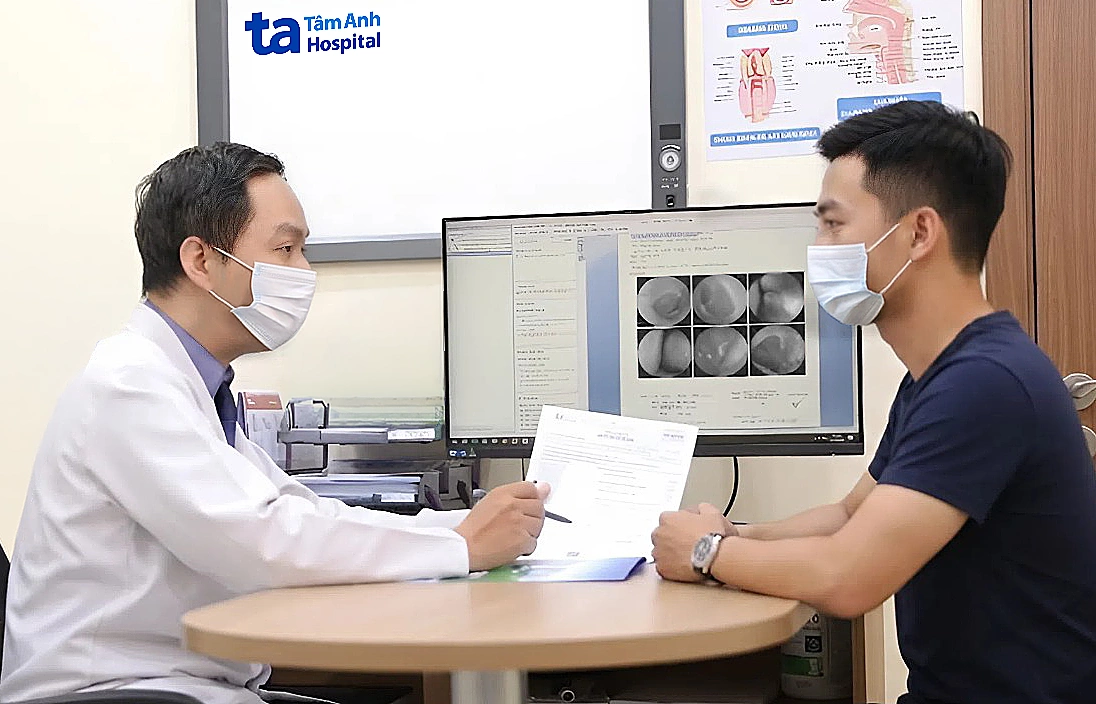 |
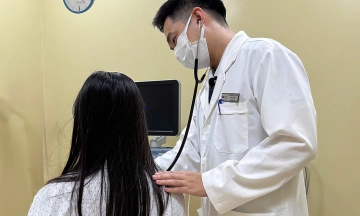
Doctor Khanh Duy consults with Khanh. Photo: Tam Anh District 7 General Clinic |
Nosebleeds associated with thalassemia are managed with symptomatic treatment and recurrence prevention. Khanh received instructions on first aid and local hemostasis techniques.
When bleeding occurs, patients should sit upright and lean their head slightly forward. They should firmly pinch the soft part of the nose (Kiesselbach's area) continuously for 10-15 minutes, avoiding tilting the head back to prevent blood from flowing down the throat. Vasoconstrictor drops may help stop nasal bleeding. If bleeding persists, patients should seek emergency medical attention. After the bleeding stops, patients should avoid forceful nose blowing, nose picking, or other mechanical irritations for several hours.
Additionally, Khanh should keep his nasal mucosa moist by using saline drops and increasing air humidity. He should not take iron supplements without medical advice. Regular hematology check-ups and pre-marital screening are also recommended before planning to have children.
Thalassemia is an inherited recessive gene disorder caused by abnormal hemoglobin synthesis. Normally, hemoglobin consists of two alpha and two beta globin chains. A defect in one of these chains reduces hemoglobin synthesis, resulting in small, hypochromic red blood cells that are easily destroyed prematurely, leading to chronic anemia due to a reduced number of functional red blood cells.
In its trait form, the condition often presents with no clear symptoms, allowing individuals to lead normal lives. It is typically discovered incidentally through blood tests or screening. Doctor Duy added that this form is not dangerous and does not require specific treatment; however, it has genetic significance. If both parents carry the gene, their child faces a risk of developing severe thalassemia, which requires lifelong blood transfusions and carries a risk of severe complications such as liver failure, cirrhosis, heart failure, facial deformities, and endocrine gland failure.
Uyen Trinh
*Patient's name has been changed
| Readers can submit questions about ear, nose, and throat conditions here for doctors to answer |