Ms. Nga's case presented a complex medical challenge due to her multiple uterine fibroids and a pre-existing severe heart condition. The largest fibroid measured 89x81x83 mm, causing her uterus to enlarge to the size of a 15-16 week pregnancy. This condition led to prolonged heavy menstrual bleeding, severe anemia, and left her body fatigued and exhausted. Without surgical intervention, the fibroids posed a risk of continued growth and compression of nearby organs, such as the bladder and rectum.
Adding to the complexity, Ms. Nga had a history of three heart valve repair and replacement surgeries. Dr. Hoang Thi Binh, from the Cardiology Department, Cardiology Center, Tam Anh General Hospital Ho Chi Minh City, reported that Ms. Nga currently suffers from heart failure and atrial fibrillation, complications stemming from her heart valve disease. Her heart's ejection fraction (EF) was 40%, accompanied by left atrial dilation and an irregular heartbeat. Patients with artificial heart valves and atrial fibrillation, like Ms. Nga, require lifelong anticoagulant medication.
Anticoagulants inherently increase the risk of bleeding. For women who are menstruating or have uterine fibroids, this medication can exacerbate the issue, leading to prolonged heavy menstrual bleeding. Given Ms. Nga's fragile health and impaired heart function, a hysterectomy and adnexectomy carried significant risks, including hemodynamic instability, decompensated heart failure, and cardiac arrhythmia.
To mitigate these risks, Dr. Binh developed a comprehensive pre-surgical treatment regimen for Ms. Nga. This included diuretics, heart rate control medication, beta-blockers, anemia treatment, and hormones. After one month of positive response to the medication, the patient's heart function stabilized at 48%. The medical team then instructed her to stop anticoagulant medication 5 days prior to the scheduled surgery.
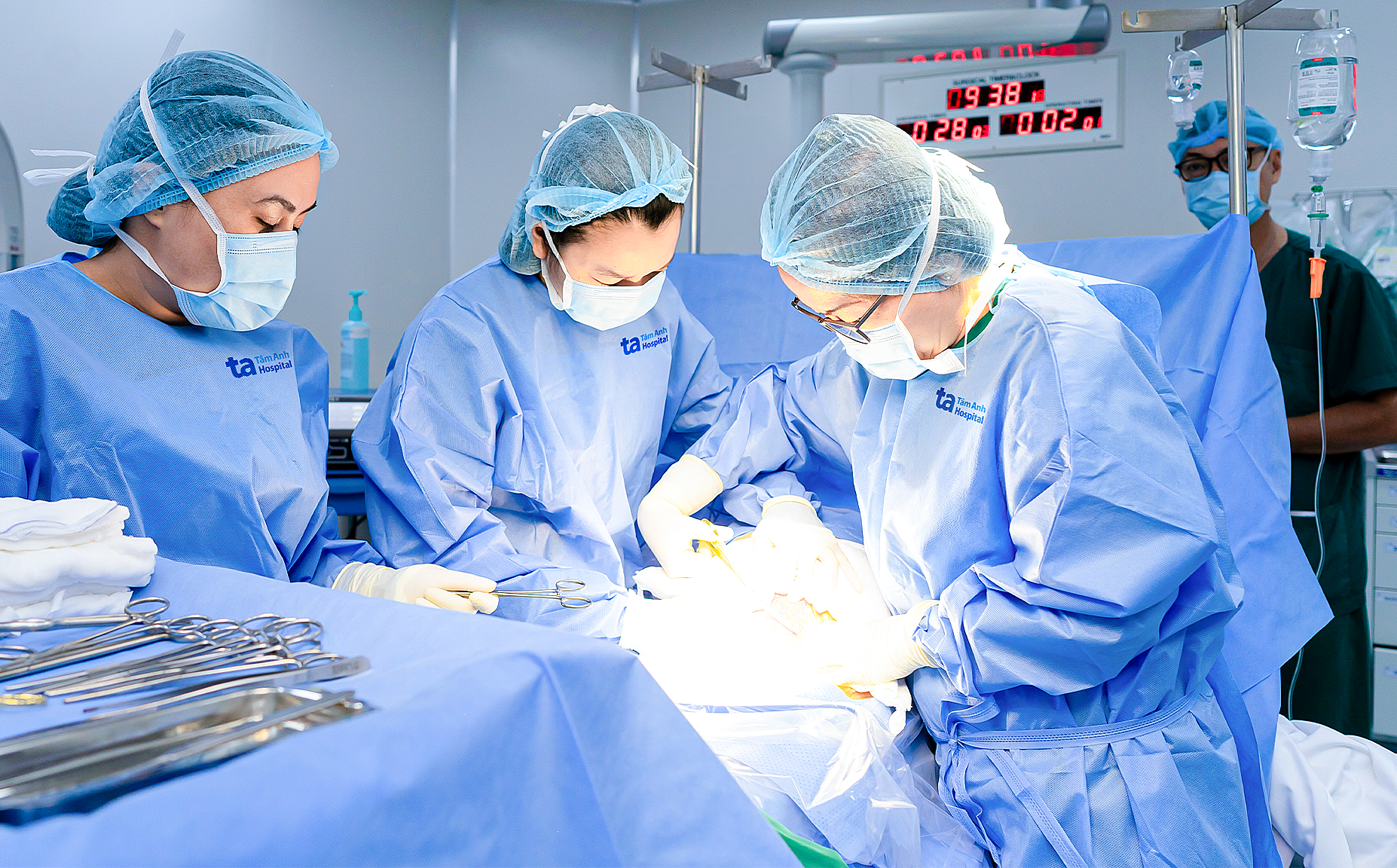 |
Dr. Nguyen Thi Quy Khoa (far right) and the surgical team performing a hysterectomy on the patient. Photo: Tam Anh General Hospital
According to Dr. Nguyen Thi Quy Khoa, Deputy Head of the Obstetrics Department, Obstetrics and Gynecology Center, Tam Anh General Hospital Ho Chi Minh City, the primary challenges during the procedure were the patient's enlarged uterus, numerous fibroids, and high risk of bleeding, compounded by her severe underlying cardiovascular disease. These factors necessitated the surgical team to operate quickly to minimize risks. Within one hour, the team successfully removed the entire uterus and both adnexa, limiting blood loss as much as possible.
Ms. Nga was alert several hours after surgery, with no bleeding from the incision. She resumed her vitamin K antagonists, essential for her artificial heart valves, and was discharged after 3 days. Dr. Nguyen Thi Quy Khoa emphasized that the surgery not only completely resolved the prolonged heavy menstrual bleeding but also significantly reduced the strain on Ms. Nga's heart by alleviating chronic anemia.
Thu Ha
*Patient's name has been changed
| Readers can submit questions about obstetrics and gynecology here for doctors to answer |