Cao Thang Eye Hospital recently achieved a successful outcome in treating a complex case of panuveitis with severe cataract complications, contributing to vision recovery and improved quality of life for the patient.
The patient, Le Nam Khanh (born in 2006), was admitted with red eyes and prolonged blurred vision. This occurred after two months of uveitis treatment at another specialized facility, which had not yielded the desired results.
Upon admission, visual acuity was significantly reduced: 3/10 in the right eye, and the left eye could only count fingers at a distance of 3 meters. Intraocular pressure in both eyes was within normal limits. However, persistent intraocular inflammation had led to cataract development, increasing the risk of irreversible vision loss. Pre-clinical results revealed complex intraocular damage, necessitating aggressive inflammation control before surgical intervention.
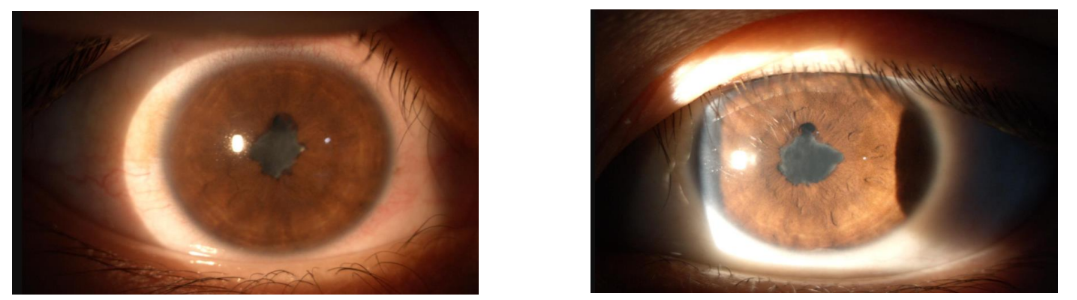 |
The patient's eye condition before treatment. Photo: Cao Thang Eye Hospital |
The patient's eye condition before treatment. Photo: Cao Thang Eye Hospital
Recognizing this as a case of panuveitis complicated by cataracts, doctors devised a treatment protocol. This strategy prioritized strict inflammation control before proceeding with surgical intervention.
The treatment protocol was flexibly adjusted, involving a gradual reduction of systemic corticosteroid (Medrol) dosage to a maintenance level, followed by its timely discontinuation. Concurrently, local anti-inflammatory treatment with eye drops was maintained.
According to Doctor Nguyen Thi Xuan Huong, a second-degree specialist and the physician directly treating the case, the key aspect was to stabilize intraocular inflammation before surgery. This approach aimed to minimize the risk of post-operative complications.
Once stable inflammation control was achieved, the patient underwent iris synechiolysis, cataract extraction, and intraocular lens (IOL) implantation. This complex surgical procedure demanded close coordination between the surgical technique and post-operative inflammation management.
Post-operative results showed significant visual acuity improvement with an astigmatism-correcting IOL. On the first day after surgery, the right eye's visual acuity reached 8/10 and remained stable after one week of follow-up. The patient continues to receive low-dose anti-inflammatory treatment to control the risk of recurrence and ensure the long-term stability of the surgical outcome. "This is a notable result, especially given that uveitis in young patients often has a complex progression, is prone to recurrence, and carries many severe complications", Doctor Huong stated.
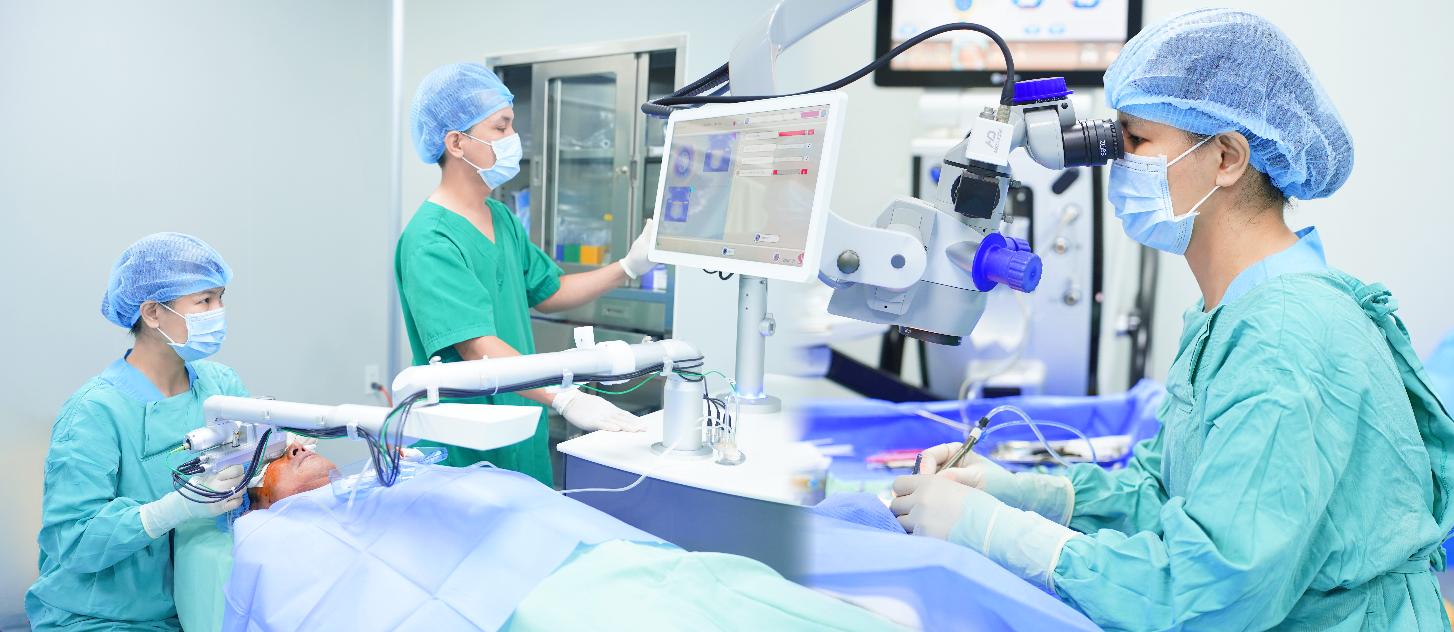 |
The surgeon performs treatment with AI-integrated laser technology. Photo: Cao Thang Eye Hospital |
The surgeon performs treatment with AI-integrated laser technology. Photo: Cao Thang Eye Hospital
According to Doctor Huong, uveitis is a complex disease that can cause severe vision loss, particularly in young patients. Its diagnosis and treatment demand not only deep expertise but also a strict, individualized inflammation control strategy tailored to each stage of the disease.
Treating complex uveitis in young patients requires a comprehensive approach, encompassing diagnosis, inflammation control, and optimal surgical timing. Adhering to JCI-standardized procedures, Cao Thang Eye Hospital continually invests in advanced diagnostic and treatment systems. The hospital also develops individualized, evidence-based treatment protocols to optimize outcomes and minimize complications.
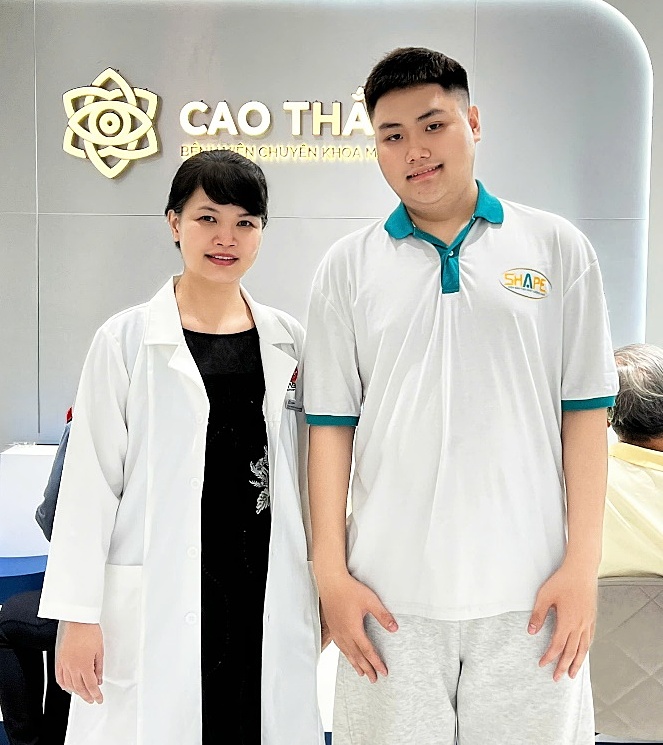 |
Doctor Nguyen Thi Xuan Huong with patient Le Nam Khanh after successful treatment. Photo: Cao Thang Eye Hospital |
Doctor Nguyen Thi Xuan Huong with patient Le Nam Khanh after successful treatment. Photo: Cao Thang Eye Hospital
Doctor Nguyen Thi Xuan Huong is also a leading specialist in cataract surgery and bladeless Phaco technology at the hospital. She has successfully performed over 30,000 surgeries using sophisticated techniques, demonstrating her ability to handle complex pathological cases that require coordination between medical and surgical treatment.
Yen Chi