On the afternoon of 13/4, Nguyen Thuy Lieu traveled from Dong Thap to Ho Chi Minh City to meet doctors from Military Hospital 175 and the US-based humanitarian organization Operation Walk Chicago. At a seminar on hip replacement surgery, Lieu walked briskly in her ao dai, a radiant smile replacing the despair she felt seven years ago.
In 2018, Lieu was diagnosed with Pemphigus, an autoimmune disease requiring lifelong corticosteroid treatment. Initial high-dose corticosteroid use led to bilateral femoral head necrosis. By 2019, at age 30, severe joint pain made it impossible for her to walk, confining her to a wheelchair for daily activities. Her teaching career was interrupted, and her family's finances depended on her husband.
"I was in agony, thinking my future was over and I would be disabled," she recalled.
An opportunity arose in late 2023 when a team of doctors from Operation Walk Chicago came to Dong Thap for charity surgeries, performing a hip replacement on her right side, which was more severely damaged. In 2024, through a collaborative program between Operation Walk Chicago and Military Hospital 175, Lieu traveled to Ho Chi Minh City again for a free hip replacement on her left side.
After two surgeries, Lieu is pain-free and walks normally. She now cares for her family independently and has returned to teaching eight hours a day. Although she continues to take lower-dose corticosteroids to manage Pemphigus, her life has taken a new turn.
 |
Lieu (in a blue ao dai) presents flowers to thank doctors from Military Hospital 175 and Operation Walk Chicago (US) on the afternoon of 13/4. Photo: Song Khue |
Lieu (in a blue ao dai) presents flowers to thank doctors from Military Hospital 175 and Operation Walk Chicago (US) on the afternoon of 13/4. Photo: Song Khue
Lieu is one of nearly 200 patients who have regained mobility thanks to the free hip replacement program, a joint effort by Military Hospital 175 and Operation Walk Chicago over the past five years. During the program, many other patients shared their journeys of overcoming pain. Ngoc Anh, for example, escaped years of insomnia and depression caused by joint necrosis. Dao Hai, 63, who once thought she would "crawl for the rest of her life," can now walk after undergoing simultaneous bilateral hip replacements.
Doctor My Duy Tien, Specialist Level 2, Head of the Department of Lower Extremities at Military Hospital 175's Institute of Orthopedics and Traumatology, explained that the causes of hip joint damage are diverse, ranging from trauma and degeneration to necrosis. When damage is severe, artificial joint replacement is the optimal solution. Currently, the hospital utilizes 3D design technology and minimally invasive surgery, which reduces blood loss, pain, and recovery time.
Early rehabilitation plays a crucial role. Lieutenant Colonel, Doctor Quach Long Vy, Specialist Level 1, Head of the Department of Rehabilitation, stated that according to the Enhanced Recovery After Surgery (ERAS) model, patients can begin exercises immediately after waking up, mobilize in bed within 8-12 hours, and walk within 24 hours, significantly reducing the risk of complications.
 |
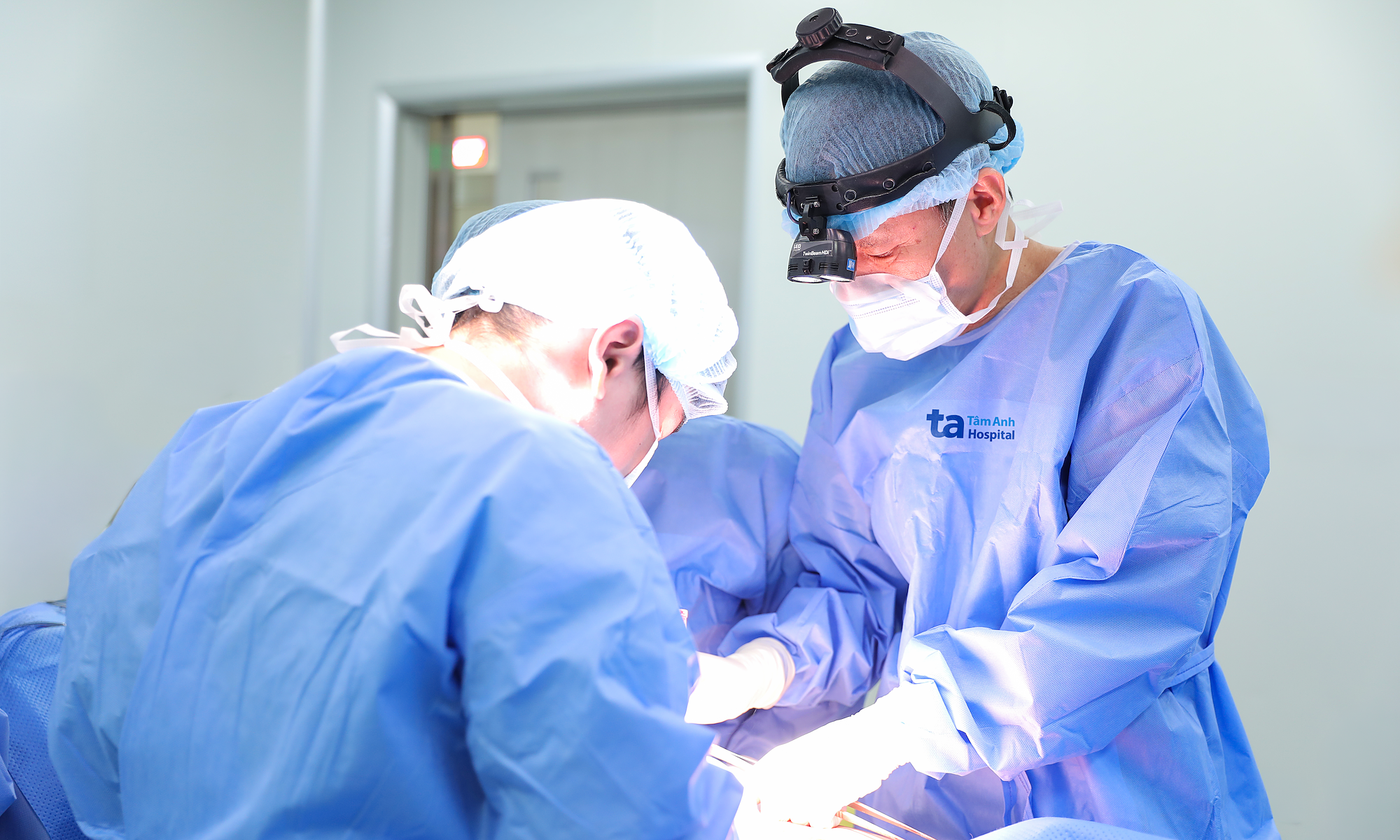
Doctors performing hip replacement surgery at Military Hospital 175. Photo: Hospital provided |
Doctors performing hip replacement surgery at Military Hospital 175. Photo: Hospital provided
Colonel, Doctor Phan Dinh Mung, PhD, Deputy Director of Military Hospital 175, noted that hip joint diseases are affecting younger individuals, with many cases occurring in their 20s and 30s. Contributing factors include smoking, alcohol consumption, sedentary lifestyles, and corticosteroid abuse. The cost of hip replacement surgery, typically 80-100 million VND, remains a barrier. Therefore, since 2019, the program has supported nearly 200 patients. The recent 10-14/4 period saw 37 surgeries, including three complex cases.
Doctors advise Vietnamese patients who undergo hip replacement surgery to abandon habits such as squatting, sitting cross-legged on the floor, or lying in a hammock, as these can increase the risk of hip dislocation.
By Le Phuong