Tonsils are large lymphatic tissues located on both sides of the oropharynx, playing a role in immunity by protecting the body from agents entering through the nose and mouth. The common type of tonsil cancer is squamous cell carcinoma, typically affecting one side (left or right) and rarely appearing on both.
Professor, Doctor Tran Phan Chung Thuy, Director of the ENT Center, Tam Anh General Hospital TP HCM, explained that tonsil cancer treatment often combines surgery with adjuvant methods. The chosen approach depends on the disease stage and the patient's condition.
For stage one and stage two tonsil cancer, treatment may involve radiation therapy or surgery. Surgical intervention includes removing the tonsil using Coblator plasma technology, followed by lymph node dissection and pathological examination. This assessment determines the extent of metastasis and invasion beyond the tonsil or cervical lymph nodes. Based on these findings, doctors may recommend additional chemotherapy or radiation therapy.
In stage three and stage four, the disease is typically treated with combined chemoradiation, potentially followed by surgery in some cases. Patients require thorough examination and diagnosis, utilizing endoscopy and CT scans to evaluate the tumor's spread, the condition of surrounding tissues, cervical lymph nodes, and any distant metastasis.
When tonsil cancer reaches stage 4 with metastasis, the primary treatment focuses on chemotherapy, which may be combined with immunotherapy. Doctors develop suitable, individualized protocols for each specific case.
 |
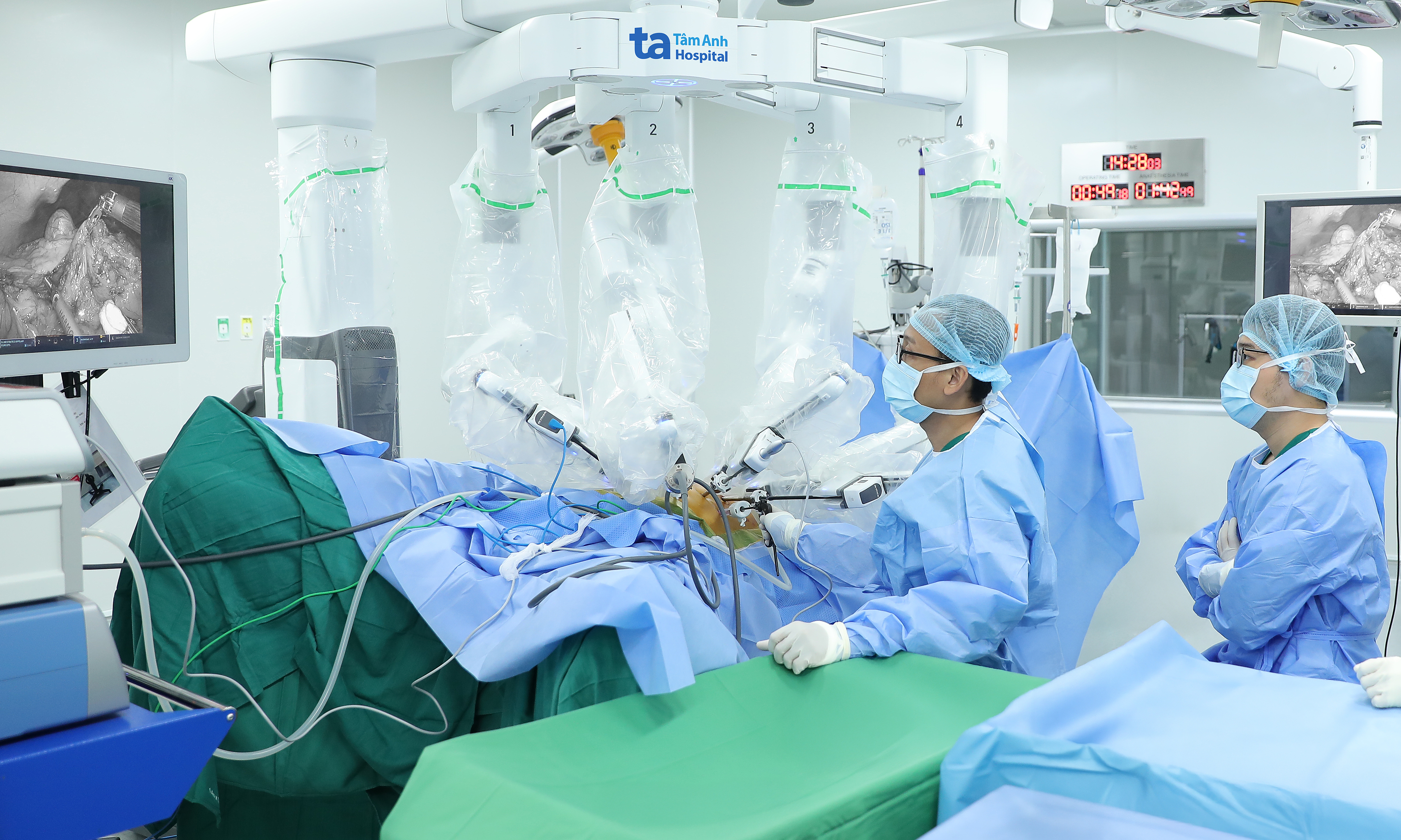
Professor Chung Thuy (right) performs tonsillectomy for a cancer patient. *Photo: Tam Anh General Hospital* |
The disease prognosis depends on the stage at diagnosis and the pathological results obtained after surgery. Following surgery, patients need regular follow-up appointments for ongoing monitoring and appropriate medical guidance.
According to Professor Chung Thuy, initial symptoms of tonsil cancer often include a feeling of obstruction, such as a lodged bone, or painful swallowing on one side. The exact causes of tonsil cancer are not yet fully understood. However, certain factors increase the risk, including poor oral hygiene and human papillomavirus (HPV) infection.
Patients experiencing a persistent sore throat or difficulty swallowing should seek early consultation with an ENT specialist. Beyond clinical examination, screening tools include white light pharyngeal endoscopy and narrow banding imaging (NBI) endoscopy. These methods help detect mucosal changes, indices, and images suggestive of precancerous or malignant lesions. If suspicion arises, doctors will order a biopsy to confirm the diagnosis and ensure timely treatment. Individuals with a family history of head and neck, respiratory, or digestive cancer should undergo regular screening as recommended by their doctor.
Uyen Trinh