Professor Doctor Vo Thanh Nhan, Director of the Interventional Cardiology Center at Tam Anh General Hospital Ho Chi Minh City, stated that the 96-year-old patient was the oldest with severe heart and kidney failure at the hospital to undergo minimally invasive heart valve replacement, avoiding open-chest surgery. Following the procedure, Ms. Men's breathing improved, her heart function stabilized, and she was discharged after 5 days, capable of walking independently.
Diagnosed over 10 years ago, Ms. Men's advanced age and multiple co-existing conditions, including hypertension, diabetes, kidney failure, and severe heart failure, made open surgery unfeasible, leading to medical management only. Professor Nhan emphasized that without valve replacement this time, the disease would continue to progress, with a prognosis of less than two years.
The medical team also assessed the patient's risk of intraoperative mortality as high, at 14%. For context, a risk below 3% is considered low, 3-8% moderate, 8-15% high, and above 15% very high, typically contraindicating surgery.
Transcatheter aortic valve implantation (TAVI) was identified as the sole viable solution. A dedicated team of cardiovascular surgeons and intensive care specialists, supported by an extracorporeal membrane oxygenation (ECMO) system, remained on standby to provide circulatory support should the patient experience acute heart failure or cardiac arrest.
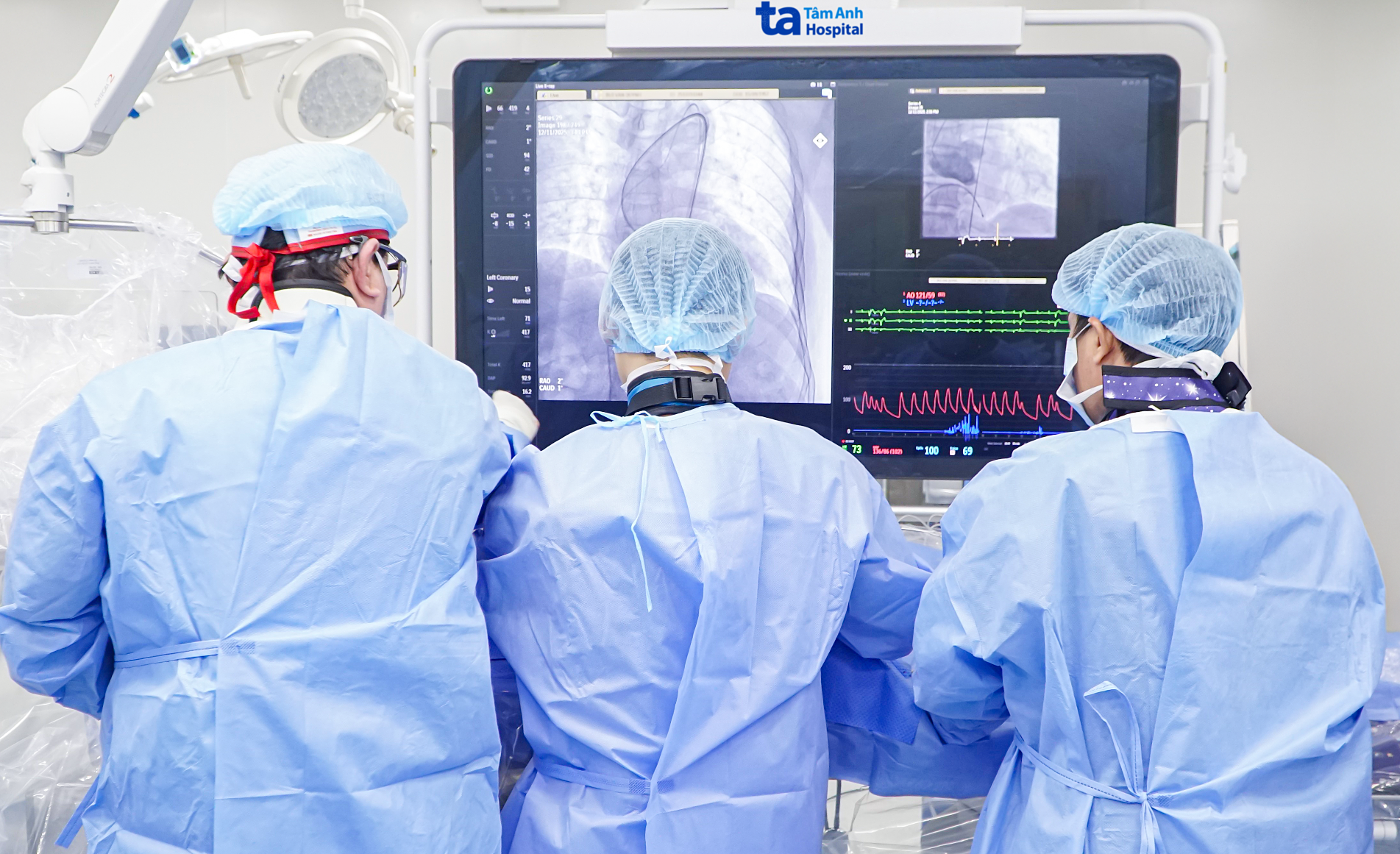 |
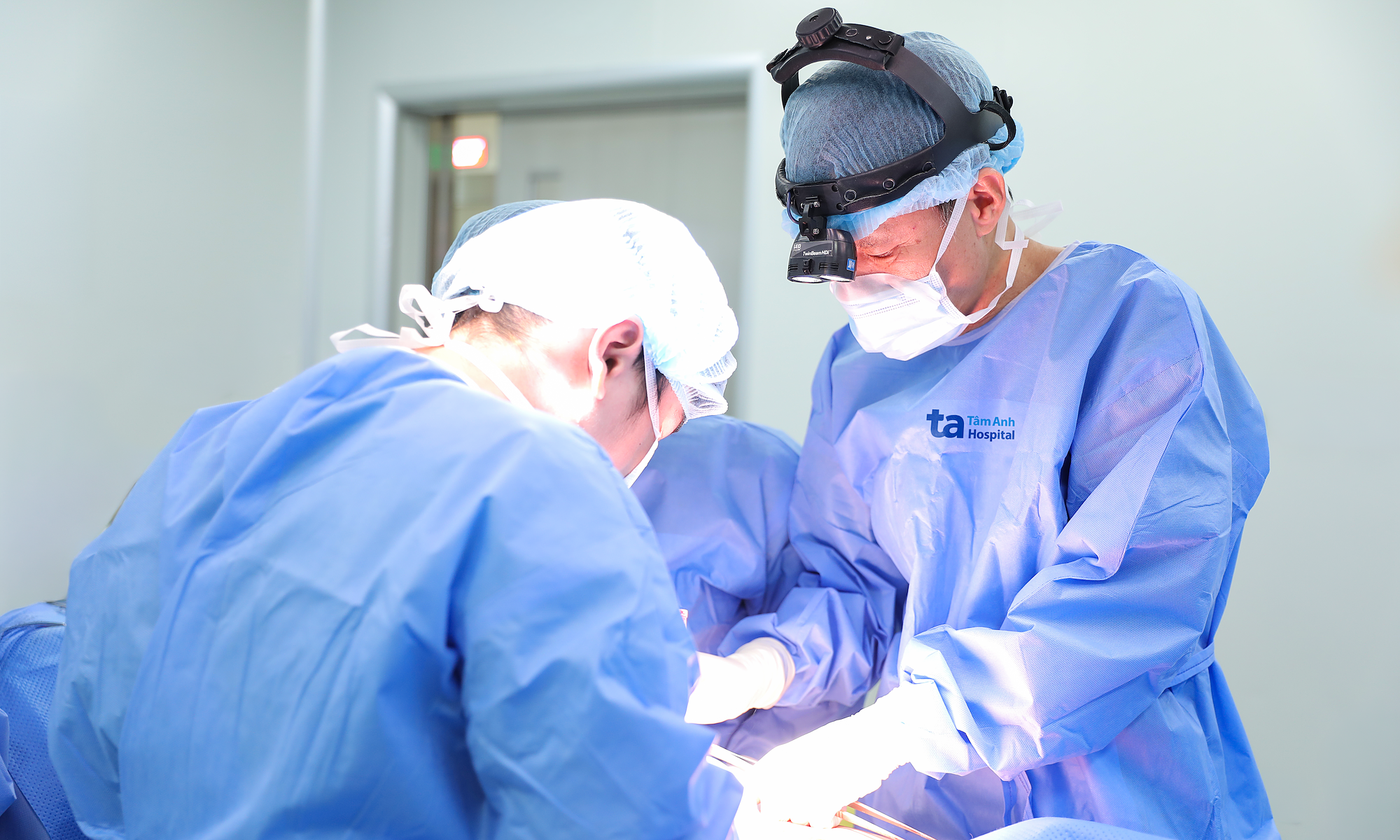
Professor Nhan (far left) and the team performing transcatheter aortic valve replacement. *Photo: Tam Anh General Hospital* |
To mitigate the risk of tracheal edema, local anesthesia was chosen. Ms. Men remained fully conscious and pain-free during the 60-minute procedure. The medical team skillfully guided the catheter through tortuous arterial segments, preventing vessel wall damage. They then performed balloon dilation to expand the aortic valve opening, creating a clear path for the artificial valve. The Sapien 3 valve, known for its balloon-expandable technology and flexible catheter, was selected for its ability to conform to the aortic path, ensuring accurate placement.
Given the patient's kidney failure and a glomerular filtration rate of only 30 ml/min, administering over 100 ml of contrast agent, as is standard, could further compromise renal function and necessitate post-procedure hemodialysis. The team opted to use only 50 ml of contrast agent, successfully preserving her kidney function. The intervention concluded successfully after two hours, with the new valve correctly positioned and functioning effectively. Myocardial contractility (ejection fraction – EF) also improved, enhancing blood circulation throughout the body.
Aortic valve stenosis occurs when the valve fails to open completely, restricting or blocking blood flow from the heart to the rest of the body. The condition progressively worsens, leading to severe complications such as endocarditis, cardiac arrhythmias, stroke from blood clots, and ultimately, death.
Professor Nhan noted that historically, surgical aortic valve replacement with extracorporeal circulation was the sole treatment for symptomatic aortic valve stenosis. However, approximately one-third of patients were deemed unsuitable for surgery due to co-existing medical conditions like severe left heart failure, kidney failure, chronic obstructive pulmonary disease (COPD), or diabetes.
Transcatheter aortic valve implantation (TAVI) is now utilized in over 80 countries, with case numbers increasing by 40% annually. Tam Anh General Hospital Ho Chi Minh City received certification as an "Independent TAVI Center" for both self-expanding and balloon-expandable valve technologies in May and November 2025.
Thu Ha
| Readers can submit questions about cardiovascular diseases here for doctors to answer. |