Ms. Thi had known about her goiter for over two years and received regular treatment. Dr. Tran Nguyen Quynh Tram, Deputy Head of the Endocrinology - Diabetes Department at Tam Anh General Hospital in TP HCM, suspected the goiter was compressing the patient's airway. X-ray results confirmed the substernal goiter had descended into the mediastinum (chest cavity), pushing the trachea to the right. The tracheal walls were pressed together, narrowing the airway's diameter to just 1,5 mm over a length of 4,5 cm.
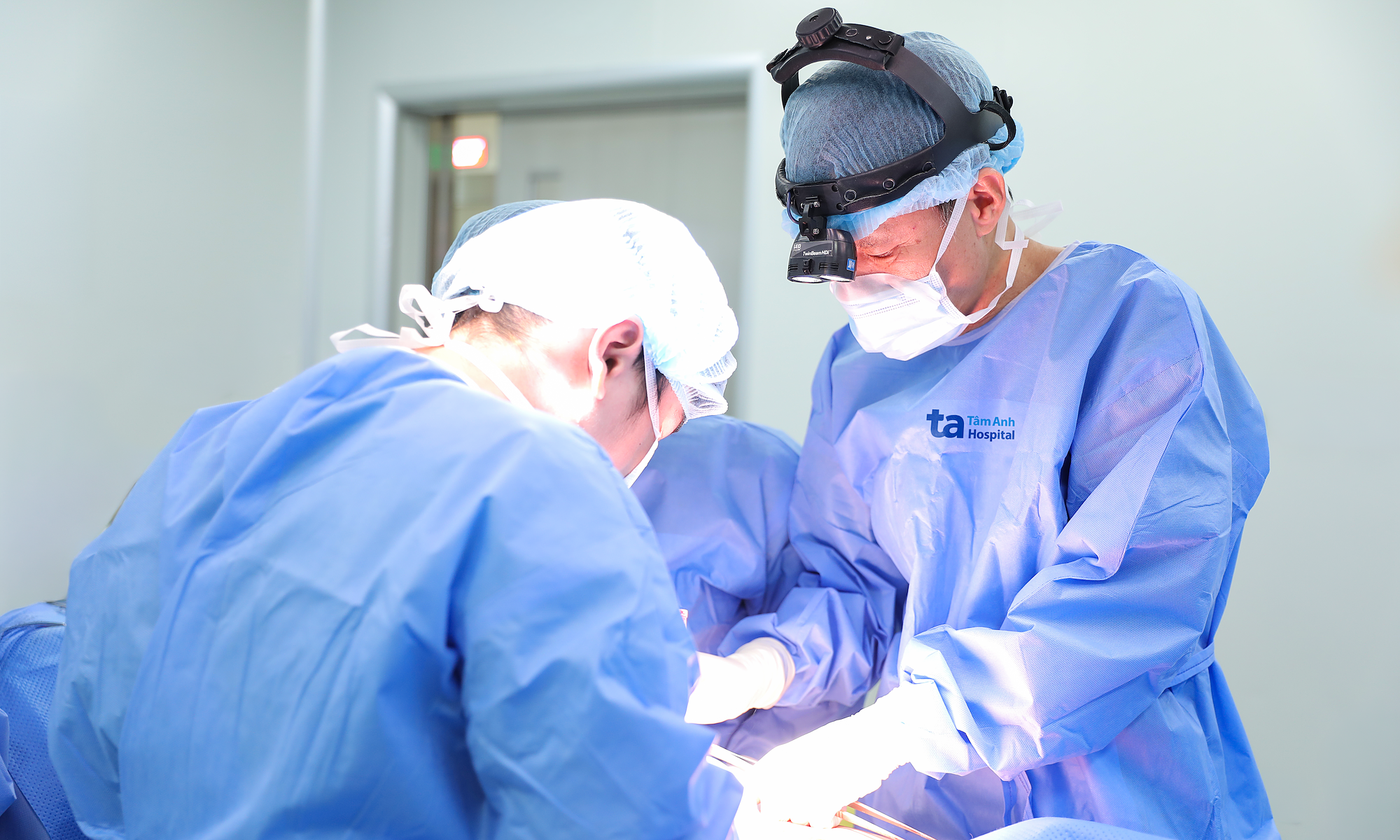
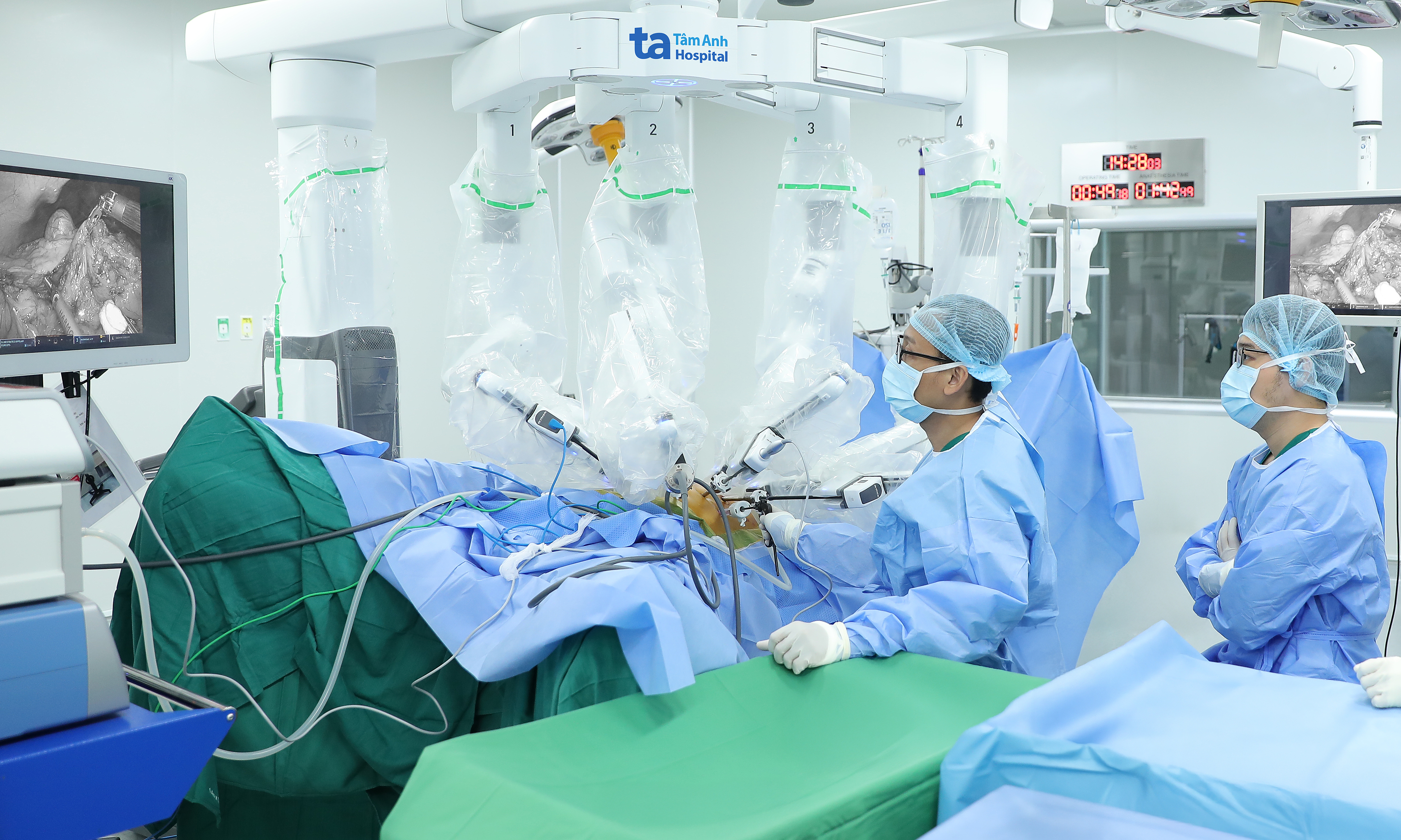
The patient underwent surgery to relieve airway compression. The surgical team made a 6 cm incision in her chest to carefully dissect the goiter, avoiding perforation of the trachea or esophagus and preventing damage to major blood vessels, successfully removing the entire growth.
 |
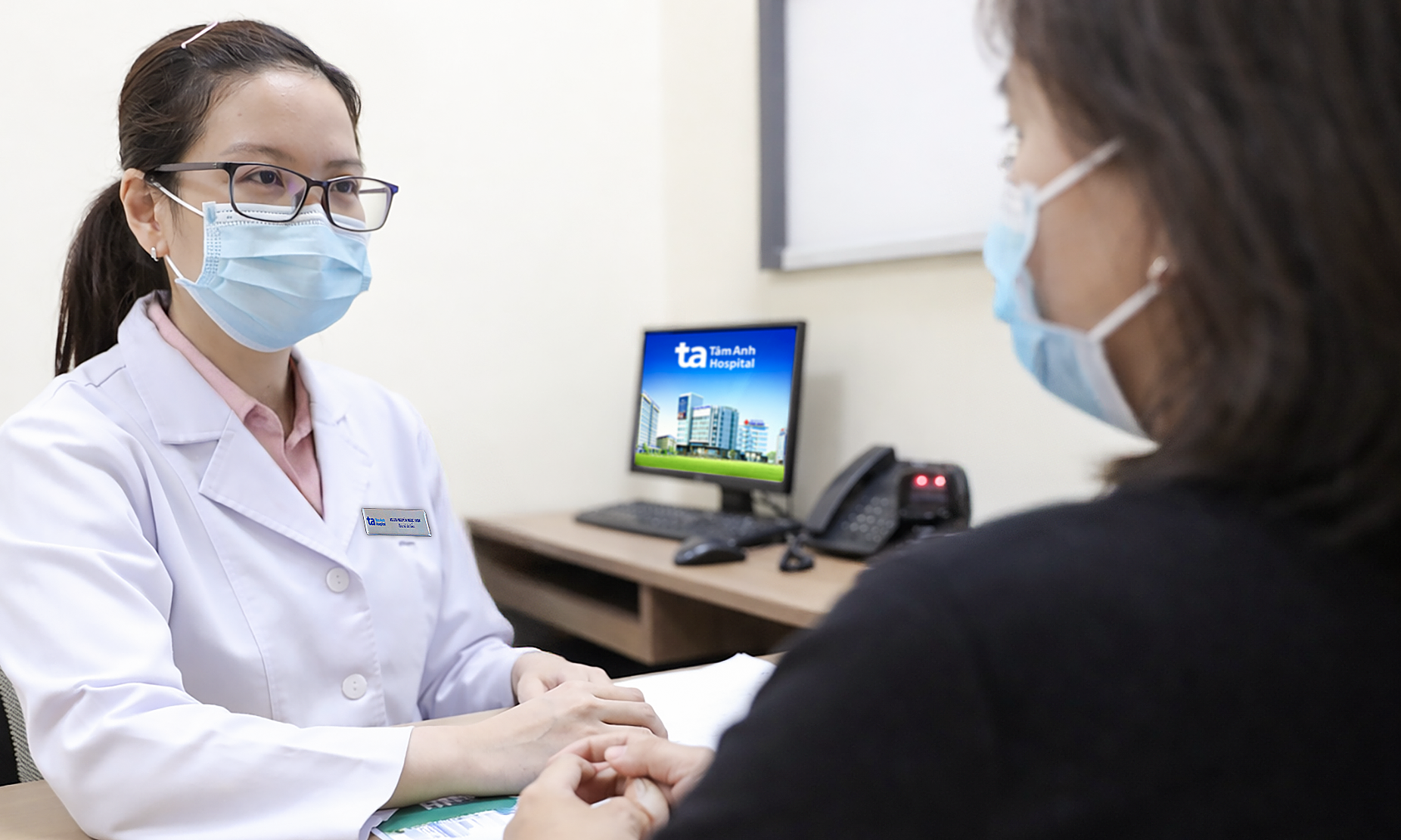
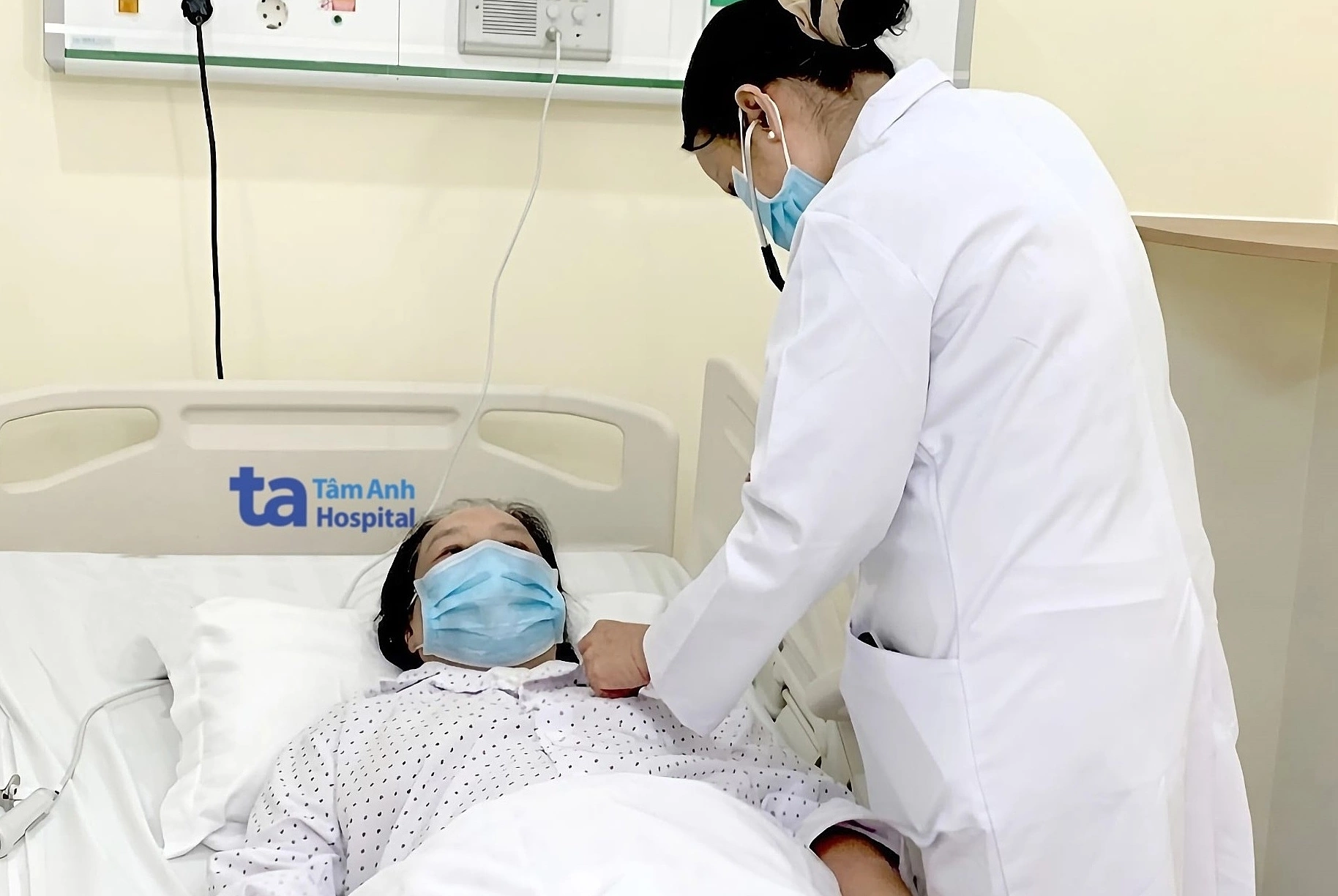
Doctors examine Ms. Thi after open surgery to remove the goiter. Photo: Tam Anh General Hospital |
Doctors examine Ms. Thi after open surgery to remove the goiter. Photo: Tam Anh General Hospital
According to Dr. Tram, the patient also had fibrotic lung lobe lesions, several small solid nodules less than 4 mm in diameter beneath the pleura, and thoracic spinal degeneration. These conditions complicated the patient's airway recovery following the substernal goiter surgery.
Ms. Thi was closely monitored for signs related to her trachea, esophagus, and larynx. 5 days after surgery, she recovered well, her shortness of breath resolved, and she had no difficulty swallowing.
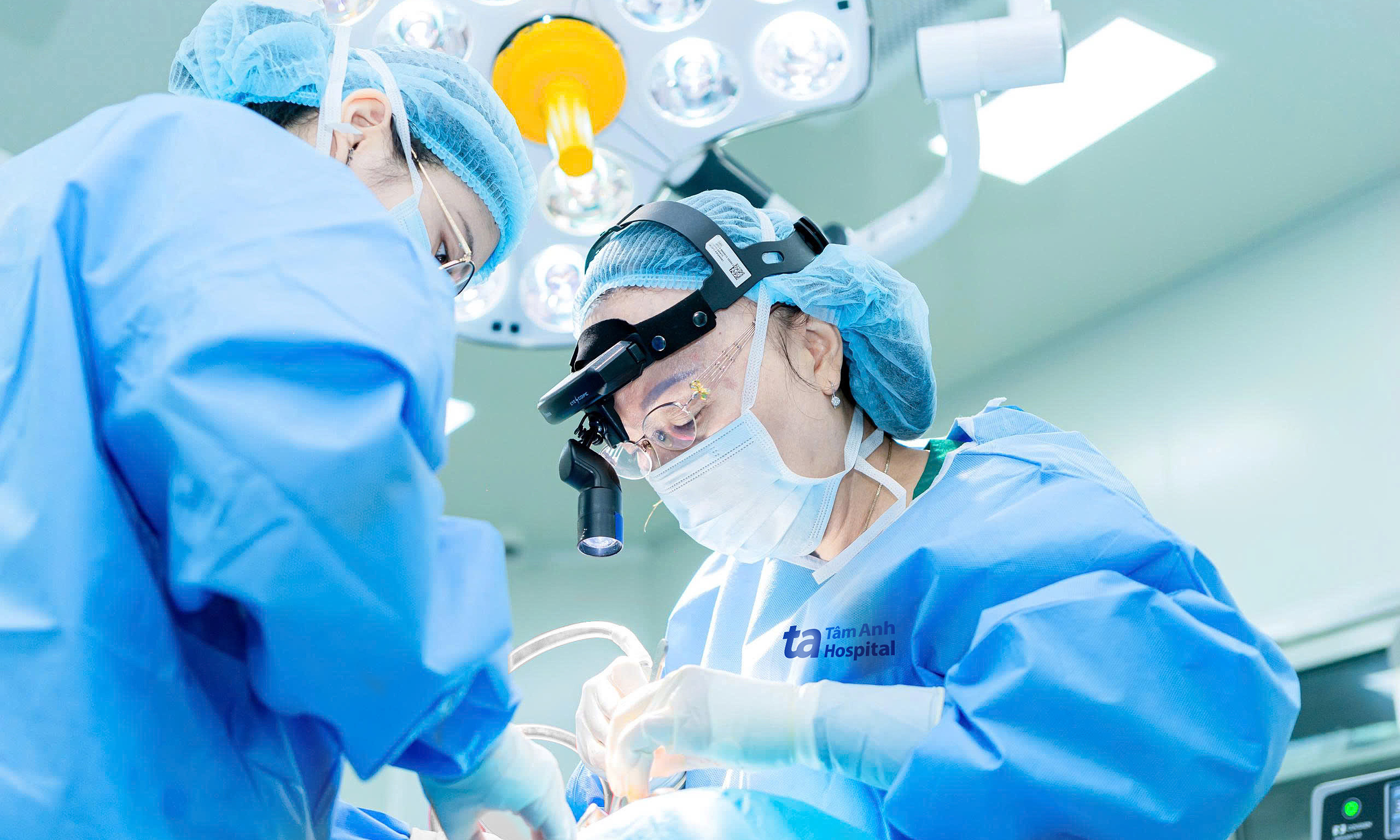
 |
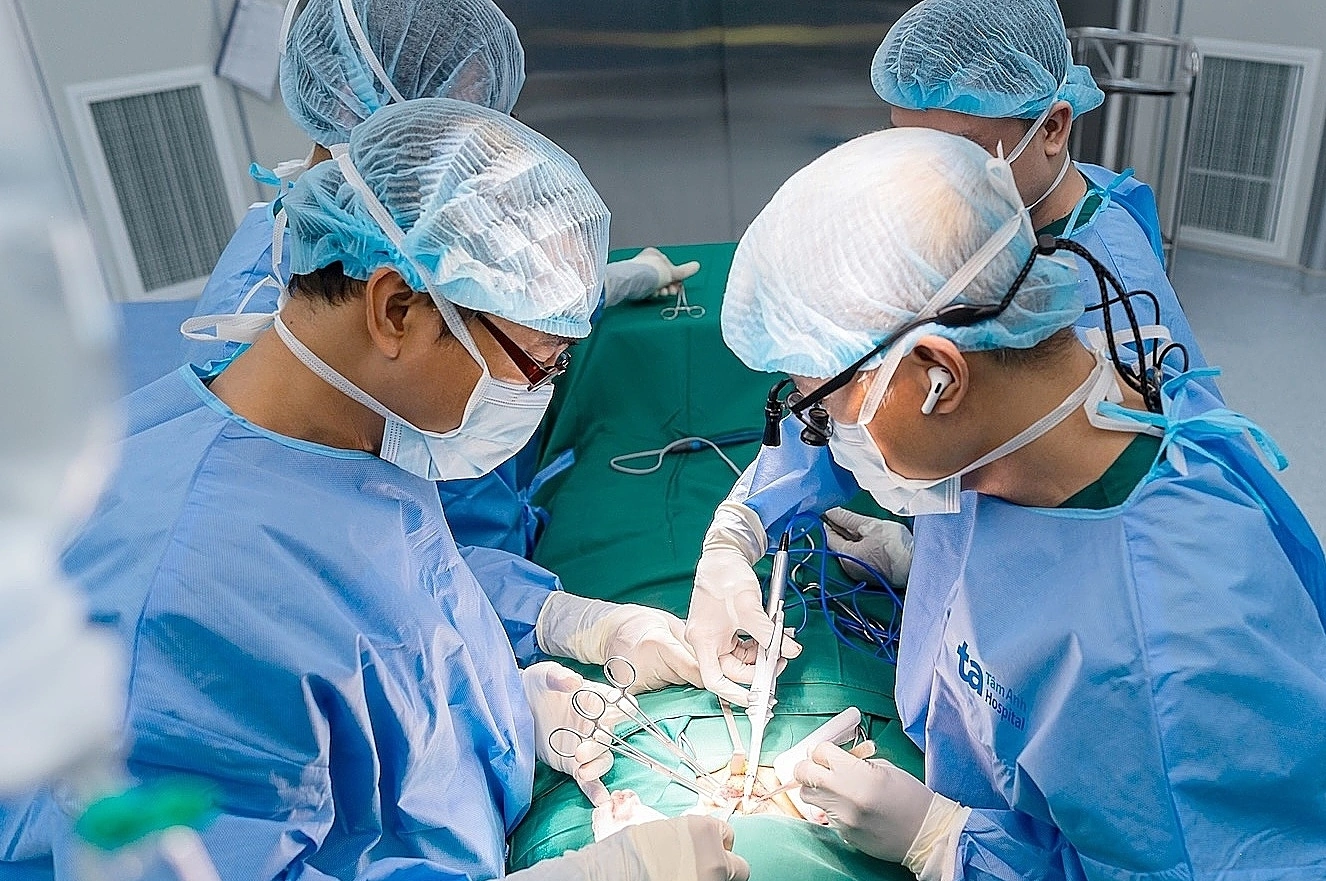
Doctors perform substernal goiter surgery on Ms. Thi. Photo: Tam Anh General Hospital |
Doctors perform substernal goiter surgery on Ms. Thi. Photo: Tam Anh General Hospital
Dr. Tram stated that substernal goiters account for 3-20% of all goiter cases. The condition often causes few symptoms in its early stages and is typically discovered incidentally during chest X-rays, CT scans, or when the goiter descends into the mediastinum, causing acute shortness of breath.
Risk factors and causes include: iodine deficiency, multinodular goiter, thyroid adenoma, thyroid cysts, chronic thyroiditis, hormonal changes during pregnancy, autoimmune diseases (Hashimoto's and Graves'), and genetics. Doctors advise regular health check-ups and thyroid ultrasounds to detect abnormalities, diagnose causes, and ensure timely treatment.
Bach Duong
*Patient's name has been changed