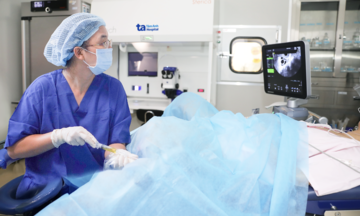
Doctor Nguyen Thi Yen Thu, from the Department of Obstetrics and Gynecology at Tam Anh General Hospital, Ho Chi Minh City, reported that Mrs. Nop had a cyst measuring 64x49x59 mm near her right ovary and a 21x15x18 mm cyst on her left. Post-menopausal ovarian cysts can develop due to abnormal cell growth, which is the most common cause, or pelvic infections. After menopause, ovaries may produce cells that grow uncontrollably, leading to cysts that could become cancerous.
Doctors recommended robot-assisted surgery using the Da Vinci Xi system to remove the tumor-containing adnexa. Given Mrs. Nop's risk of hypertension, heart rhythm complications, embolism, uncontrolled bleeding, and post-operative infection, the medical team prioritized safety. They carefully managed her blood pressure, optimized cardiovascular factors, and selected appropriate pain management and anesthesia to ensure a safe procedure.
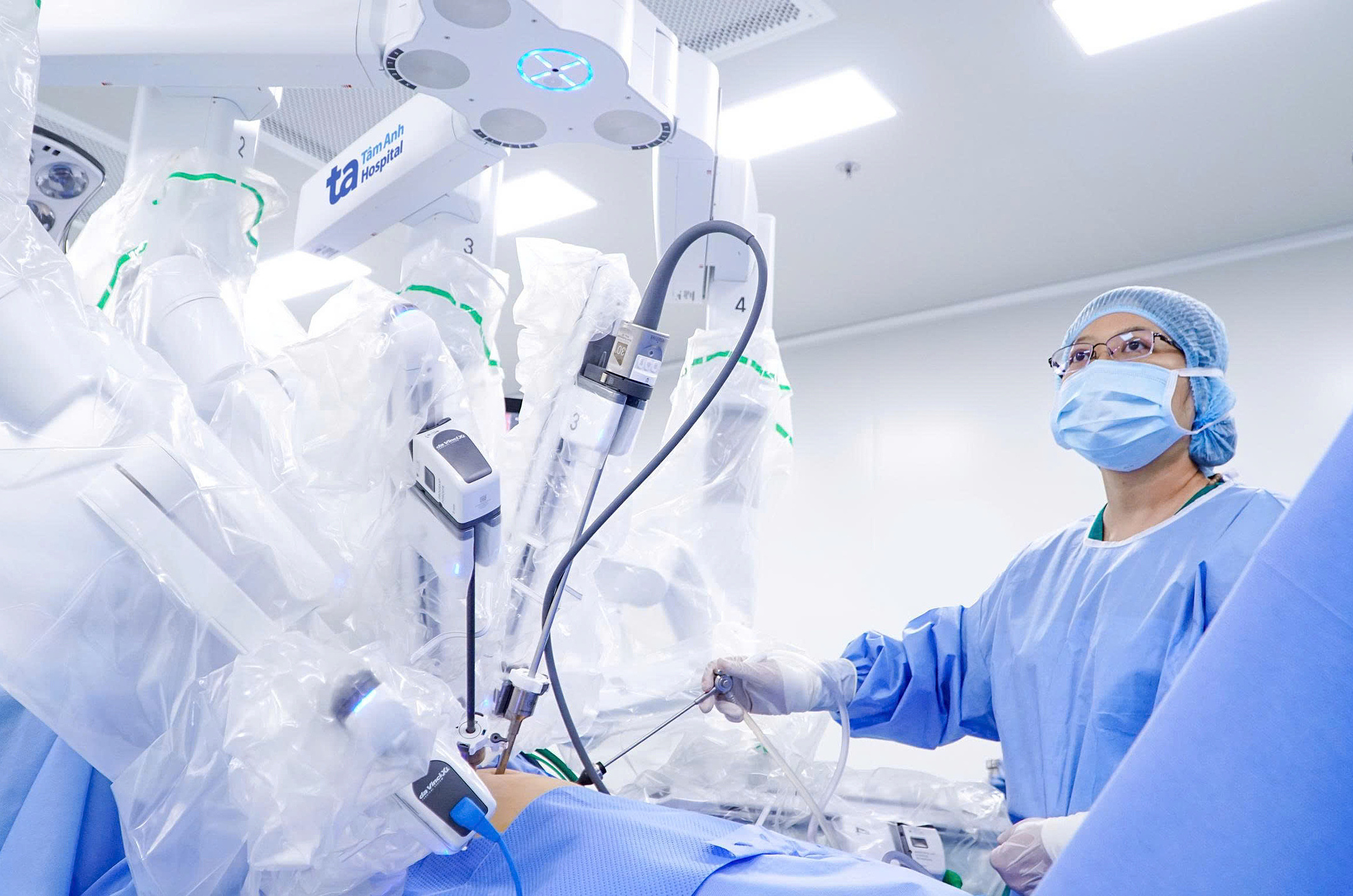 |
Doctor Thu participated in the robot-assisted surgery to remove Mrs. Nop's tumor-containing adnexa. Photo: Trung Vu |
Doctor Nguyen Ba My Nhi, Director of the Department of Obstetrics and Gynecology, highlighted the precision of robot-assisted surgery. The robot provides 3D magnification 15 times greater than conventional methods, minimizes hand tremors, and significantly reduces the risk of damaging the ureters and blood vessels in the narrow pelvic region. Doctors successfully removed the bilateral adnexa containing the tumors, preserving vital surrounding structures, and observed no post-operative complications. The 8 mm incision resulted in less pain, allowing the elderly patient to recover much faster compared to open surgery.
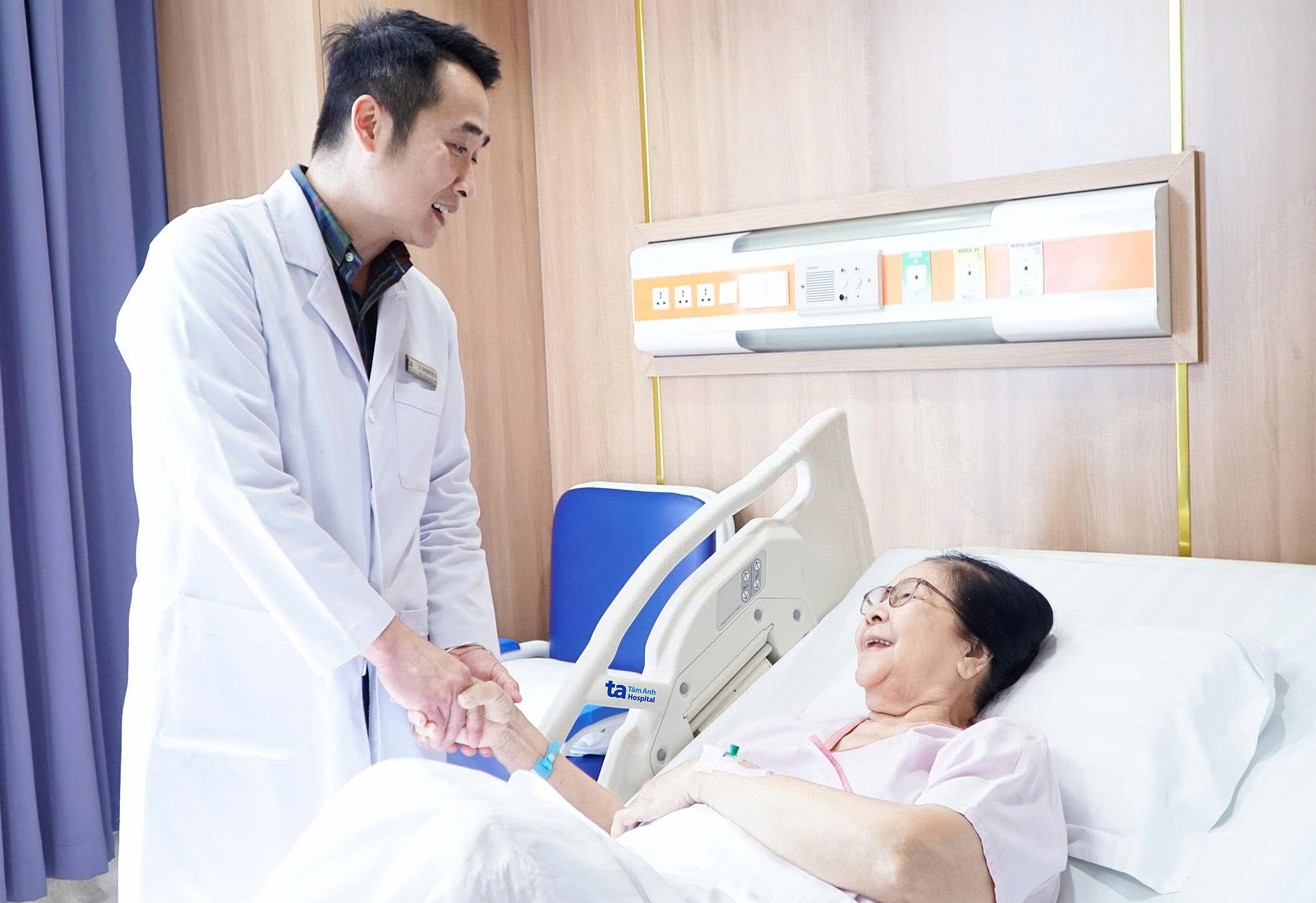 |
Doctor Phan The Thi spoke with Mrs. Nop one day after her surgery. Photo: Trung Vu |
Thanks to the small incision and minimal pain, Mrs. Nop quickly resumed eating and was able to walk within 8 hours after surgery. She was discharged after two days of monitoring. According to Doctor My Nhi, elderly patients typically recover 3-5 times faster after robot-assisted surgery than after open surgery, experiencing fewer complications such as intestinal adhesions and post-operative pneumonia, and returning to daily activities sooner.
Doctor Nguyen Thi Yen Thu noted that approximately 80% of serious gynecological conditions in menopausal women progress silently and are often overlooked. She advises women to maintain regular health check-ups and gynecological screenings once every 6-12 months. Women should seek medical attention sooner if they experience symptoms like abdominal pain, unusual weight loss, vaginal bleeding, or detect an abnormal lump.
Tue Diem
| Readers can send questions about obstetrics and gynecology here for doctors to answer |