Sreing had been advised to undergo surgery years ago but opted for conservative treatment, fearing post-operative complications. When her pain became severe and walking difficult, she sought examination at Tam Anh General Hospital in Ho Chi Minh City. X-ray results revealed end-stage knee osteoarthritis, with the cartilage layer almost completely gone, causing her bone ends to collide during movement.
Dr. Le Dinh Khoa, head of the Joint Reconstruction Department, prescribed a knee replacement for Sreing using an AI-integrated Cuvis-Joint robot. This approach aimed for faster recovery and reduced the need for her to travel from Cambodia to Vietnam for multiple follow-up appointments.
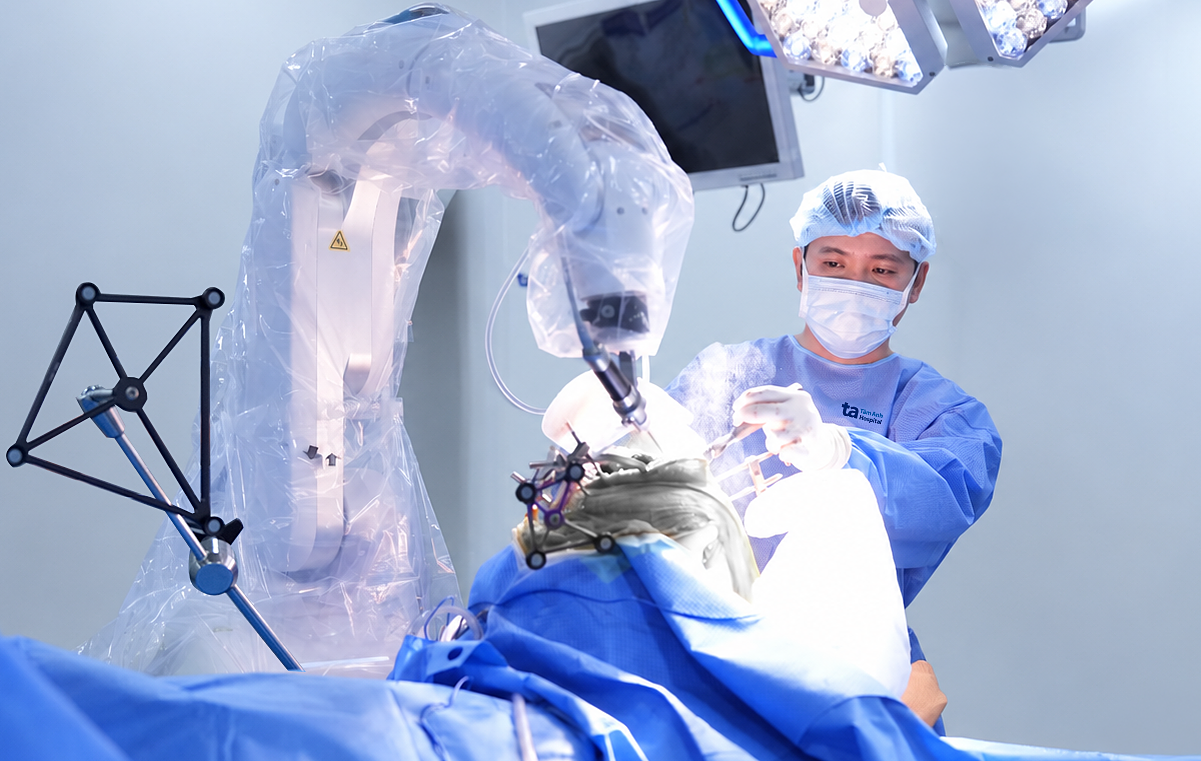 |
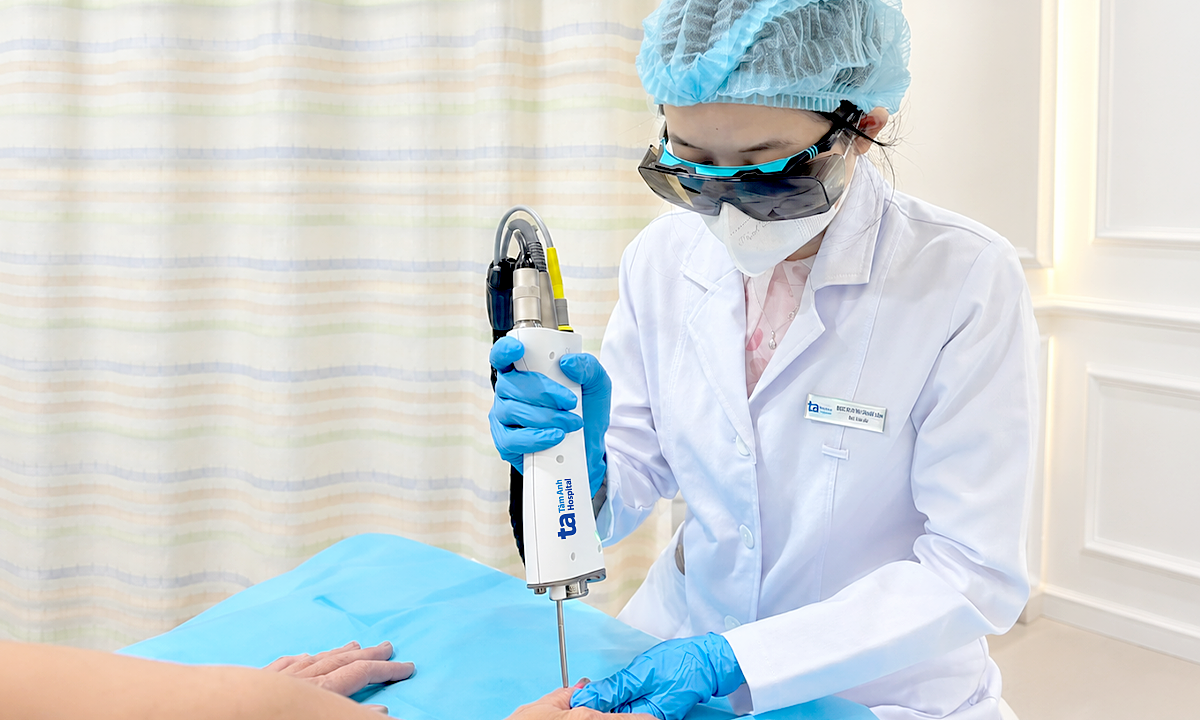
Dr. Khoa performs knee replacement surgery for Sreing with the assistance of the Cuvis-Joint robot. *Photo: Tam Anh General Hospital.*
The AI robot, equipped with J-Planner software, assists doctors in accurately analyzing bone morphology and the patient's knee joint anatomical parameters, enabling the development of a precise surgical plan.
The AI Cuvis-Joint robot autonomously cuts bone according to the surgeon's approved plan with millimeter-level precision, minimizing the risk of damage to blood vessels, nerves, and ligaments. Consequently, patients experience less pain and faster recovery post-surgery. The robot also assists surgeons in optimizing soft tissue balance and limb alignment to match the natural curvature of the leg before the illness, rather than adjusting it to be perfectly straight. This enables patients to move and flex their leg more easily after surgery, avoiding the sensation of using an artificial knee joint.
Sreing was discharged three days after surgery. During her two-week follow-up, she could navigate stairs and walk independently with ease. Thanks to her excellent post-operative recovery, she was able to perform ankle and foot exercises in the car on her journey home, as instructed by the doctor, which helped improve circulation. This proactive approach allowed her to avoid risks associated with long periods of sitting after knee replacement, such as deep vein thrombosis, pulmonary embolism, edema, and joint stiffness.
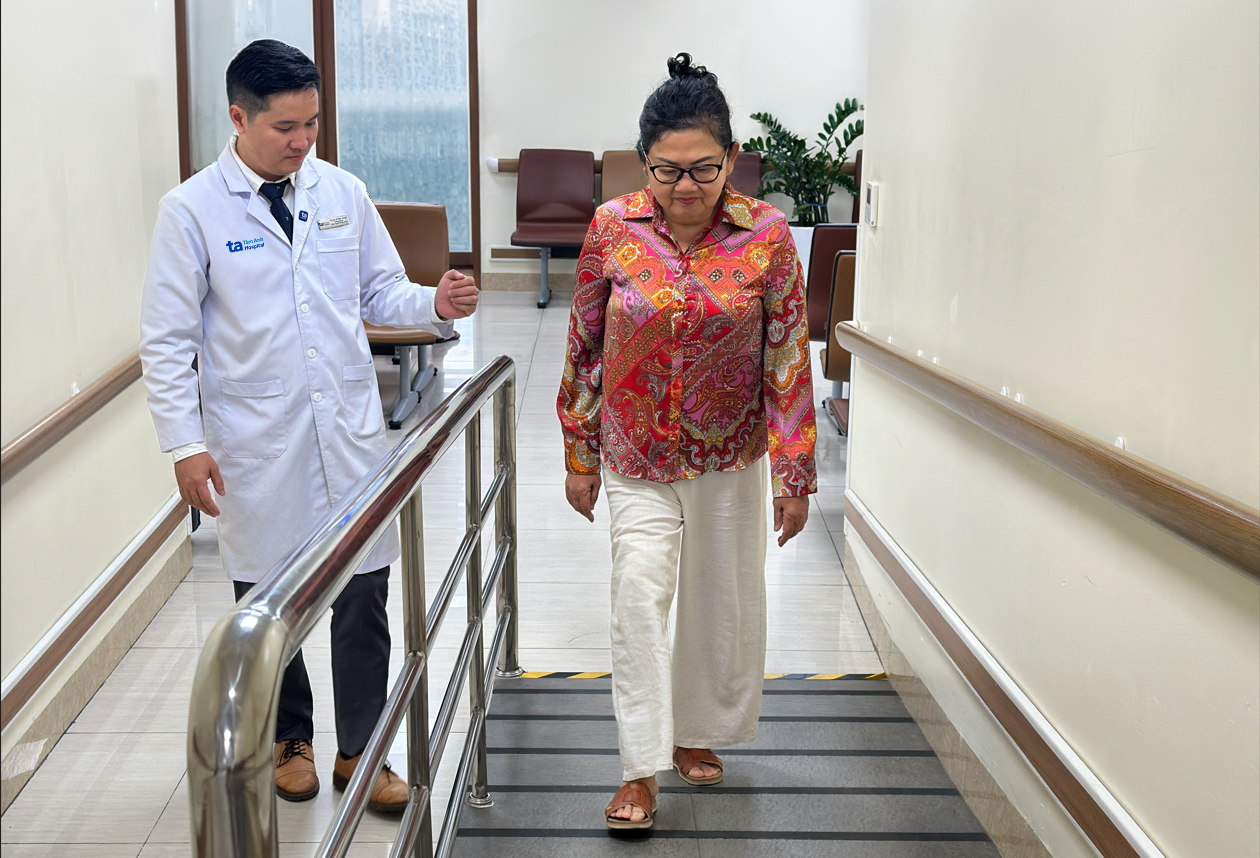 |
Dr. Khoa assesses Sreing's recovery two weeks after surgery. *Photo: Tam Anh General Hospital.*
Knee osteoarthritis is a common condition that can be well-managed with medication and exercise in its early stages. However, when surgery is indicated, patients should seek early treatment. Pain relievers and anti-inflammatory drugs only alleviate symptoms; the underlying cause remains untreated, leading to a quick return and worsening of pain. Prolonged reliance on these medications can expose patients to risks such as weakened immunity, liver and kidney damage, and loss of mobility.
By Phi Hong