Thuy's toenails have been discolored, thick, and brittle for five years, frequently recurring. Recently, the damage spread to her fingernails, prompting her to visit Tam Anh General Hospital Ho Chi Minh City. Dr. Quach Thi Bich Van, a specialist in Dermatology and Aesthetic Dermatology, diagnosed Thuy with nail fungus and atopic dermatitis, a factor that made the condition persistent for many years.
Doctors explain that nail fungus is not simply a fungal infection that can be cured with medication alone. For individuals with chronic skin conditions like atopic dermatitis, the skin structure around the nails often experiences prolonged damage, making them prone to onycholysis (nail separation). Dry, cracked, inflamed skin reduces natural protective abilities, increasing the risk of fungal invasion and making treatment more challenging and prolonged.
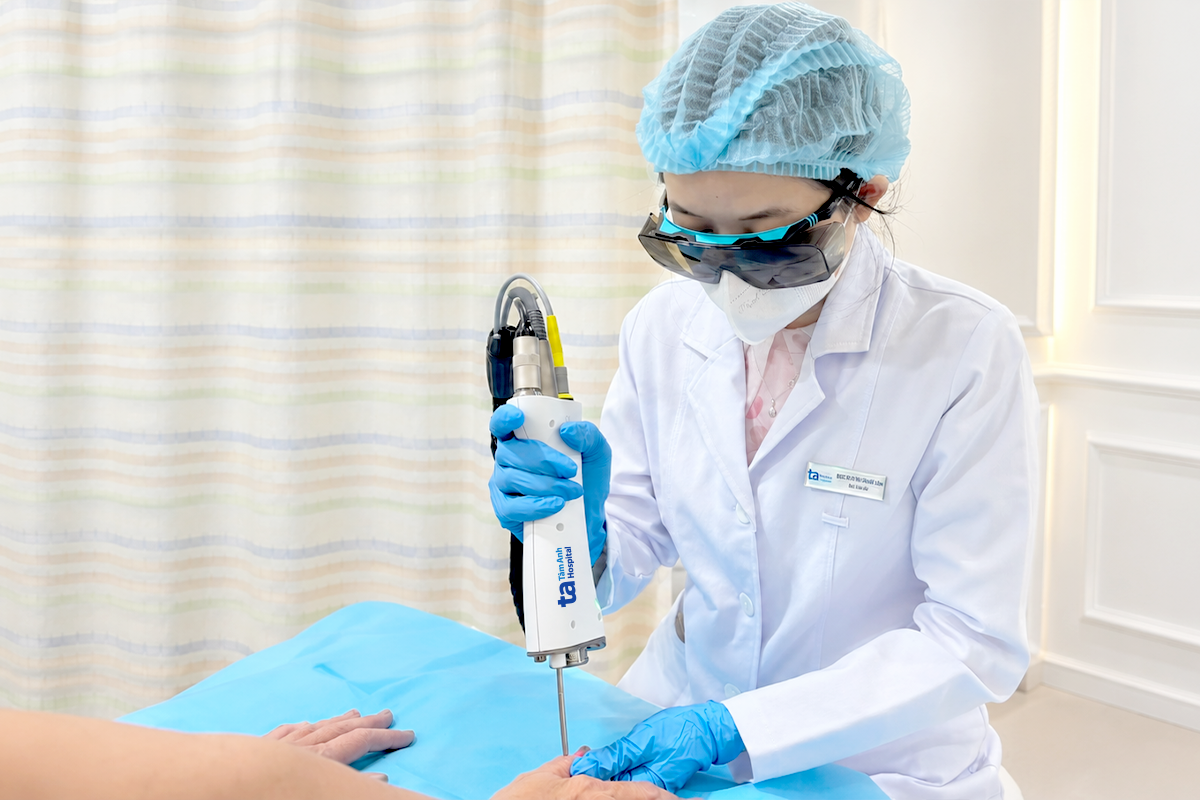 |
A doctor treats Thuy's nail fungus with a 6D laser. Photo: Tam Anh General Hospital
The doctor developed a combined treatment protocol to manage atopic dermatitis and address nail fungus. The patient received antifungal medication, alongside care for the skin around the nails to restore the skin's protective barrier. Concurrently, the doctor prescribed a 6D laser for topical treatment, creating conditions for healthier nail growth and enhancing medication effectiveness. This method directly targets the damaged nail area, promoting stronger new nail growth.
Thuy was advised to keep her nails clean and dry, avoiding prolonged exposure of her hands and feet to moisture. When frequently exposed to water or detergents, patients should use protective gloves to reduce irritation to the skin around their nails.
After more than six months of treatment, the damaged nails gradually became less thick, nail color improved, and new nails grew healthier than before. However, patients need to continue treatment and have regular follow-up appointments to monitor response and manage the underlying condition.
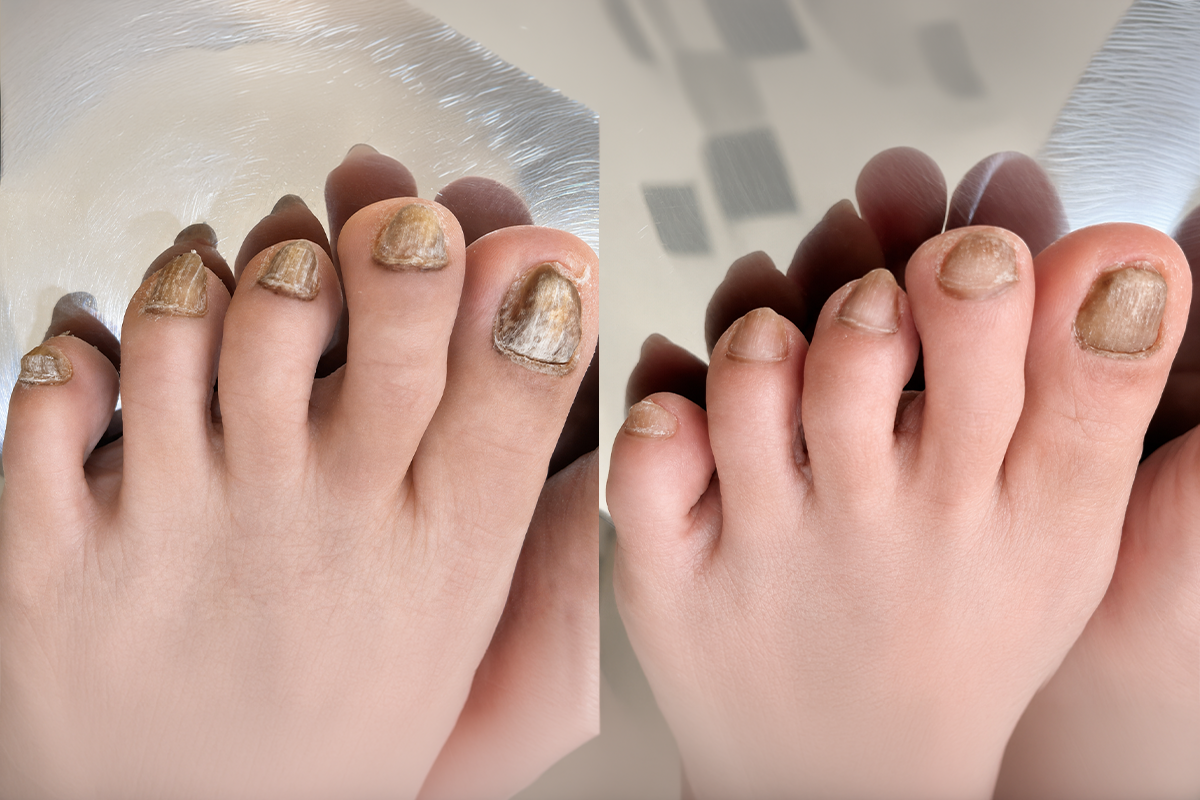 |
Thuy's nails are less hyperkeratotic after six months of treatment. Photo: Tam Anh General Hospital
Doctors recommend that individuals with persistent nail discoloration, thickening, brittleness, separation, or deformity seek examination at a Dermatology and Aesthetic Dermatology department to determine the cause. If nail fungus recurs, doctors will assess risk factors such as atopic dermatitis, psoriasis, diabetes, or immunocompromised status to select an appropriate treatment protocol. Due to slow nail growth, patients need to complete the full course of treatment, even if symptoms have improved, to reduce the risk of recurrence.
Minh Huong
*Patient's name has been changed.