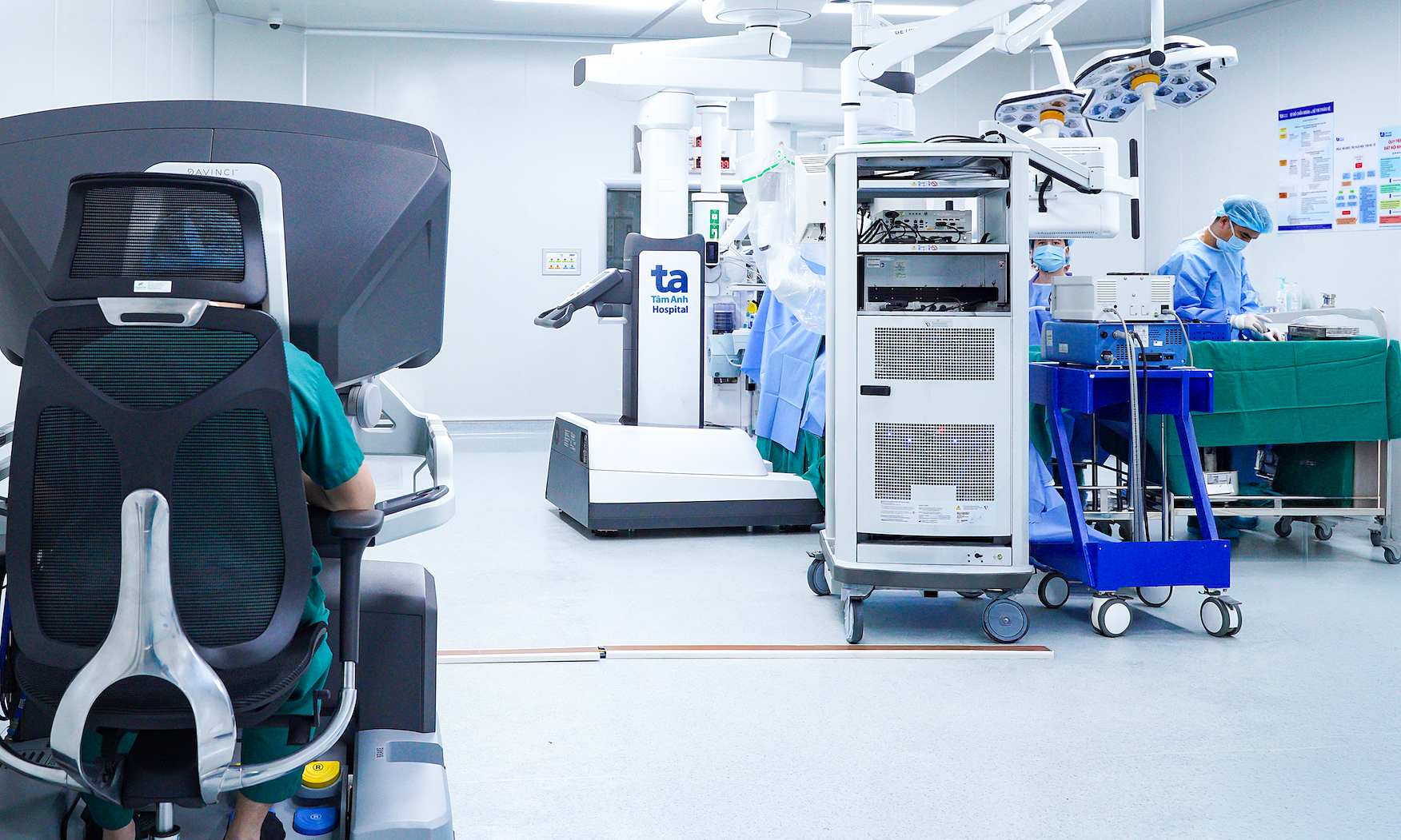
Robot-assisted laparoscopic surgery is an advanced, minimally invasive surgical method that significantly reduces patient trauma and promotes rapid recovery. On the second day after surgery, the patient was mobile, had their abdominal drain removed, and began a light diet, followed by postoperative monitoring.
Prostate cancer is a malignant condition that develops from cells in the prostate gland, a small organ located below the bladder in men. It is common in middle-aged and older men, typically over 50 years old. The disease often progresses silently with symptoms such as difficult or painful urination, which can be easily mistaken for other benign urinary tract conditions in men.
The aforementioned patient was admitted with symptoms of difficult and painful urination. Doctors discovered a firm nodule in the prostate, and a prostate-specific antigen (PSA) test showed an elevated level of 9.03 ng/ml, significantly higher than the normal level of under 4 ng/ml. Biopsy results confirmed the patient had stage two prostate cancer, categorized as an intermediate-risk group.
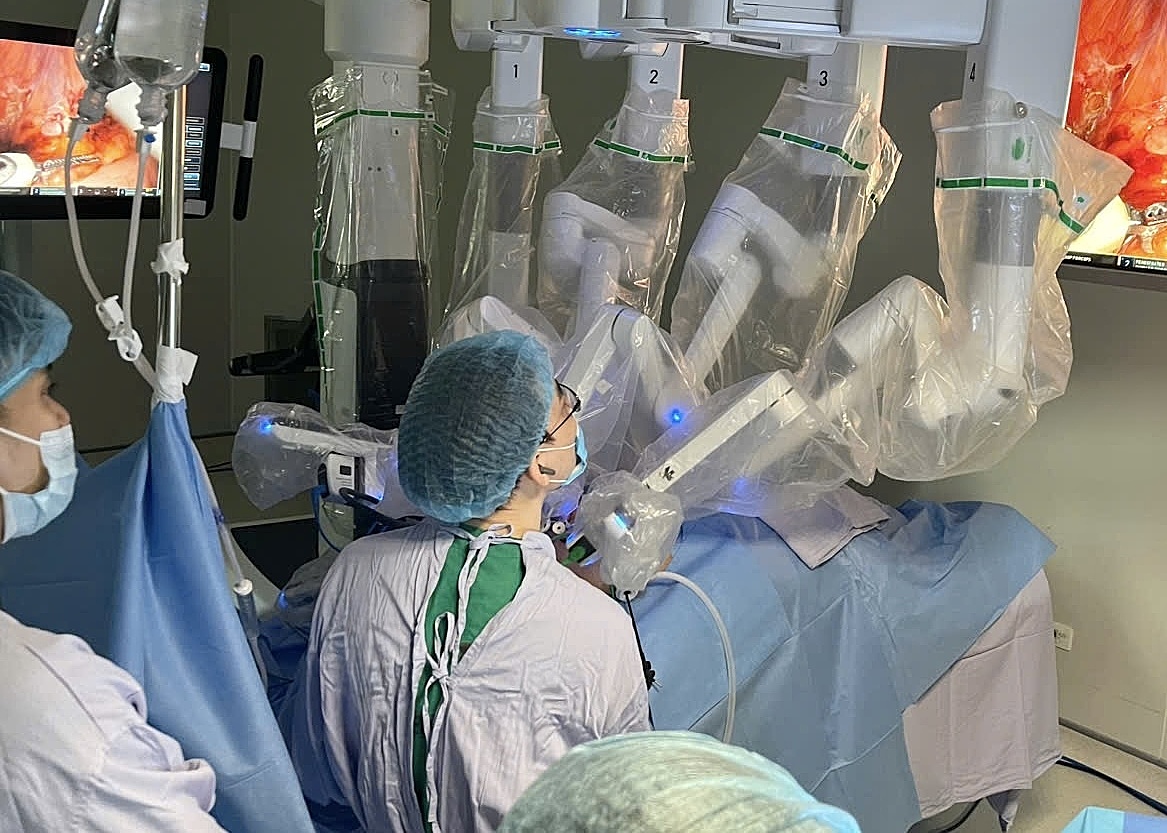 |
Doctors use a surgical robot for a prostate cancer patient. Photo: Ha Tran |
Master, Doctor Nguyen Viet Dung, Deputy Head of the Department of Urology, stated that for localized prostate cancer, a radical prostatectomy aims to completely remove the tumor, prevent metastasis, and extend the patient's survival time. Early detection and timely intervention help patients avoid severe complications that can arise in later stages of the disease.
"When the disease has not progressed, meaning the tumor is still confined within the prostate, has not invaded surrounding tissues, and there is no distant metastasis, it is the optimal time for radical surgery, offering the highest chance of a cure", said Doctor Dung. He added that among current surgical methods, robot-assisted surgery is the most modern option, offering many advantages for patients, especially the elderly, who can be discharged sooner and recover more quickly.
Master, Doctor, Second-Degree Specialist Do Anh Tuan, Head of the Department of Urology, noted that Benh vien K is actively promoting robot-assisted laparoscopic surgery and other modern diagnostic and treatment methods to enhance service quality and treatment effectiveness for patients. Many elderly patients with weakened health who undergo robot-assisted laparoscopic surgery experience reduced blood loss risk, ensured safety, and faster recovery times after the procedure.
Benh vien K has incorporated robotic surgery for various cancers, including esophageal, gastric, colorectal, liver, urological, lung, and gynecological cancers.
Le Nga