Nguyen Thuy Phuong Dung, a resident of TP HCM, maintained a habit of undergoing health check-ups every six months. Recently, experiencing discomfort in her left chest, she visited FV Hospital for an examination. A CT scan of her lungs unexpectedly revealed a tumor in her chest. The tumor was located at the corner of the descending aorta, pressing against the heart and pulmonary artery, and was obscured by ribs, shoulder blade, and pleura.
Master of Science, Second-Degree Specialist Doctor Luong Ngoc Trung, Head of Vascular Surgery and Endovascular Intervention, and an expert in thoracic and robotic surgery at FV Hospital, noted that due to the tumor being hidden by bone structures and located close to the aorta, the medical team could not perform a needle biopsy through the chest wall to determine its benign or malignant nature before surgery.
"If we intervened with conventional laparoscopic surgery, accessing and maneuvering in the narrow, hidden space between large blood vessels would be extremely difficult", he stated.
 |
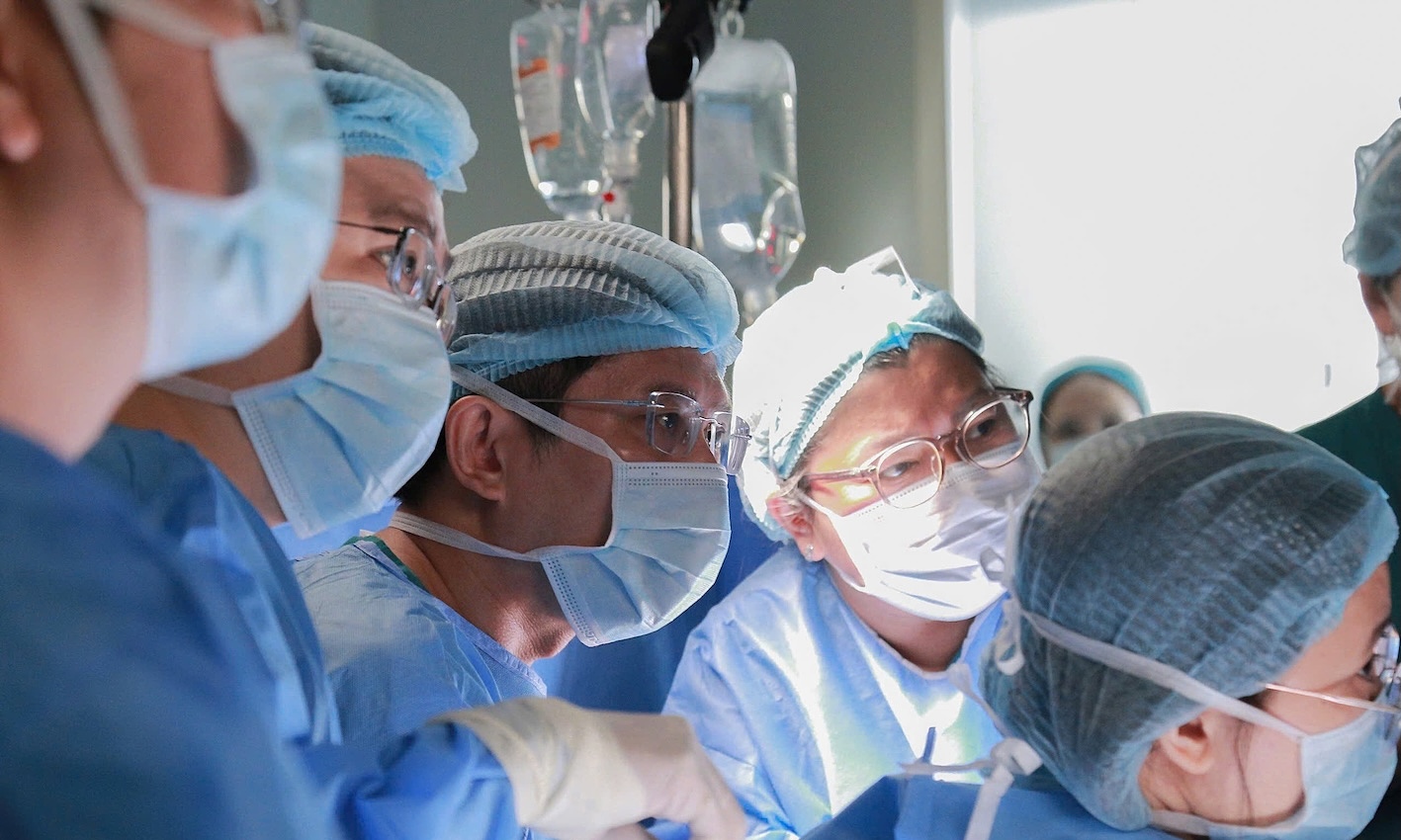
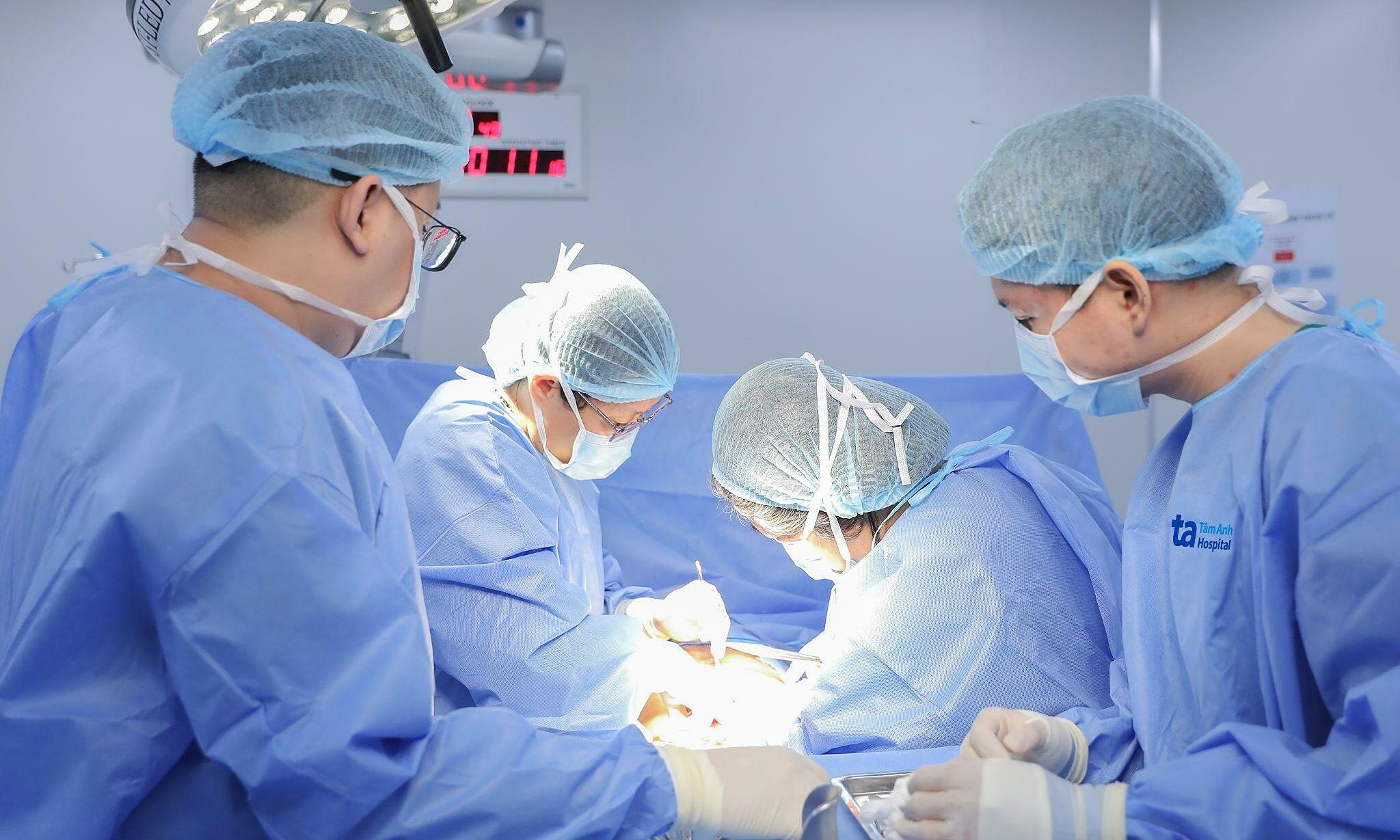
The FV Hospital surgical team dissects the tumor using the da Vinci Xi robot. Photo: FV Hospital |
Given the challenging location for intervention, the optimal solution was surgery using the da Vinci Xi robot. According to Doctor Trung, one of the advantages of robotic surgery is its ability to assist surgeons in performing precise maneuvers in confined spaces and hard-to-reach angles. The highly flexible robotic arms, combined with clear imaging, allow doctors to effectively control the dissection around critical structures such as the aorta, pulmonary artery, and heart.
Beyond precision, robotic surgery also minimizes invasiveness, which helps reduce damage to healthy tissue and leads to less pain and shorter recovery times for patients compared to more invasive surgical methods. This advantage is particularly significant for lesions located deep within the chest, where conventional surgical access and manipulation can be challenging.
The team led by Doctor Luong Ngoc Trung performed the surgery, removing a tumor measuring 3,8 x 3 x 1,5 cm, located on the surface of the lung. The entire radical resection process took only 90 minutes from the patient's entry into the operating room. Post-operative immunohistochemistry results confirmed it was a benign solitary fibrous tumor.
 |
Master of Science, Second-Degree Specialist Doctor Luong Ngoc Trung and the da Vinci Xi Robotic surgical system. Photo: FV Hospital |
According to Doctor Trung, solitary fibrous tumors are rare. While about 80% of cases are benign, there is still a 20% risk of malignancy, such as sarcoma. Even in benign cases, if not surgically removed, the tumor can continue to grow, compressing nearby structures in the chest and causing complications. When the size increases, surgery also becomes more complex.
After the operation, the patient recovered smoothly. After two months, Phuong Dung returned to normal activities, her health recovered by about 90%, and her spirits were completely comfortable. "My health has stabilized, and I feel very reassured. The recent surgery, in particular, went very well", she shared.
 |
Patient Nguyen Thuy Phuong Dung recovers well after surgery to remove a fibroid tumor in her left chest. Photo: FV Hospital |
Through Dung's case, Doctor Trung emphasized the importance of early detection of small tumors in difficult locations. With the support of da Vinci Xi robotic surgical technology, tumors in narrow, hidden corners close to large blood vessels—where conventional laparoscopic surgery is extremely difficult to access and needle biopsies cannot be performed—can be completely and safely removed.
Experts recommend that people maintain regular health check-ups (every six months) to promptly detect any abnormalities in the body and intervene with modern medical treatments.
Hai My
For more information on da Vinci Xi Robotic surgery at FV Hospital, contact:
Address: 6 Nguyen Luong Bang Street, Tan My Ward (formerly District 7), TP HCM.
Phone: (028) 35 11 33 33.
Emergency Hotline: (028) 35 11 35 00.
Operating license number 79/BYT-GPHD, since 2013.
Scope of professional activities: Performing specialized techniques approved by the Minister of Health and issued with the operating license.