A CT scan revealed a dense mediastinal tumor approximately 6 cm in diameter. The tumor had invaded blood vessels, the pericardium (heart sac), and the pleura (lung lining), which was the primary cause of chest pain when the patient took deep breaths.
Associate Professor Vu Huu Vinh, Director of the Thoracic and Vascular Surgery Center at Tam Anh General Hospital, Ho Chi Minh City, explained that open surgery carried significant risks, prolonged recovery, and a high chance of infection or respiratory failure during and after the procedure. Conventional laparoscopic surgery also presented challenges due to the patient's overweight status, making instrument placement and tumor dissection difficult.
Following a consultation, the medical team decided to perform the surgery using the Da Vinci Xi robot. This choice ensured safety, cosmetic results, and minimized postoperative complications.
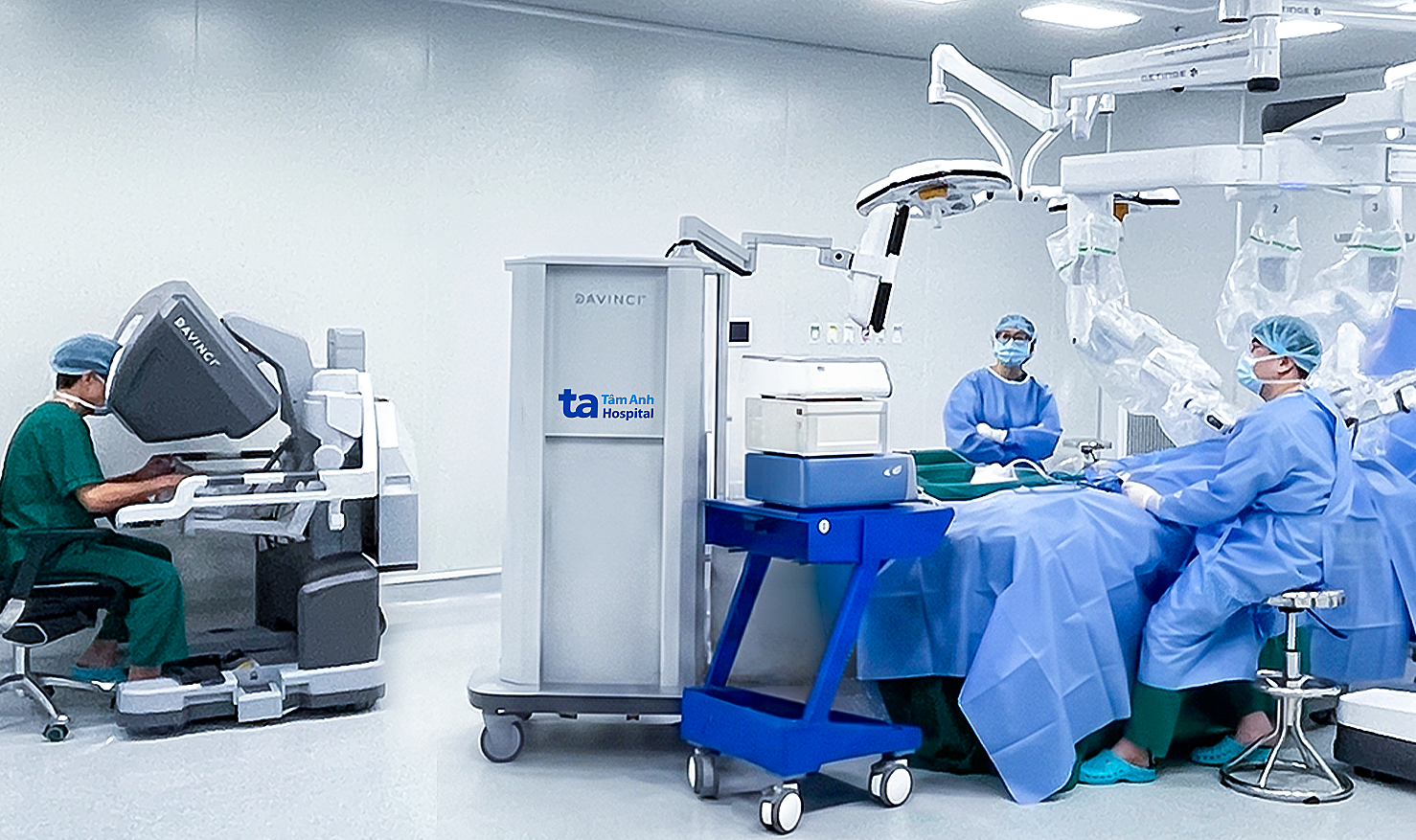 |
Associate Professor Vinh (left) controls the Da Vinci Xi robot during mediastinal tumor surgery. Photo: Tam Anh General Hospital |
The surgical team carefully calculated the anesthesia dosage and used specialized endoscopic equipment to survey the airway. They then measured the surgical trajectory, employed longer specialized trocars, and optimized gas pressure to stabilize the surgical field, creating clear access for the robot's arms to operate.
Professor Vinh skillfully maneuvered the robot within the patient's chest cavity to reach the tumor. He seamlessly switched between the magnified 3D camera system and the flexible robot arms, which rotated 540 degrees, to precisely dissect the tumor from major blood vessels, the heart, and the patient's lungs. The large tumor was then completely removed from the chest, avoiding damage to surrounding areas.
Thanks to the minimally invasive robotic intervention, Ms. Thanh recovered quickly after surgery. She no longer experienced chest pain when breathing and was able to walk and eat normally after three days, leading to her discharge from the hospital.
Subsequent histopathology results identified the mediastinal tumor as a thymoma. For this type of tumor, complete surgical removal helps reduce the need for supplementary postoperative treatments like chemotherapy and radiation therapy.
 |
Associate Professor Vinh checks on the patient's health after surgery. Photo: Tam Anh General Hospital |
Early-stage thymomas often develop silently. As they grow, they can compress blood vessels, the heart, and lungs, leading to shortness of breath, persistent coughing, chest tightness, and impaired respiratory function. If the tumor is accompanied by myasthenia gravis, an autoimmune condition where the immune system attacks nerve-muscle junctions, it can worsen muscle weakness and increase the risk of complications.
Professor Vinh advises people over 30, especially those with myasthenia gravis or a family history of thoracic conditions, to undergo regular health check-ups. This helps detect any abnormalities in the chest early, particularly if symptoms such as chest tightness, shortness of breath, persistent coughing, or weight loss appear. With the support of modern medical equipment, mediastinal tumors discovered early can be completely treated, minimizing complications.
Bao Anh
*Patient's name has been changed
| Tam Anh General Hospital System is hosting a consultation program titled "New-generation 'super machines' and surgical robots supporting safe, accurate diagnosis and treatment, and rapid recovery," featuring a team of leading experts and experienced doctors. Readers can submit questions here for answers. |