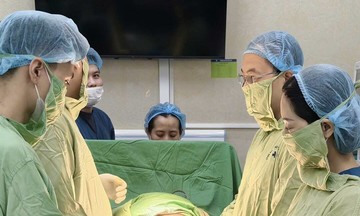
Mr. Toan visited Tam Anh General Hospital Ho Chi Minh City for a general health check-up. Blood tests revealed his prostate-specific antigen (PSA) level was 4,5 ng/mL, exceeding the safe threshold (typically below 4 ng/mL). Subsequent magnetic resonance imaging (MRI) and prostate biopsy confirmed a localized malignant tumor in his prostate, which had not yet invaded nearby organs.
Previously, Mr. Toan had been healthy. His only symptoms were nocturia, a slightly weak urine stream, occasional dysuria, and intermittent dull back pain, which he attributed to old age. Master of Science, Doctor, Level I Specialist Nguyen Tan Cuong, Deputy Head of Urology and Head of the Urological Oncology Unit at the Center for Urology - Nephrology - Andrology, stated that Mr. Toan's symptoms were non-specific and could indicate early benign prostatic hyperplasia or cancer. For a patient in good health with a long-term prognosis like Mr. Toan, the optimal solution was surgery to remove the entire prostate, aiming for a complete eradication of the cancer.
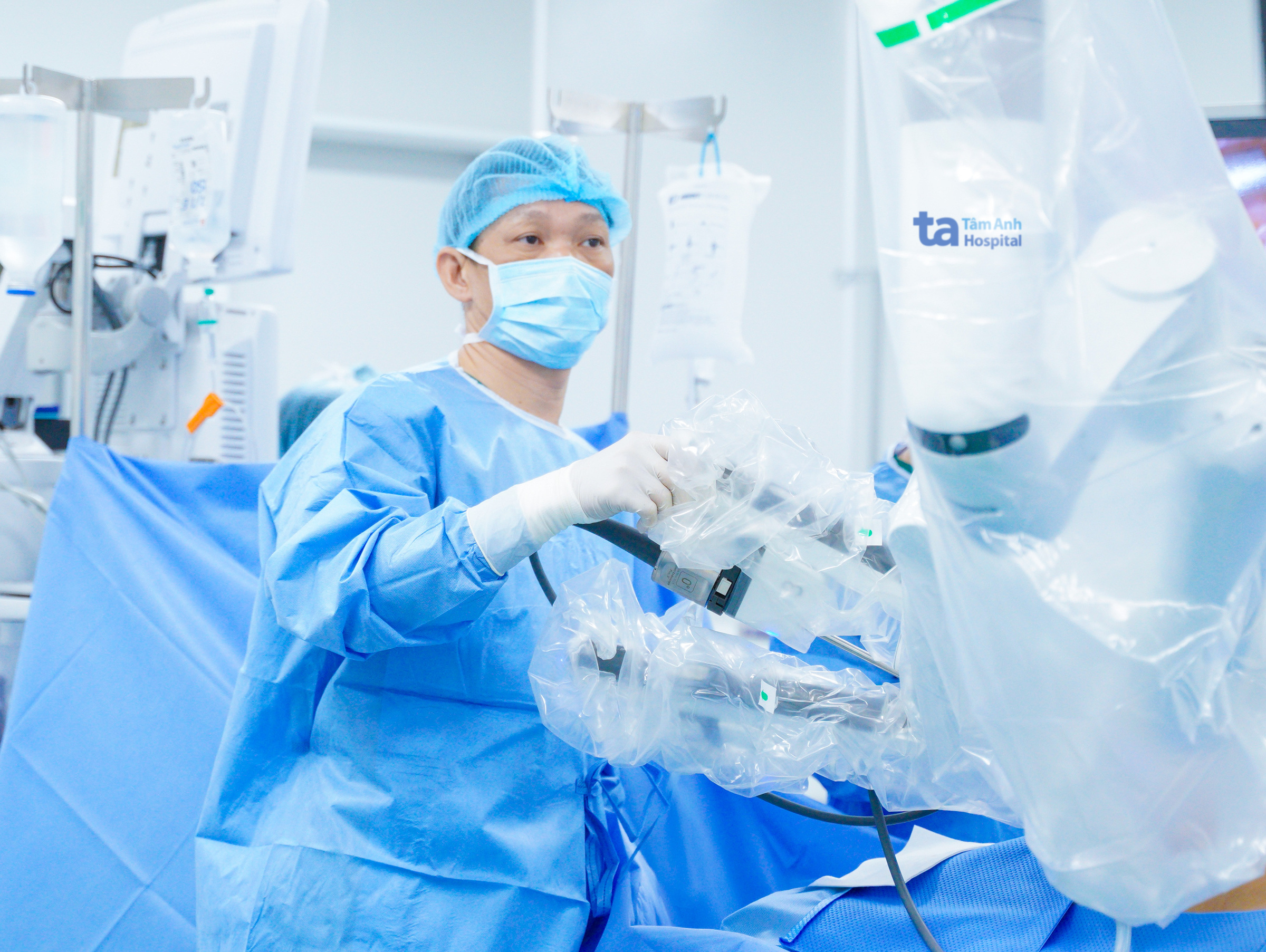 |
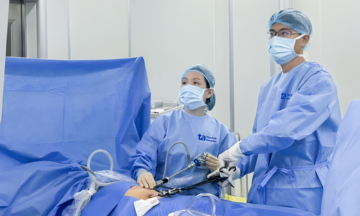
Doctor Cuong performs radical prostatectomy using the Da Vinci Xi robot for a patient. Photo: Tam Anh General Hospital
With assistance from the Da Vinci Xi robot, doctors can operate in complex anatomical areas deep within the pelvis. One of the biggest challenges in prostate surgery is controlling bleeding, as this region contains numerous venous plexuses, especially the vascular sinus located behind the pubic bone.
Doctor Cuong and his colleagues meticulously dissected the area around the prostate, cut the venous plexus behind the pubic bone, ligated the blood vessels supplying the prostate, and precisely reconnected the urethral stump to the bladder neck. After three hours of surgery, the entire prostate and both seminal vesicles were removed for histological examination. If the margins around the prostate are free of cancer cells, the surgery is considered radical, completely eliminating the cancer without requiring post-operative adjuvant therapy.
Doctor Cuong noted that the most common complications after radical laparoscopic prostatectomy are urinary incontinence and erectile dysfunction. The primary causes are damage to nerves and the urethral sphincter. Urinary incontinence gradually improves over time, significantly reducing within 3-6 months post-surgery. Patients who consistently perform pelvic floor muscle physical therapy can achieve faster recovery.
Doctor Cuong recommends that men aged 50 and above undergo prostate examinations and cancer screenings at specialized hospitals, including ultrasound and blood PSA tests. Early detection offers a greater chance of successful treatment.
Bao Anh
*Character's name has been changed