During the annual scientific conference of the Tam Anh General Hospital system on 18/9, Dr. Nguyen Huy Cuong, from the Obstetrics and Gynecology Center at Tam Anh General Hospital Ho Chi Minh City, highlighted the importance of HPV testing in cervical cancer screening. Traditionally, attending a medical facility for sample collection using specialized instruments has been a barrier for many women, often due to hesitation or lack of time. To address this challenge, self-sampling for HPV is now an option. This method involves using a swab or specialized device, inserted into the vagina according to instructions, to collect a sample. The collected sample is then used for HPV-DNA testing. If the HPV test result is positive, the individual requires further examination and follow-up according to professional protocols.
 |
Dr. Huy Cuong presents the self-sampling solution for HPV testing at the conference. Photo: Trung Vu |
Dr. Huy Cuong presents the self-sampling solution for HPV testing at the conference. Photo: Trung Vu
Dr. Cuong explained that a key difference from traditional methods is that this technique does not require a speculum for direct cervical sampling. Additionally, self-sampling for HPV at home helps reduce the burden on healthcare facilities, saves non-medical costs for women, avoids taking time off work for appointments, and reduces travel time.
Currently, this method has been implemented in some testing centers in Vietnam through the provision of self-sampling kits. Women perform the sample collection themselves and then send the samples to the testing center. These kits allow for screening of about 40 HPV strains, ensuring both privacy and convenience.
The HPV virus has nearly 200 strains, with over 15 high-risk types known to cause prolonged inflammation in the cervix, leading to precancerous cell changes. During the shedding and regeneration of the mucous membrane, HPV-infected cells and viral genetic material can be present in vaginal secretions, providing a basis for accurate sample collection.
Dr. Cuong cited a study conducted in Ho Chi Minh City in 2024 involving 775 women, which showed that 99.9% of participants successfully self-sampled for HPV on their first attempt, with an 80.4% satisfaction rate. The self-sampling model for HPV testing is implemented flexibly in countries worldwide. Women can perform the collection at a healthcare facility under the guidance of medical staff or self-sample at home.
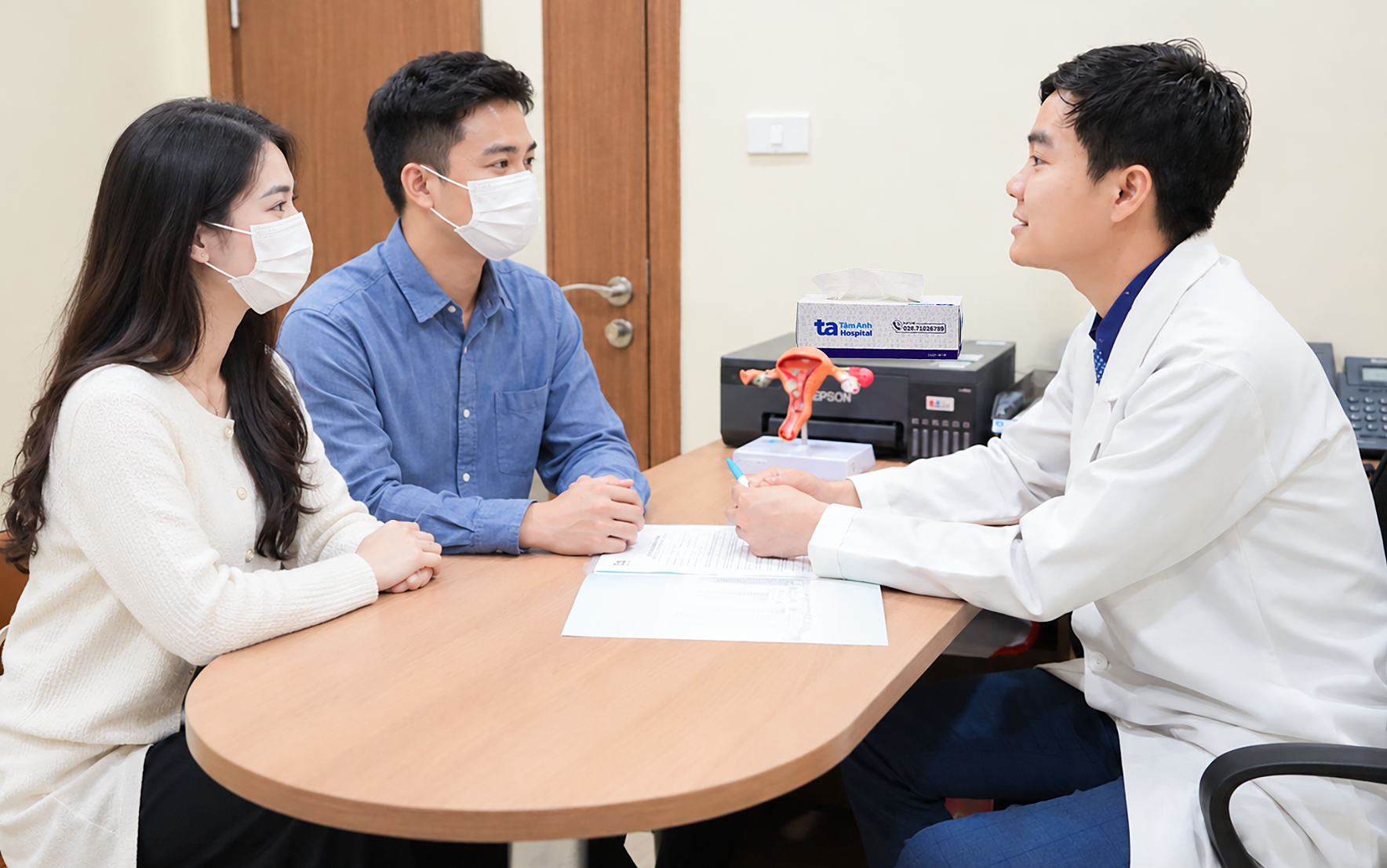 |
Dr. Cuong consults a couple on HPV screening during a pre-marital health check. Photo: Tam Anh General Hospital |
Dr. Cuong consults a couple on HPV screening during a pre-marital health check. Photo: Tam Anh General Hospital
However, anxiety during the procedure remains a barrier to the self-sampling method. Some individuals fear incorrect device placement, insufficient sample collection, or doubt the reliability of the results. Others are concerned about what to do if the result is positive. Dr. Cuong emphasized that individuals need clear instructions on how to use the device, how to store, and how to submit the sample. Test results must be provided and counselled within a healthcare system with established follow-up protocols.
It is important not to simply purchase any kit, self-sample, and send it to a laboratory. In the US, the FDA has approved certain HPV tests that use self-collected vaginal samples, but only with devices, specimen types, and procedures within the approved scope.
According to Dr. Cuong, self-sampling for HPV is primarily a method for collecting specimens for HPV testing; it does not replace a full gynecological examination and assessment. Individuals with cytological abnormalities, those previously diagnosed or treated for precancerous lesions, those with a special medical history, or those belonging to a high-risk group still require a doctor's assessment.
A positive HPV result does not automatically mean a woman has cervical cancer. HPV can clear spontaneously in many cases. Conversely, a negative HPV result does not mean one should be complacent about a low cancer risk; regular screening should continue.
According to Globocan 2022, the world recorded approximately 604,000 new cases of cervical cancer and 342,000 deaths. Vietnam reported about 4,610 new cases and 2,570 deaths.
Tue Diem
| Readers can submit questions about obstetrics and gynecology here for a doctor's response. |