For mild myopia under one diopter, when the eyes' ability to adjust is still good, wearing glasses constantly is not always necessary. However, it is advisable to wear glasses for tasks requiring clear distant vision or high concentration, such as studying, reading, sewing, driving, or working with computers. This helps reduce excessive eye strain.
Individuals with myopia of one diopter or more should wear glasses to prevent eye strain, headaches, and reduced concentration. For those with 2-3 diopters, consistent use is essential to maintain vision and limit progression and complications.
For adults over 18, like you, myopia is often stable and mild. While not needing to wear glasses continuously, it is beneficial to use them when focusing on distant objects, traveling, or working extensively with computers. Initial discomfort like headaches or dizziness may occur when first wearing glasses, but this typically subsides after a few days.
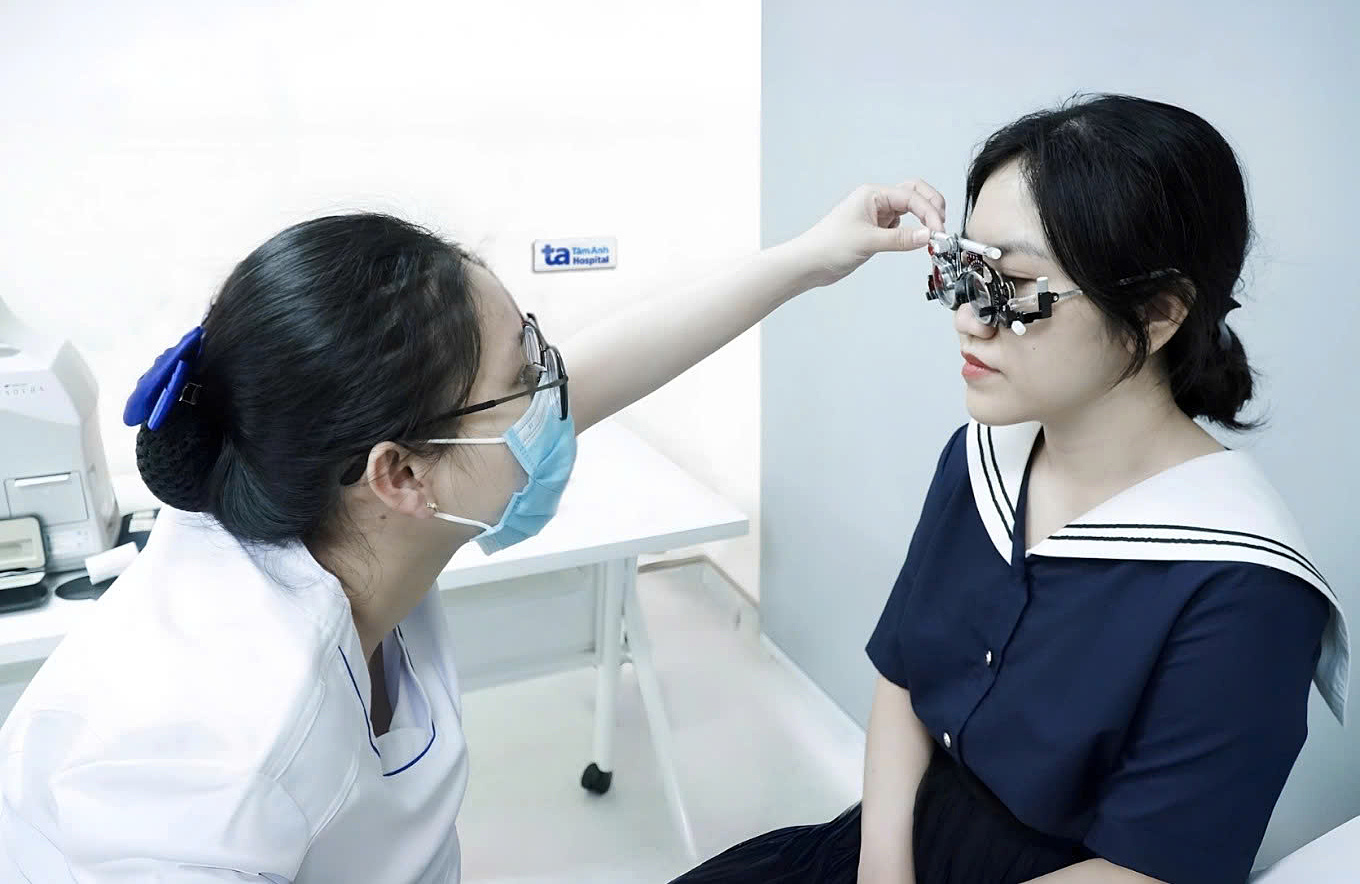 |
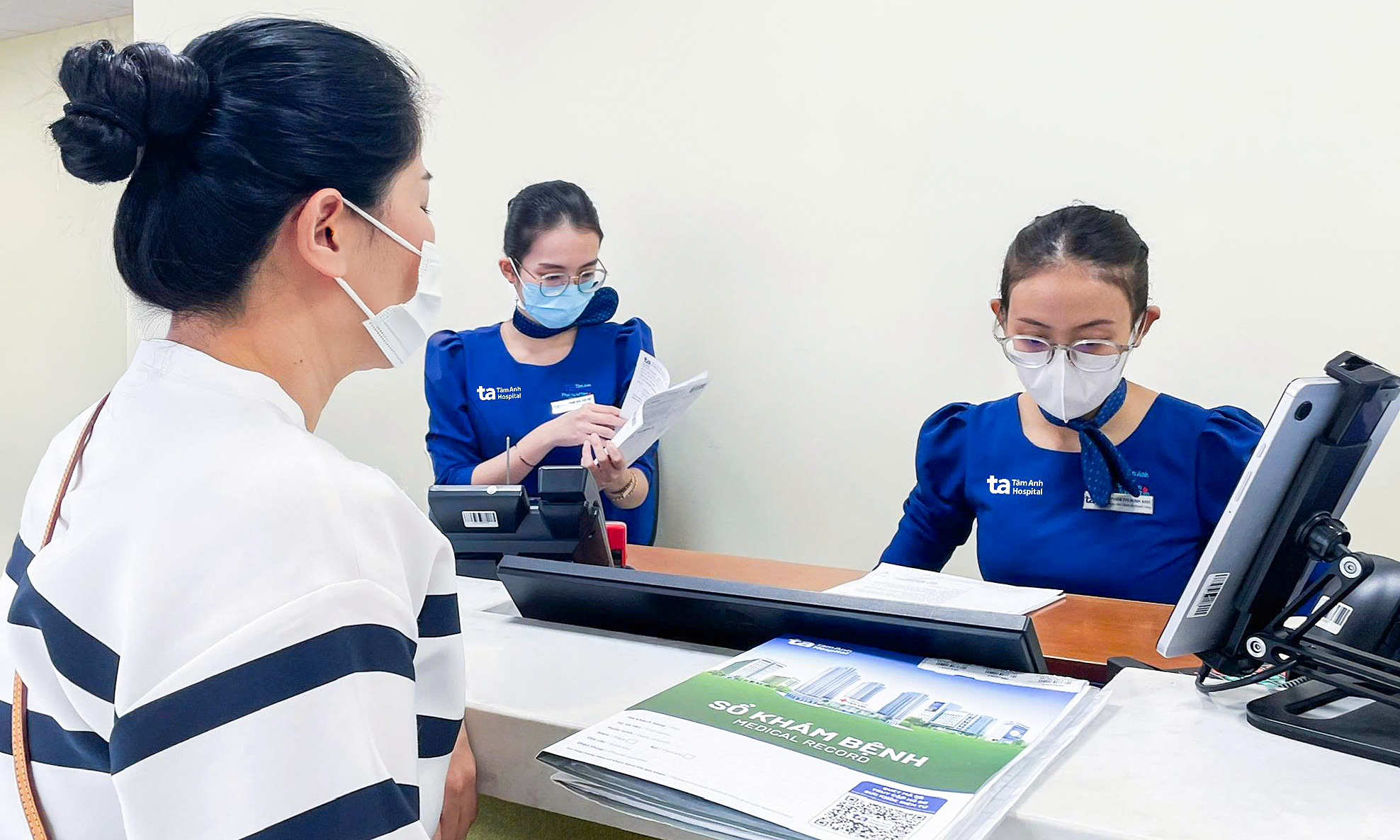
A healthcare worker checks a patient's vision. Illustration: Tam Anh General Hospital |
Myopia is a refractive error where light rays converge in front of the retina instead of focusing directly on it. This causes individuals with myopia to see nearby objects clearly while distant objects appear blurry. Myopia glasses are diverging lenses that correct the light's focal point to the retina, improving vision for those with myopia. The decision to wear glasses depends on age, the degree of myopia, and the need for clear distant vision.
To protect your eyes and limit myopia progression, adjust daily habits. Rest your eyes for 20-30 minutes after each period of studying or working, especially when using computers, phones, or tivi. Ensure adequate lighting in your environment, increase time spent outdoors, and schedule regular eye exams.
Maintain a diet rich in vitamins and minerals. You can also supplement with specific eye nutrients like natural broccophane essence (broccoli extract), which increases thioredoxin (a small protein acting as a redox antioxidant). This supports the balance of protein components in the lens, helping slow myopia progression.
Dr. Hoang Quyet Tien
Medical Information Center
Tam Anh General Hospital Ho Chi Minh City
| Readers can submit ophthalmology questions here for a doctor's response. |