Response:
Mouth ulcers are one of the characteristic and common signs when a child contracts hand, foot, and mouth disease. These ulcers can appear simultaneously in various locations within the oral cavity, such as the tip of the tongue, inner cheeks, gums, inside the lips, or the soft palate. Children with mouth ulcers often experience a sore throat, fever, fatigue, and excessive salivation, leading to pain, picky eating, or refusal to eat.
To help children alleviate pain, reduce ulcer size, and promote faster healing, several types of topical medications can soothe the ulcers. However, these topical medications only offer temporary pain relief for children; they do not eliminate the hand, foot, and mouth virus and may cause side effects such as allergies, tongue numbness, blurred vision, or heart rhythm disorders. Therefore, parents should not use topical medication for children without guidance and a prescription from a specialist doctor.
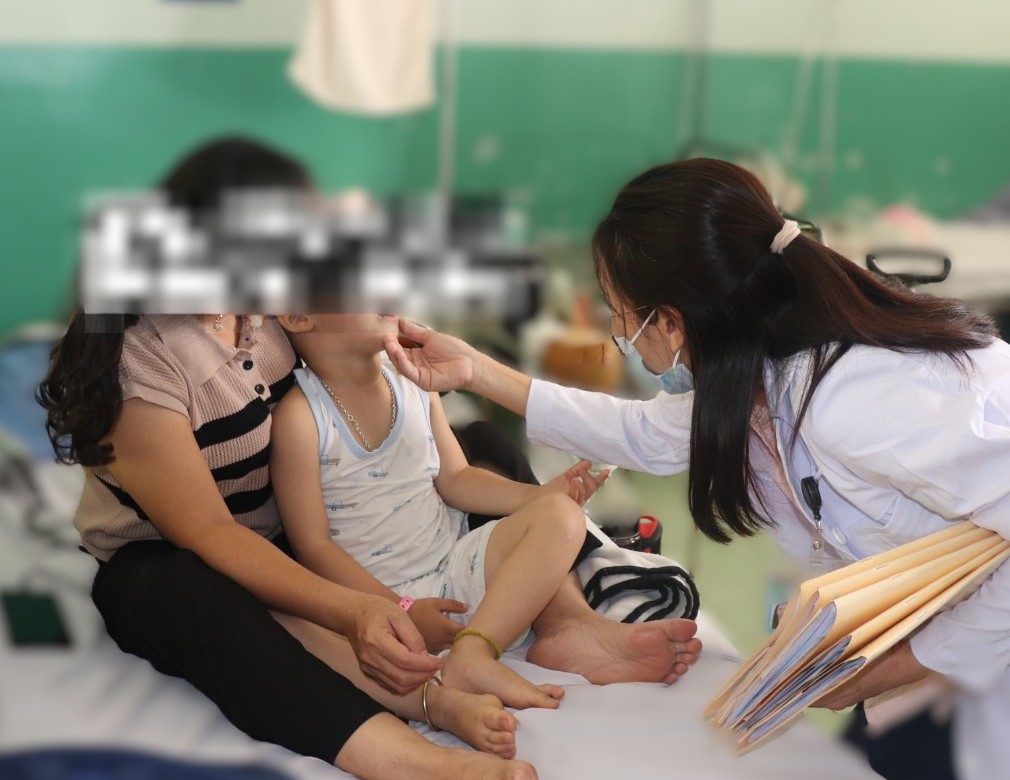 |
A doctor is examining mouth ulcers in a child with hand, foot, and mouth disease. *Photo: Children's Hospital 2*
Children with loss of appetite, dehydration, and weakened immunity due to the illness may face higher risks of complications. Families should provide children with soft, liquid foods for nutrition, such as: milk, porridge, soup, broth, smoothies, and juices. Meals should be cooled, and can be chilled to make them easier for the child to eat and to soothe the pain. Children need to drink enough water, replenish minerals, and increase vitamins through fruits and fresh coconut water. It is important to avoid hot, spicy, salty, sour, and hard foods to reduce ulcer irritation.
Parents also need to prevent children from touching the ulcers or putting their hands in their mouths. Oral hygiene should be maintained by cleaning the child's teeth and mouth with physiological saline or antiseptic solutions like Betadine. Regular bathing and frequent washing of children's hands and feet are essential to remove dirt, bacteria, and plaque, which helps children recover faster from the illness.
Hand, foot, and mouth disease is an acute infectious illness caused by enteroviruses. It is easily transmitted through the fecal-oral route, nasopharyngeal secretions, or indirectly through contact with contaminated objects. The disease is common in children under 10 years old, particularly those under five years old.
The current hand, foot, and mouth disease outbreak is experiencing unpredictable developments. The circulating Enterovirus 71 (EV71) strain is highly virulent, spreads rapidly, and causes severe cases three to five times more frequently than the older strain. Many infected individuals exhibit mild symptoms but experience rapid worsening of their condition.
A hand, foot, and mouth disease vaccine has been licensed by the Ministry of Health in Vietnam. VNVC is implementing steps to bring the vaccine to the country soon and administer it to children. While awaiting the vaccine, parents should protect their children by disinfecting homes, utensils, toys, and learning tools with antiseptic solutions. It is important to teach children personal hygiene, including washing hands with soap and gargling thoroughly. Children need to consume sufficient nutrients, drink enough water, get adequate sleep, and increase vitamin intake to boost their immunity.
If a child contracts the disease, parents should monitor for severe symptoms and seek immediate hospitalization. These symptoms include prolonged fever, fever unresponsive to antipyretics, unsteady gait, limb weakness, or frequent vomiting.
Master, Doctor Ngo Thi Kim Phuong
Medical Manager, VNVC Vaccination System
Readers can ask vaccine consultation questions for doctors to answer here.