A sprain occurs when ligaments are overstretched or torn, causing pain and reduced or lost joint movement. This often results from sports injuries, household accidents, or prolonged repetitive work movements. The ankle joint is the most common site for sprains, leading to pain, swelling, and bruising.
Master of Science Tran Van Dan, from the Department of Physical Therapy and Rehabilitation at Tam Anh General Hospital Hanoi, advises against applying hot oil or using hot compresses when experiencing sprain symptoms. Hot oil dilates blood vessels in the injured area, increasing blood flow into soft tissues. This can worsen swelling and bruising, and even raise the risk of internal bleeding within the joint and around the ligaments.
Increased temperature stimulates the ligaments, hindering healing and prolonging recovery. Many people feel more comfortable after applying hot oil or hot compresses, mistakenly believing the pain has subsided and resuming activity too soon. This can further aggravate the sprain injury.
Master Dan states that within the first 72 hours after a sprain, patients should follow the standard international protocol, abbreviated as PRICE.
P - Protection: Immediately stop activities that caused the injury to protect the ligaments.
R - Rest: Limit movement and avoid independently moving the sprained area without proper first aid. Do not self-massage or apply pressure to the painful area.
I - Ice: Use an ice pack or a cold cloth on the sprained area for 15-20 minutes, 4-8 times daily. This helps constrict blood vessels, reducing swelling and pain. Avoid direct contact between ice and skin, and do not leave the ice pack in one spot for too long to prevent cold burns.
C - Compression: Use a moderately tight bandage to stabilize and support the injured joint. Ensure the bandage is not too tight, which could obstruct circulation, nor too loose.
E - Elevation: If the injury is in a lower limb, elevate the leg; if in an upper limb, elevate the arm (using pillows) when sitting or lying down. For arm injuries, use a triangular bandage or scarf to suspend the injured arm across the chest, keeping it in a functional position (the most comfortable position) and gently securing it to the front of the chest. This helps reduce swelling and improve circulation.
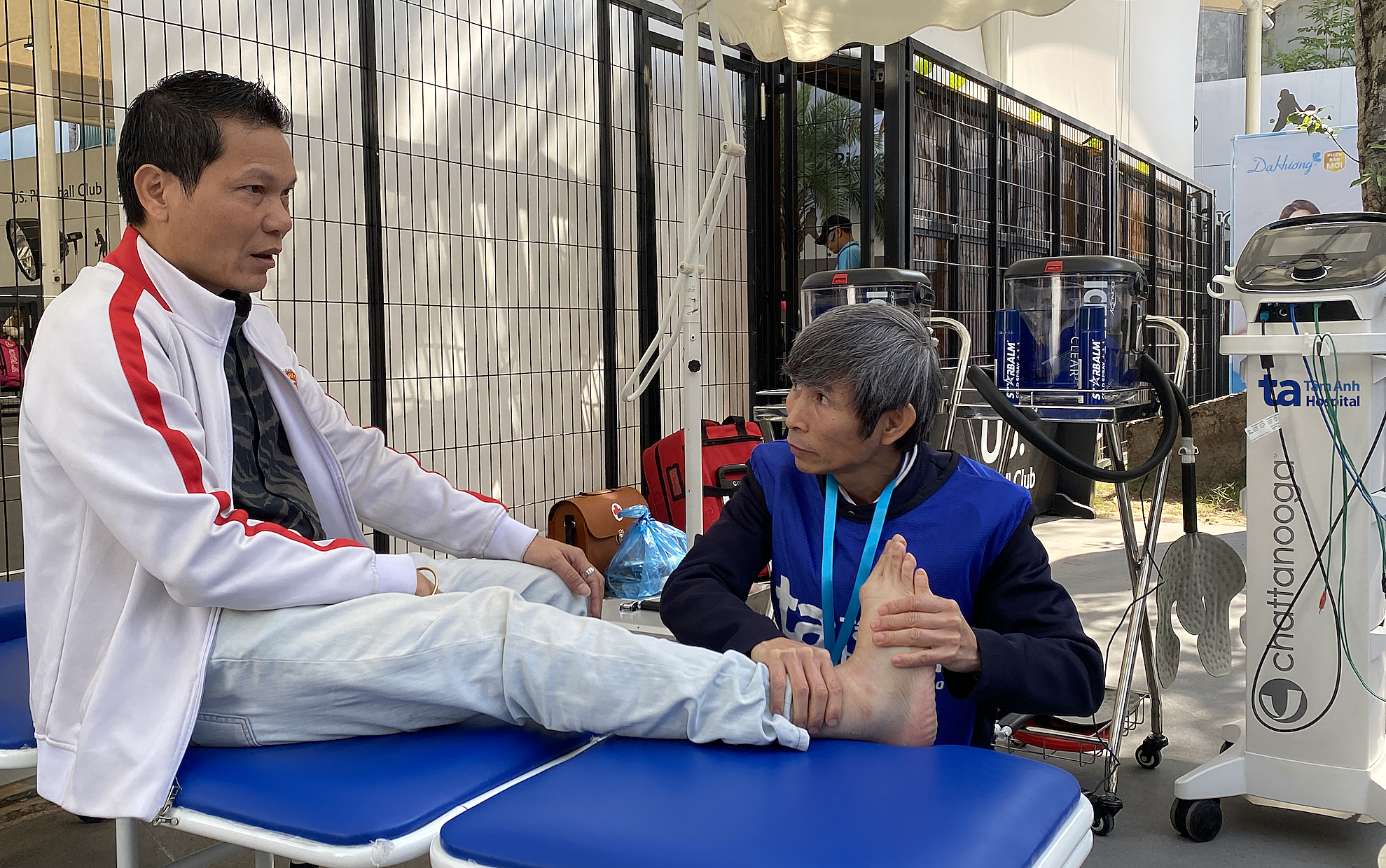 |
Master Dan examining an athlete with a sprain. Photo: Tam Anh General Hospital |
Most mild grade one sprains, involving mild ligament stretching and minimal pain and swelling, can recover after applying the PRICE principles. However, if a patient experiences a more severe grade two sprain with some ligament tears, noticeable pain, and moderate swelling, or a grade three sprain where ligaments are completely torn, causing severe pain, significant swelling, extensive bruising, and joint instability, they should visit a specialized hospital for thorough examination and advanced sprain treatment.
Based on clinical examination, doctors may order a joint ultrasound or MRI scan to diagnose the sprain. Depending on the condition, the doctor will recommend a conservative treatment protocol or reconstructive ligament surgery, followed by comprehensive rehabilitation to help the patient recover as quickly and effectively as possible.
To prevent sprains, athletes should warm up thoroughly. When participating in outdoor sports like running, football, or basketball, they should pay attention to weather and terrain, avoid overexertion during play or training, and listen to their body for appropriate rest. In daily life and work, it is important to prevent slips and falls by clearing obstacles at home and in the workplace. Regular exercise helps maintain a healthy musculoskeletal system and a healthy weight, avoiding overweight and obesity.
Thanh Long
| Readers can ask questions about musculoskeletal diseases here for doctors to answer |