Staring at screens continuously reduces blinking frequency, leading to uneven tear distribution. This often causes dryness, grittiness, burning, and eye fatigue. These are typical symptoms of dry eyes. While not immediately dangerous, if left untreated, this condition can become man tinh, potentially damaging the ocular surface and impairing vision.
Many people habitually use physiological saline (0.9% NaCl) daily to soothe their eyes. However, this isotonic solution only provides temporary cleansing. It does not offer deep moisturizing properties and cannot replace medication for eye conditions.
The ocular surface is naturally protected by a three-layered tear film: the lipid layer, which prevents evaporation; the aqueous layer, which supplies oxygen and disinfects; and the mucin layer, which aids adhesion. This film maintains stable moisture. Overusing physiological saline eye drops multiple times a day can inadvertently wash away this protective layer. As a result, the eyes lose their natural moisture, making them more prone to dryness, burning, and irritation.
You should only use physiological saline when truly necessary for cleansing. This includes washing away dust after travel or swimming, when a foreign object enters the eye, or for hygiene during inflammatory conditions like conjunctivitis or pink eye, as directed by a doctor.
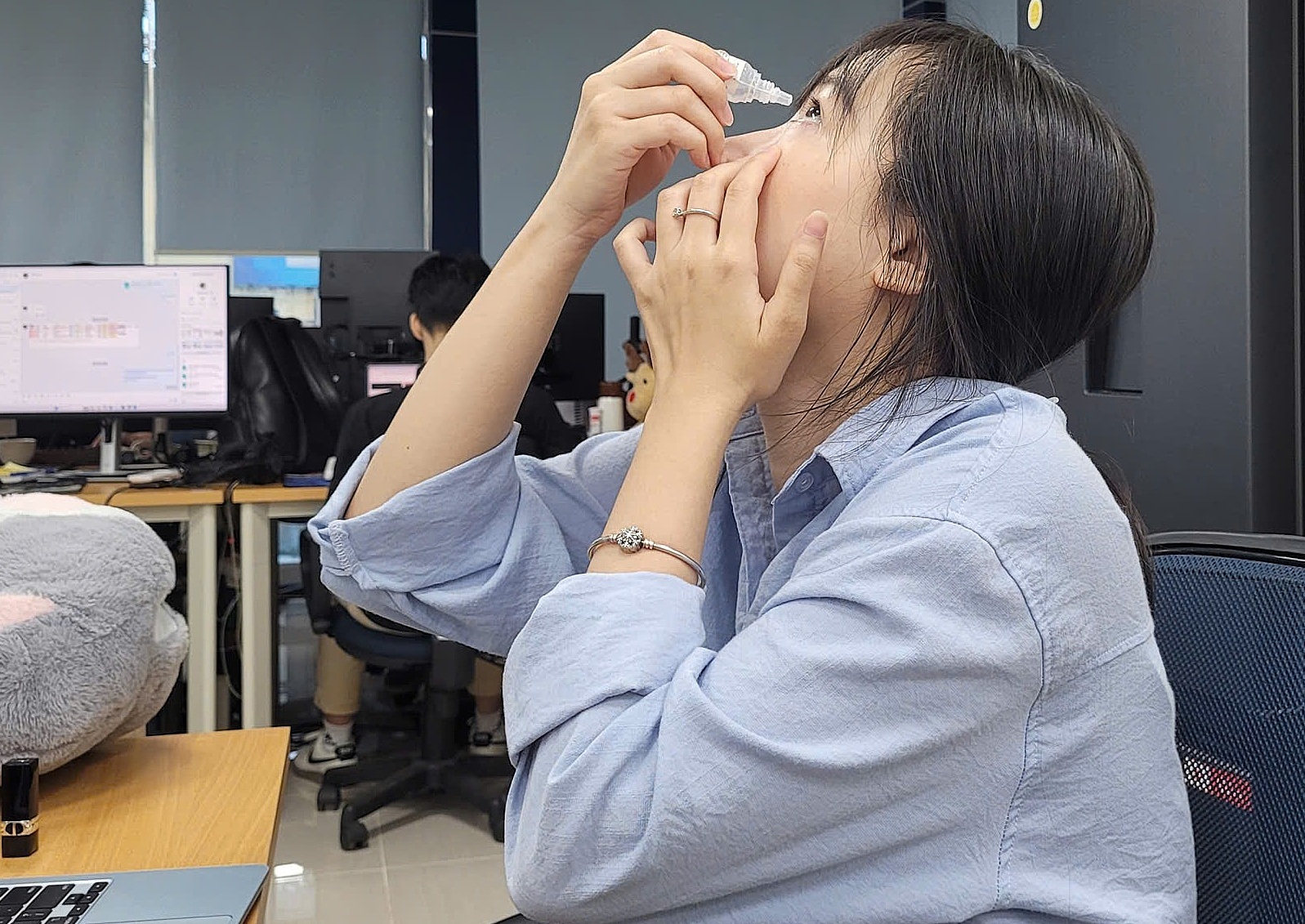 |
Overusing physiological saline eye drops can lead to moisture loss in the eyes. Illustration: Hai Au |
For dry and fatigued eyes caused by electronic device use, artificial tears are the optimal solution. These products mimic the natural tear film, helping to replenish moisture, lubricate, and restore the ocular surface. If frequent use is required, consult a doctor for preservative-free options.
Regardless of the eye drops used, sterile hygiene is mandatory. You should use a separate bottle for yourself and never let the dropper tip touch your eye or eyelashes to prevent cross-contamination. Physiological saline or artificial tear bottles, once opened, should be used for a maximum of two weeks to one month, depending on manufacturer recommendations. Using solutions past their open-date expiry poses a high risk of infection.
To reduce dry eye fatigue, limit continuous screen time by following the 20-20-20 rule: every 20 minutes, look at something 20 feet away for 20 seconds. Blink frequently, maintain an appropriate distance from the screen, and avoid direct airflow from fans or air conditioners. When outdoors, wear sunglasses and supplement your diet with foods rich in omega-3, vitamin A, C, E, and lutein. If dry eyes persist with pain, redness, or vision loss, consult an ophthalmologist for proper treatment.
Master of Science, Doctor Luong Thi Anh Thu
High-Tech Eye Unit
Tam Anh Cau Giay General Clinic
| Readers can submit questions about ophthalmological conditions here for a doctor's response. |