Nguyen, 74, who is currently undergoing treatment for five types of cancer including esophageal, laryngeal, stomach, lung, and colorectal, recently experienced persistent abdominal pain. Five years ago, he underwent a stent graft procedure for an abdominal aortic aneurysm to prevent blood flow from entering the aneurysm sac, which could cause it to enlarge and rupture. His recent symptoms were diagnosed as an endoleak type 1, a common complication following endovascular repair of an aortic aneurysm. This critical condition requires prompt treatment, leading Nguyen to seek care at Tam Anh General Hospital Ho Chi Minh City.
Doctor Nguyen Anh Dung, Head of the Department of Thoracic and Vascular Surgery at the Center for Thoracic and Vascular Surgery, explained that after an aneurysm repair procedure, blood flows through a new arterial lining, known as a stent graft, preventing it from entering the aneurysm sac and causing rupture. An endoleak occurs when blood leaks outside the stent graft and flows into the aneurysm sac.
Some types of endoleaks, such as type 2, which originate from collateral circulation, may resolve spontaneously. Others, like type 4, where blood flows through the stent graft's pores, and type 5, where the aneurysm sac expands without clear signs of an endoleak on imaging, require close monitoring. However, cases like type 1 and type 3, where the seal between two stent segments is incomplete or there is a hole in the stent, are severe and necessitate intervention to prevent aneurysm rupture.
Nguyen's case was classified as an endoleak type 1, occurring when the stent graft fails to completely cover the aneurysm neck, allowing blood to leak around its proximal or distal ends. According to Doctor Dung, this type of endoleak is the most serious due to its high risk of aneurysm rupture and potential fatality. For Nguyen, immediate intervention was crucial to prevent a life-threatening rupture.
The medical team placed an additional stent graft higher to cover the leak. However, this position would have obstructed the origin of the left renal artery. Therefore, the doctors performed a "chimney" technique, creating a separate cover stent for the left renal artery. The stent graft was securely anchored to the vessel wall, preventing the risk of aneurysm rupture, which could lead to massive hemorrhage and hypovolemic shock.
The procedure was successfully completed in 45 minutes. Nguyen experienced immediate relief from abdominal pain after the intervention, his health stabilized, and he resumed his chemotherapy regimen for stomach cancer.
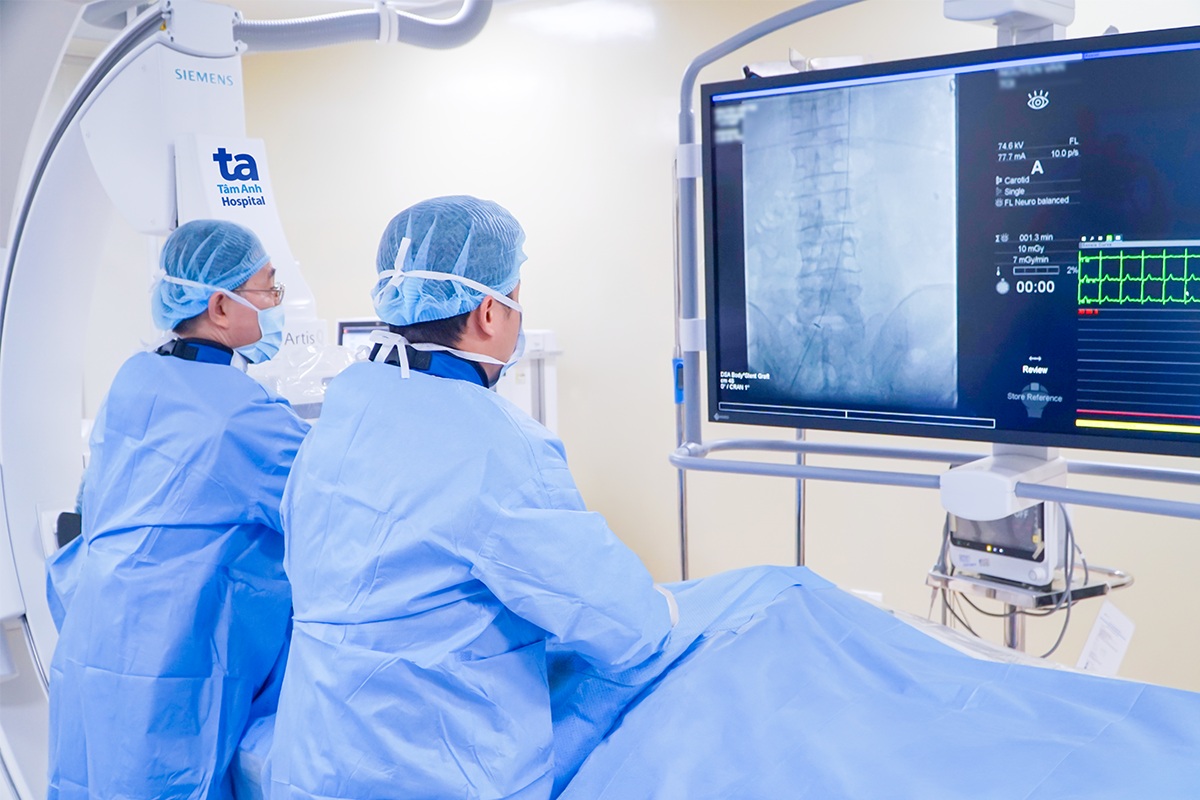 |
Doctors place a stent graft to treat endoleak for a patient. Photo: Tam Anh General Hospital
According to Doctor Dung, most endoleak type 1 cases appear early after the procedure, typically within the first 6 months. Some occur later because the aortic neck, where the stent graft was placed, tends to dilate, creating a gap that causes the endoleak. Nguyen's case falls into this latter category.
Typically, an aortic aneurysm does not cause obvious symptoms and is often only discovered incidentally through imaging during examinations or treatment for other conditions. However, signs indicating an endoleak leading to aneurysm rupture include: cold skin, dizziness, fainting, rapid heartbeat, nausea, and shortness of breath.
Doctor Dung advises patients who have undergone surgery or intervention for an aortic aneurysm to take prescribed medication and adhere to guidelines regarding diet, daily activities, and exercise. Patients should attend scheduled follow-up appointments to detect any abnormalities early and facilitate timely intervention.
By Thu Ha
*Patient's name has been changed.