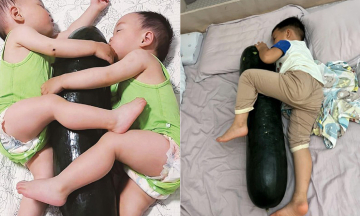
Joint hypermobility is a condition where joints have a greater range of motion than normal, capable of bending, extending, and pulling far beyond typical limits. It commonly affects the fingers, wrists, elbows, knees, and various other body parts.
Dr. Vu Trung Hieu, from the Orthopedic Trauma Department at Tam Anh Cau Giay General Clinic, states that joint hypermobility often stems from genetic abnormalities. These abnormalities relate to the genes responsible for producing collagen, a key component of ligaments, tendons, muscles, joint capsules, and connective tissues around the joints. Faulty genes lead to defective, weak collagen with reduced tensile strength, causing the structures around the joints to become loose and unable to secure them firmly. The condition typically manifests in adolescence with signs such as the thumb being able to bend backward to touch the forearm, other fingers bending backward beyond 90 degrees, and the hips being able to perform a 180-degree split without training.
Joint hypermobility usually causes no pain and does not affect daily activities, leading to complacency. Parents often consider their child to be naturally flexible, even talented in certain artistic fields requiring flexible joints, such as dancing, gymnastics, or playing the piano.
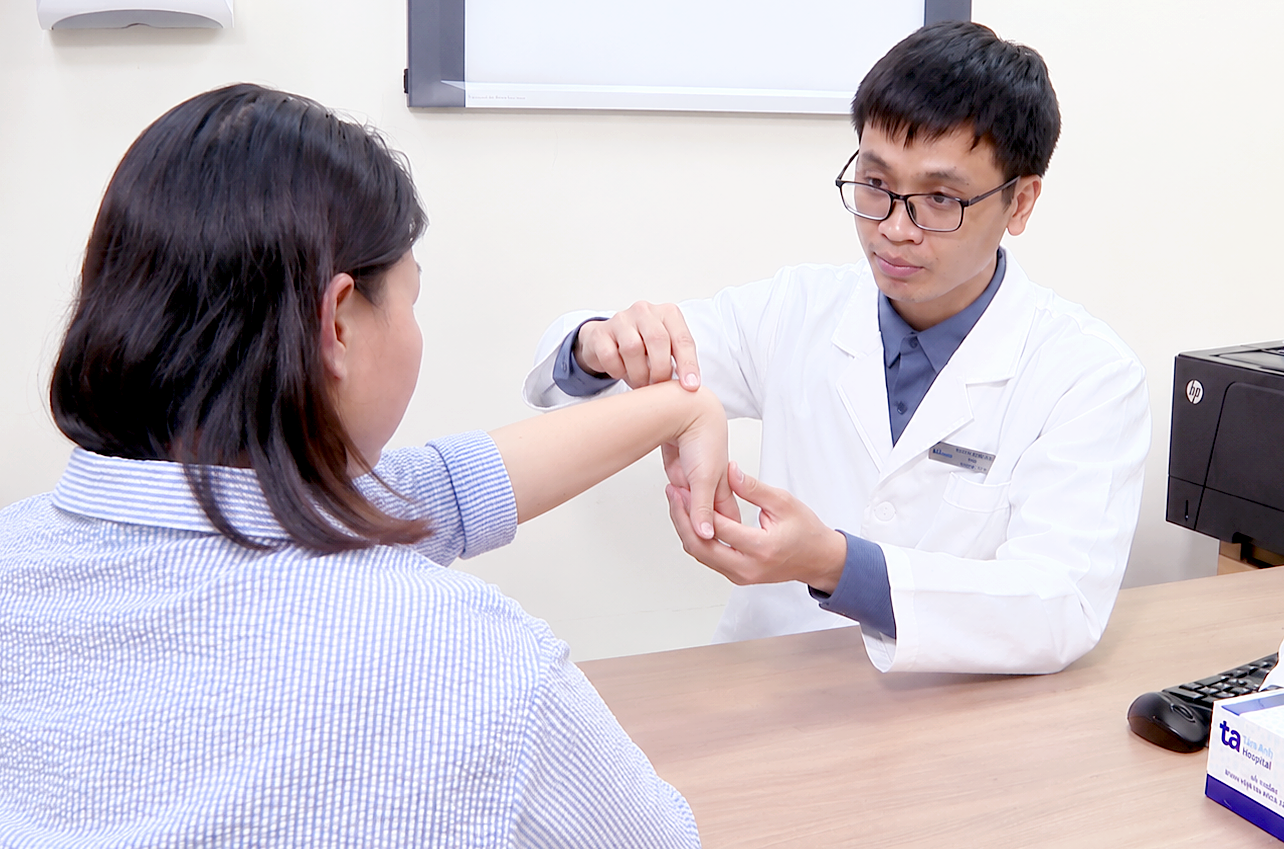 |
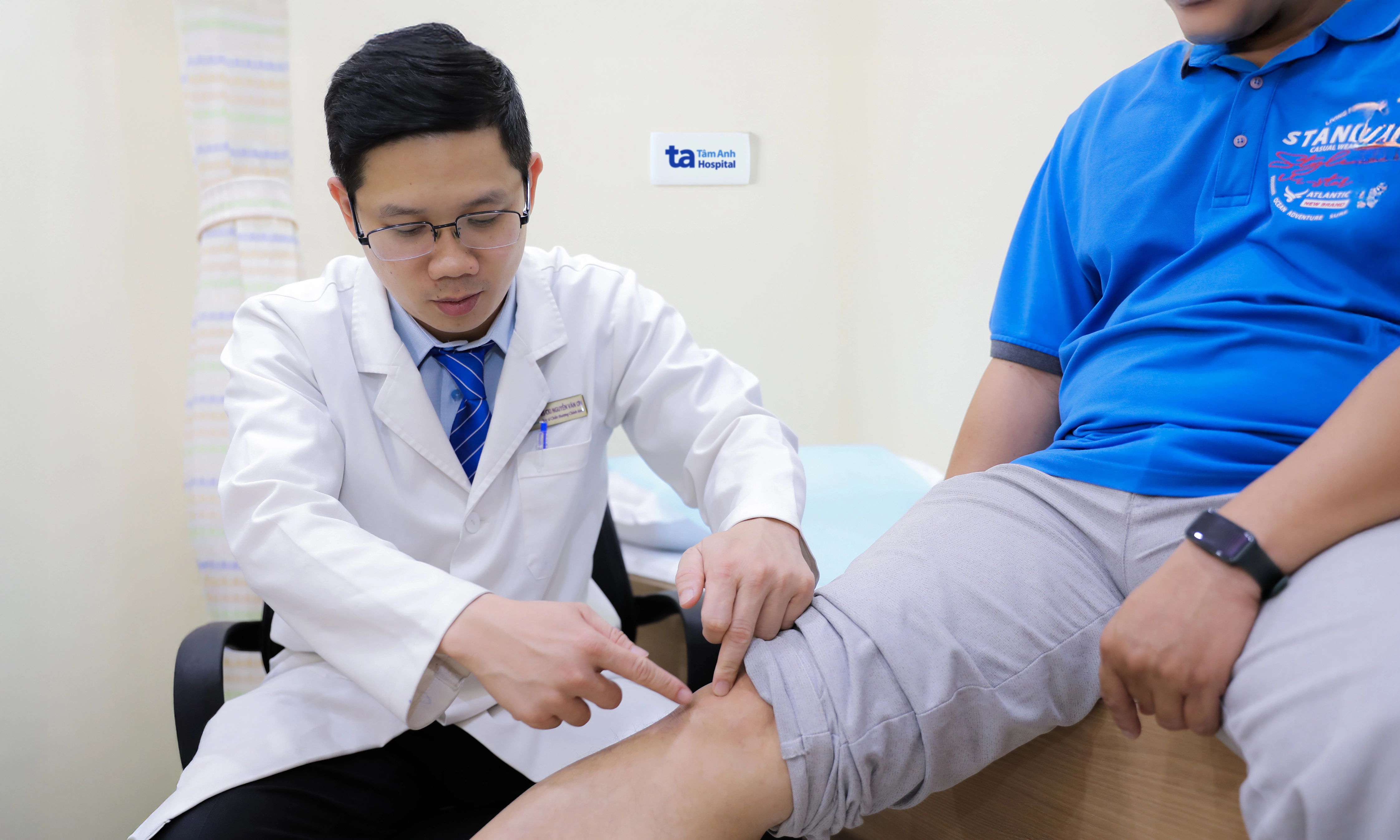
Dr. Hieu examining a patient with joint hypermobility. Photo: Tam Anh Cau Giay General Clinic |
However, Dr. Hieu warns that some individuals with joint hypermobility develop pathological symptoms, requiring early medical examination, monitoring, or treatment.
Fatigue results from the body having to mobilize more muscle groups to stabilize loose joints. This causes individuals to tire more quickly than others during physical activity or sports.
Pain and joint stiffness commonly occur in the knees, ankles, hips, shoulders, or spine after prolonged standing, long walks, climbing stairs, or heavy labor. Pain can persist for several hours after physical activity, increasing significantly with intense exercise or prolonged sports.
Instability and reduced balance arise when joints are excessively loose. There may be loud clicking sounds and a sensation that the joint is about to dislocate during sudden movements or incorrect postures.
Recurrent dislocations frequently affect joints with a large range of motion, such as the shoulder, patella, fingers, and ankles. Individuals with joint hypermobility may experience dislocations even from minor bumps or falls. Repeated dislocations progressively stretch ligaments, leading to greater joint instability over time. Dislocations can occur even when reaching for an object or turning suddenly.
Flat feet develop when the ligaments and joints in the feet are overstretched, losing their natural tension needed to support the arch structure. Individuals with flat feet may develop an abnormal gait and face difficulties participating in sports requiring endurance and balance.
Systemic issues like autonomic dysfunction, dizziness, bloating, constipation, rapid heartbeat, night sweats, thin skin, and swollen, bruised hands and feet can also occur. This is because collagen not only forms the musculoskeletal system but also participates in various neurological, digestive, vascular, and circulatory functions.
According to Dr. Hieu, treatment for joint hypermobility is individualized based on the severity of symptoms, joint condition, and underlying cause. The goal is to address existing damage, increase joint stability, and prevent long-term complications.
Most patients benefit from physical therapy to strengthen the muscles around the joints, improving balance and motor control. Stronger muscles help stabilize the joints, reducing pressure on ligaments and joint capsules.
For persistent pain, doctors may prescribe pain medication, physical therapy, or other supportive measures depending on the severity of the condition. In cases of severe joint instability, repeated dislocations, or significant joint structural damage, surgical intervention may be necessary to repair damage, reinforce the joint, and prevent recurrence.
Thanh Long