Mango
According to Verywell Health, 100 g of mango provides about 1.5-2 g of fiber. This fruit also contains natural amylase enzymes, which aid in carbohydrate breakdown during digestion. Mango is rich in vitamins A and C, enhancing immunity, protecting eyes, and skin.
Ripe mango has higher natural sugar content than unripe mango. Individuals managing blood sugar can still consume mango in appropriate amounts, prioritizing whole fruit consumption and accounting for its total carbohydrate contribution to their daily diet.
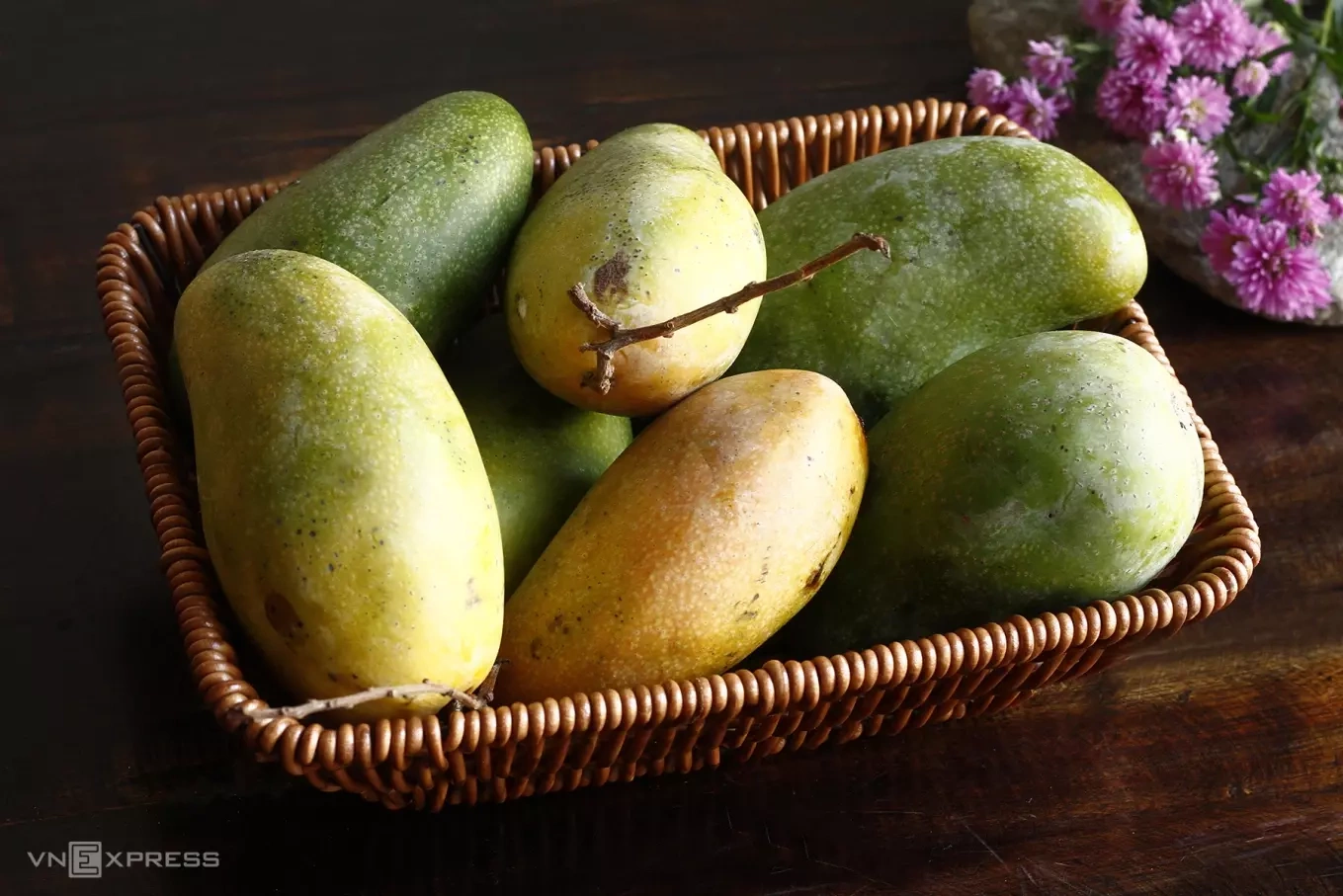 |
Mango is rich in fiber. *Photo: Bui Thuy* |
Guava
100 g of guava provides about 5 g of fiber. Fiber is present in both the flesh and the peel, with the peel containing more. Therefore, consume the entire fruit after washing to maximize its nutritional value. Guava is also rich in vitamin C and antioxidants, boosting immunity and supporting collagen synthesis.
Dragon Fruit
Dragon fruit provides about 3 g of fiber per 100 g, including soluble fiber that nourishes beneficial gut bacteria and helps balance the gut microbiome. This leads to more efficient digestion and nutrient absorption. To maximize fiber intake, eat whole dragon fruit instead of juicing it. You can enjoy dragon fruit as a snack or combine it with plain yogurt and nuts to boost its nutritional value and promote satiety.
Star Fruit
100 g of star fruit provides about 2.5-3 g of fiber, supporting bowel movements and helping to alleviate constipation when part of a balanced diet. Star fruit is also rich in vitamin C, potassium, and antioxidant compounds, protecting cells from free radical damage.
However, individuals with chronic kidney disease or impaired kidney function should avoid or limit star fruit consumption. This fruit contains caramboxin and high oxalate levels, which can cause neurotoxicity or worsen kidney damage. Patients who wish to consume it should consult a doctor.
Passion Fruit
100 g of edible passion fruit (including pulp and seeds) provides about 10 g of fiber. Therefore, consume the seeds along with the pulp, rather than just drinking the juice and discarding the residue, to maximize fiber and nutrient intake. The fiber in passion fruit promotes satiety, helps regulate blood sugar, and nourishes beneficial gut bacteria. This fruit is also rich in vitamins C and A, and polyphenol compounds with antioxidant properties, boosting immunity and protecting cells from free radical damage.
Apple
100 g of apple provides about 2.4 g of fiber, primarily concentrated in the peel. Apples are rich in pectin, a soluble fiber that slows sugar absorption, helps lower cholesterol, and nourishes beneficial gut bacteria. This fruit also provides vitamin C and flavonoids with antioxidant effects. Prioritize eating fresh fruit over juice to retain maximum fiber. Ensure adequate water intake, as fiber absorbs water, softening stool and aiding bowel movements. Insufficient water intake with high fiber consumption can increase constipation risk.
By Le Nguyen
| Readers can send questions about nutrition here for doctors to answer |