On 11/3, Dr. Nguyen Van Manh, Head of the Liver-Biliary-Pancreatic Surgery Unit at Military Hospital 175, reported on a patient with a history of hepatitis B and many years of smoking. In early 2024, a general health check-up ultrasound revealed a small, white spot-like lesion on his liver, which was recommended for regular monitoring. One year later, this white spot had progressed into a 4 cm tumor.
At two previous hospitals, doctors deemed the tumor's location too difficult, with a high risk of complications, and advised alternative treatments instead of surgery. Despite this, the family was determined to find a surgical option, hoping for a complete resolution.
According to Dr. Manh, advanced imaging showed the tumor lodged between the right hepatic vein and the inferior vena cava. This presented a major challenge, as even a minor error could tear blood vessels, causing massive bleeding that would directly threaten the patient's life on the operating table. Following a multidisciplinary consultation and a risk control strategy, surgeons successfully operated for 2,5 hours, completely removing the tumor while preserving vital blood vessels. The patient recovered well after one week, with stable liver function, and was discharged.
 |
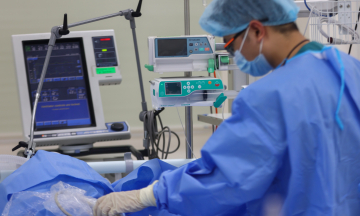
Doctors at Military Hospital 175 perform liver tumor surgery for the patient. Photo: Hospital provided. |
Doctors at Military Hospital 175 perform liver tumor surgery for the patient. Photo: Hospital provided.
Complete resection of liver tumors remains the most effective method. However, in cases where tumors are surrounded by large blood vessels, surgeons must not only be proficient in liver resection techniques but also possess extensive experience in managing blood vessels to respond to unexpected situations.
Chronic hepatitis B is one of the leading causes of liver cancer. The prolonged inflammation caused by the virus damages liver cells, gradually leading to cirrhosis, and can progress to liver cancer. The disease often progresses silently, so many cases are only detected when the tumor is already large. Individuals with hepatitis B need to adhere to treatment and have regular check-ups for early detection of abnormal lesions, increasing the chance of complete treatment.
Le Phuong