On 29/1, authorities inspected a processing facility belonging to Dung Phat Production and Trading Company Limited in Van Phuc village, Nam Phu commune. They discovered approximately 59 tons of raw offal, frozen for four to six months, one ton undergoing preliminary processing, and 3.6 tons of finished offal. The warehouse also held tons of finished products, such as sausage casings and lap xuong, ready for market.
Spoiled offal, often discolored and foul-smelling, harbors pathogens including *Salmonella*, *E. coli*, tapeworms, and liver flukes. Consuming it can lead to severe gastrointestinal infections, causing abdominal pain, diarrhea, and vomiting; in critical cases, it can be fatal.
*Streptococcus suis*, a dangerous bacterium, transmits from pigs to humans through undercooked food or open wounds. There is currently no vaccine. Severe infections rapidly progress to sepsis, septic shock, circulatory collapse, hypotension, severe coagulopathy, generalized necrotic purpura, embolism, and multiple organ failure, often resulting in coma and death.
Associate Professor Nguyen Duy Thinh from the Institute of Biotechnology and Food at Hanoi University of Science and Technology states that pork offal and other large organs naturally contain high levels of microorganisms. Prolonged freezing can cause spoilage, and the initial quality of pre-frozen products may already be compromised.
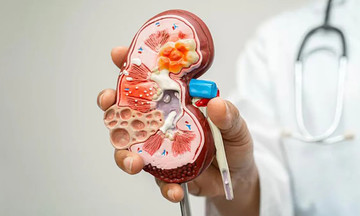
To "transform" rotten offal into a white, crispy product, facilities often use bleaching chemicals or borax. These chronic toxins accumulate in the body, burdening the liver and kidneys and causing organs to overwork.
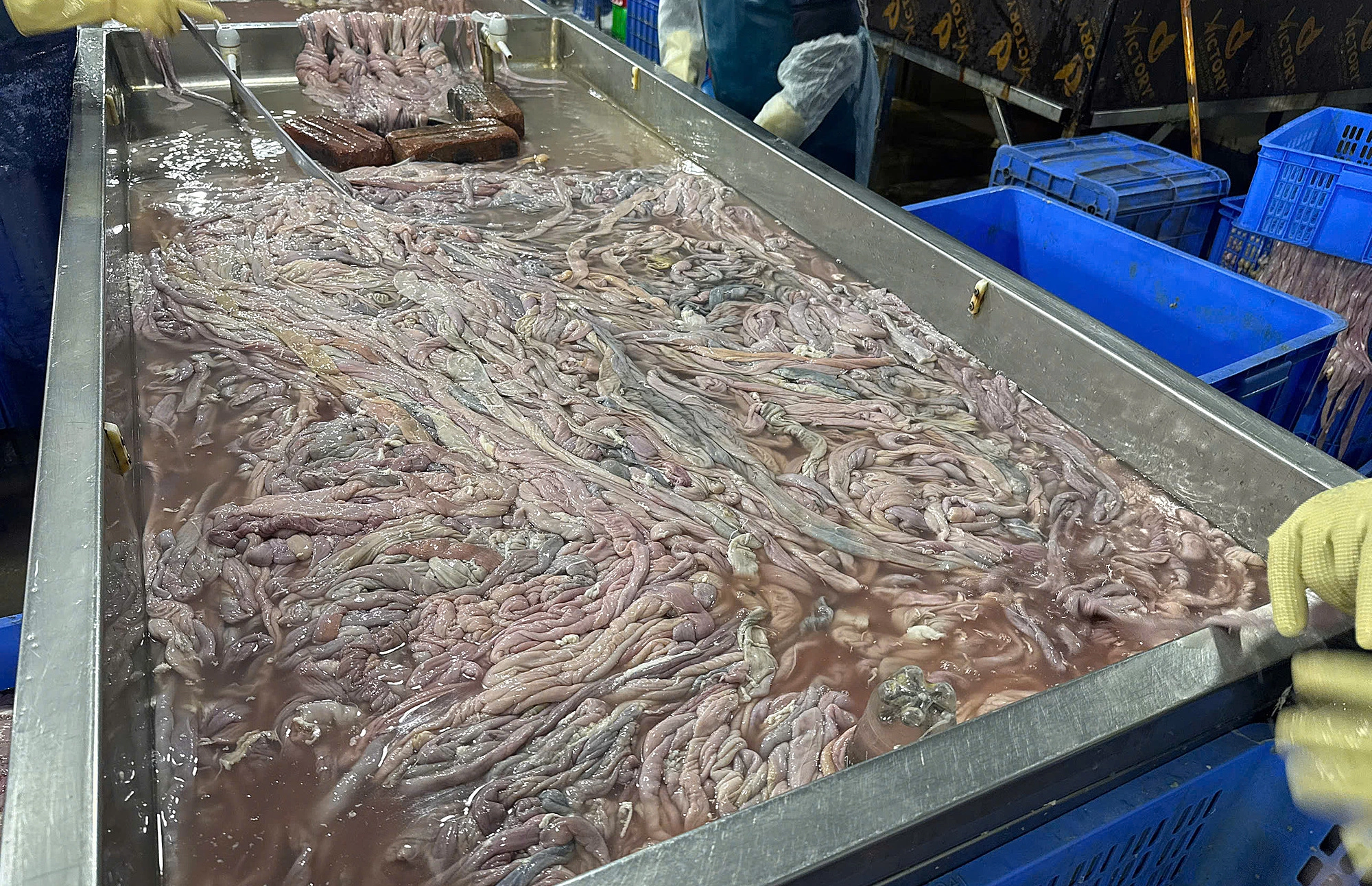 |
Many sections of offal were discolored, had a foul odor, and were frozen for four to six months, awaiting market distribution. *Photo: Linh Dan* |
Doctors strongly advise against consuming undercooked pork offal or any pork products. When buying meat, choose products from clear sources and avoid those with abnormal colors, edema, or hemorrhage. Individuals slaughtering or processing pork must wear gloves and masks, and thoroughly wash hands after contact.
Cover open wounds on hands or feet with waterproof gauze before handling raw food. Additionally, re-blanch or thoroughly cook ready-to-eat foods purchased from vendors to ensure food safety.
Thuy An